
What Are Strategic Risks? Definition, Examples, and Management Framework
Key Takeaways Key Takeaways Strategic risks are uncertainties that threaten an organization’s ability to … Read more
Enterprise risk management (ERM) is the discipline of identifying, assessing, and treating the full portfolio of risks that could prevent an organization from meeting its strategic objectives — financial, operational, strategic, compliance, and emerging risks alike. Unlike siloed risk functions, ERM gives boards and executives a single, integrated view of exposure so capital, controls, and management attention can be allocated where they move the needle most.
A mature ERM programme rests on three foundations. First, a governance framework — typically ISO 31000 or COSO ERM — that defines roles, escalation paths, and the three lines of defence. Second, a clear risk appetite statement that translates board tolerance into quantitative limits business units can actually manage against. Third, a repeatable risk management lifecycle covering identification, assessment, treatment, monitoring, and reporting.
Operationally, ERM depends on disciplined risk assessment — inherent vs residual scoring, control effectiveness testing, and scenario analysis — to keep the risk register honest. It also connects to sibling disciplines: business continuity management covers how the organisation survives disruption, information security management handles cyber and data risks, and governance, risk, and compliance (GRC) integrates the tooling and reporting that sits above all three.
Use this hub to explore frameworks, practitioner templates, certification guides (CRISC, FRM, PRM), and software comparisons. Whether you’re stood up a new ERM function or maturing an existing one, the resources below cover the methods, metrics, and reporting practices used by risk teams across financial services, healthcare, technology, and the public sector.
Key Takeaways Key Takeaways Strategic risks are uncertainties that threaten an organization’s ability to … Read more

A control measure is any action or step taken to reduce the risk of … Read more
Key Takeaways Key Takeaways A hazard is any source of potential harm — a … Read more
Key Takeaways Key Takeaways Risk management is the systematic process of identifying, assessing, treating, … Read more
Here is a composite from a 2024 post-incident review we sat in on with … Read more

Enterprise Risk Management (ERM) is a framework used by organizations to identify and address … Read more
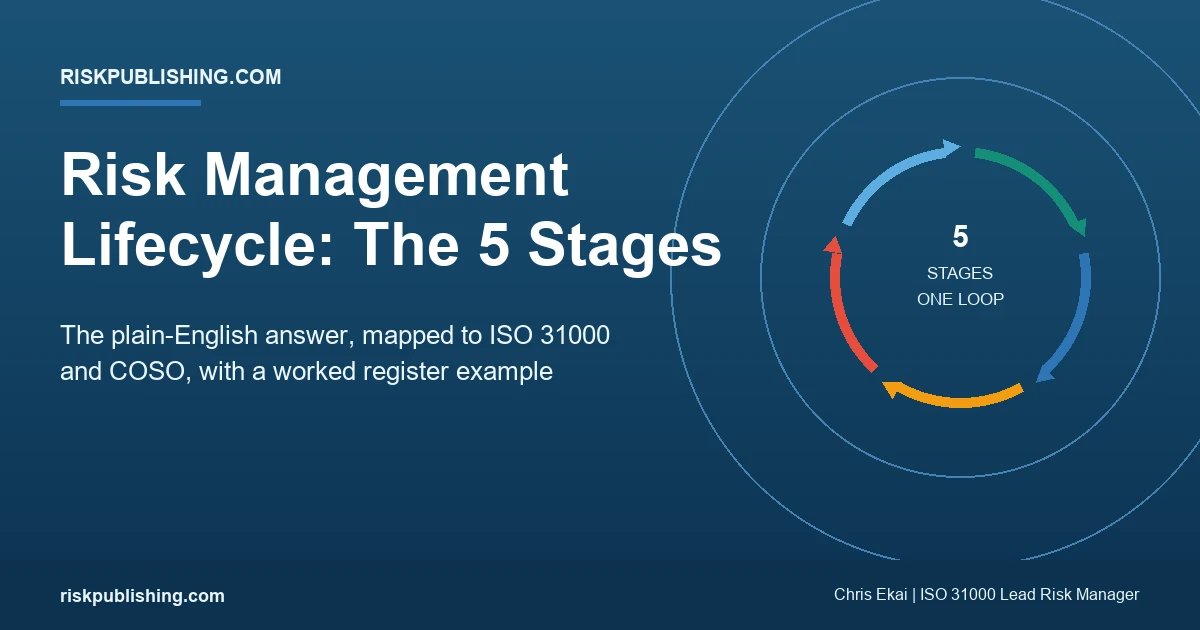
The risk management lifecycle is the continuous five-stage loop organizations use to handle uncertainty: … Read more

In January 2026, a US healthcare system lost 3.4 million patient records after a … Read more

On July 19, 2024, a faulty content update to CrowdStrike’s Falcon sensor crashed 8.5 … Read more
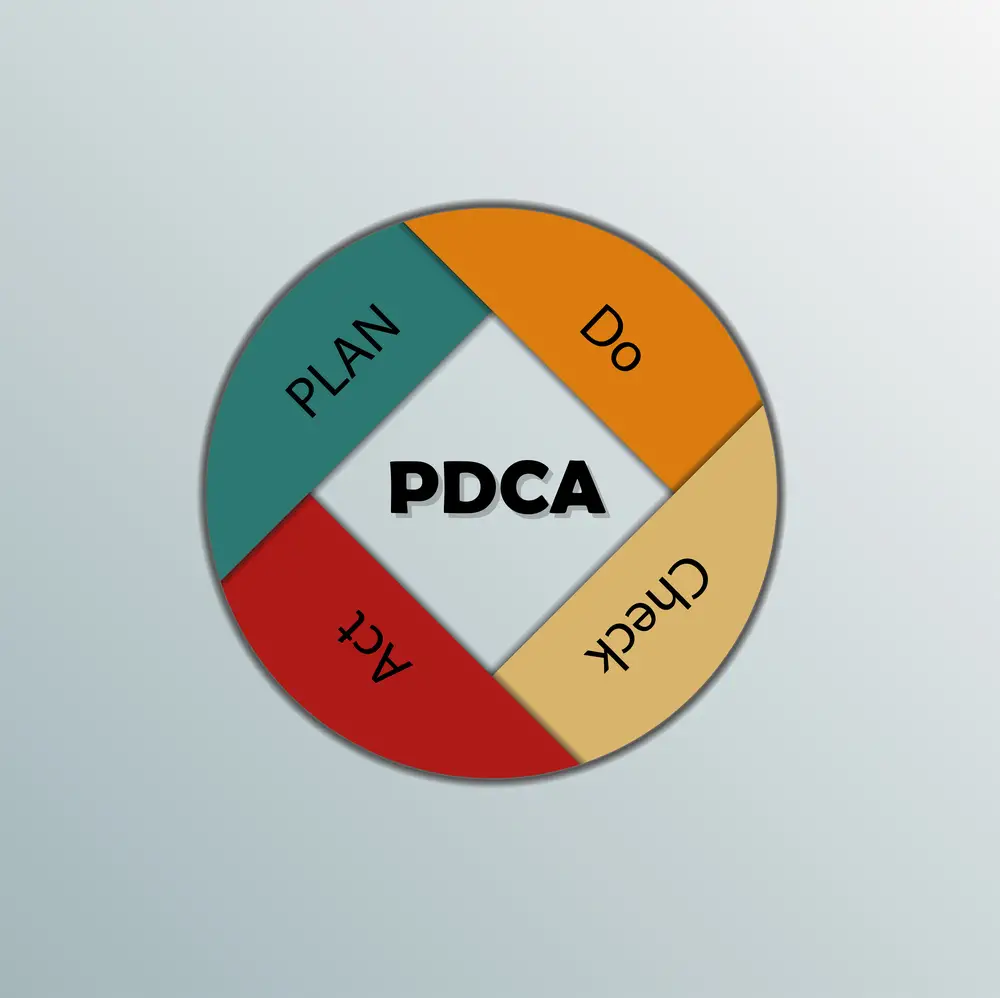
The Spiral Lifecycle Model is Boehm’s risk-driven framework for software development, and risk management … Read more

In an era where cyber threats are evolving rapidly and security breaches make headlines, … Read more
On 10 October 2024, TD Bank agreed to pay roughly $3.09 billion and pleaded … Read more