Key Takeaways
- A tool risk assessment is a systematic process for identifying hazards associated with tools and equipment, evaluating their likelihood and severity, and implementing controls to reduce the risk of injury, damage or operational disruption.
- Risk matrices and decision trees provide structured frameworks for prioritising hazards based on their potential impact, enabling organisations to allocate safety resources to the areas of greatest concern.
- Effective tool risk assessment involves all stakeholders including operators, supervisors, safety professionals and maintenance personnel, because those closest to the work often have the most practical insight into hazards and their causes.
- Regular reassessment is essential because risks change as tools age, new equipment is introduced, work processes evolve and regulatory requirements are updated.
- Documentation and communication of assessment findings ensures that risk mitigation measures are understood and followed consistently across the workforce.

What Is a Tool Risk Assessment?
A tool risk assessment is a structured evaluation process that identifies potential hazards associated with the use of tools and equipment in the workplace, rates those hazards according to their likelihood of occurrence and potential severity, and determines appropriate control measures to reduce risk to acceptable levels.
This process applies to all categories of tools including hand tools, power tools, pneumatic tools, hydraulic equipment, cutting tools, lifting equipment and specialised industrial machinery.
The objective of tool risk assessment is not to eliminate all risk, which is impossible in any working environment, but to systematically reduce risk to the lowest reasonably practicable level.
This requires balancing the severity and probability of potential harm against the cost, effort and practicality of implementing additional controls. Well-conducted tool risk assessments prevent injuries, reduce equipment damage, lower insurance costs and demonstrate compliance with occupational health and safety regulations.
Tool risk assessments are a legal requirement in most jurisdictions under occupational health and safety legislation.
Employers have a duty of care to identify hazards in the workplace and implement reasonable measures to protect workers from harm. Failure to conduct adequate risk assessments can result in regulatory enforcement action, financial penalties and criminal liability in cases of serious injury or death.

The Tool Risk Assessment Process
Step 1: Identify the hazards. The first step involves systematically identifying all potential hazards associated with each tool or category of tools. Hazards may include sharp edges, moving parts, electrical components, noise, vibration, heat, chemical exposure, ergonomic strain and projectile risks. Identification methods include workplace inspections, review of manufacturer safety data sheets, analysis of historical incident and near-miss reports, observation of workers using the tools and consultation with operators who have direct experience of the hazards involved.
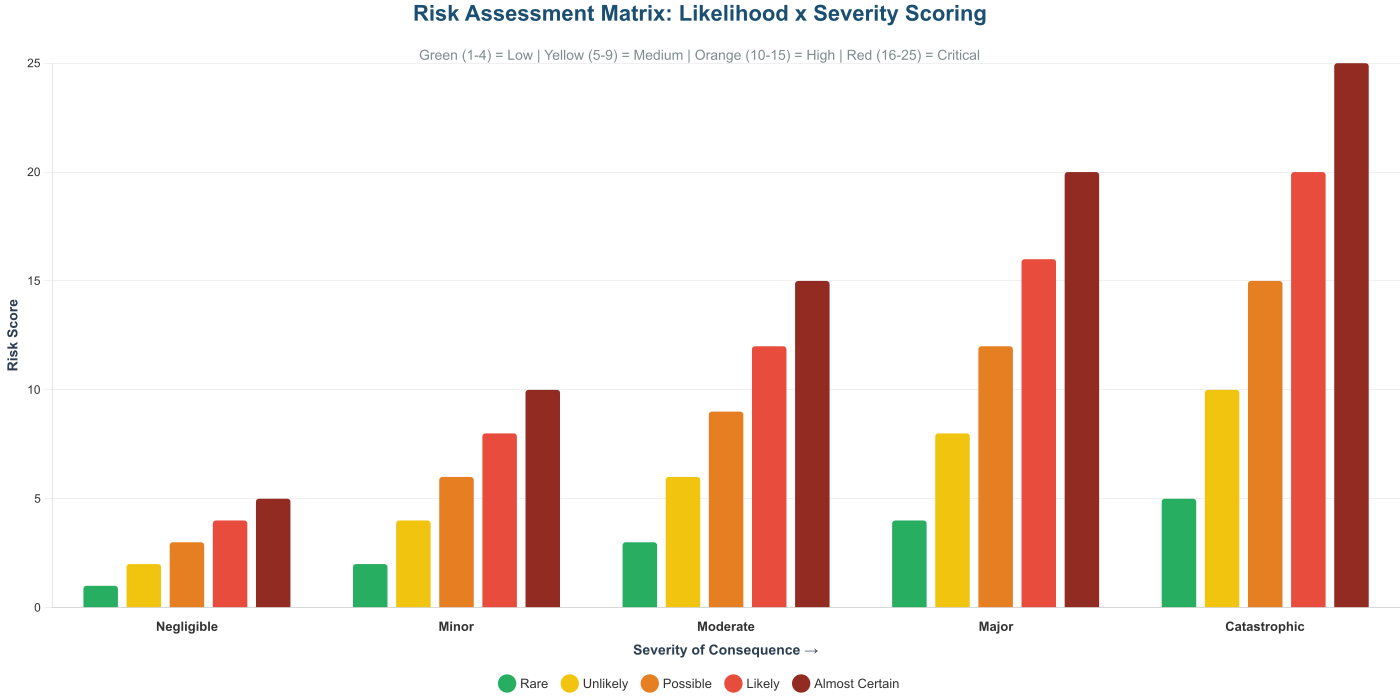
Step 2: Assess the risks. Each identified hazard is evaluated to determine the likelihood that it will cause harm and the severity of harm that could result. Risk matrices are the most commonly used assessment tool, typically using a grid that combines likelihood ratings from rare to almost certain with severity ratings from negligible to catastrophic. The intersection of these two factors produces a risk rating that classifies each hazard as low, medium, high or extreme. This rating drives the priority and urgency of the response.
Step 3: Determine control measures. The hierarchy of controls provides a structured framework for selecting appropriate risk mitigation measures. Elimination removes the hazard entirely, for example by replacing a manual cutting process with an automated one that removes operator exposure. Substitution replaces a high-risk tool with a lower-risk alternative. Engineering controls modify the tool or work environment to reduce risk, such as adding guards, interlocks or ventilation systems. Administrative controls include safe work procedures, training, signage and job rotation. Personal protective equipment provides the last line of defence when other controls cannot adequately reduce the risk.
Step 4: Implement controls. Selected control measures must be implemented effectively, which requires adequate resources, clear assignment of responsibility, realistic timelines and verification that controls are working as intended. Implementation should follow a planned approach that prioritises the highest-risk hazards and ensures that interim measures are in place while permanent solutions are being developed.
Step 5: Monitor and review. Risk assessments are living documents that must be reviewed and updated regularly. Reviews should be triggered by changes in tools or equipment, modifications to work processes, incidents or near misses, new regulatory requirements, feedback from workers and scheduled periodic reviews. Monitoring ensures that implemented controls remain effective and that new hazards are identified and addressed promptly.
Risk Assessment Tools and Techniques
Risk matrices are the most widely used tool for rating and prioritising hazards. A standard risk matrix uses a five-by-five grid with likelihood on one axis and consequence on the other. Each combination produces a risk score that maps to a colour-coded risk level. The simplicity of risk matrices makes them accessible to non-specialist users, but organisations should be aware of their limitations including the potential for inconsistent interpretation of likelihood and consequence categories.
Decision trees provide a structured approach to determining appropriate responses based on a series of yes-or-no questions about the hazard characteristics.
These tools guide assessors through a logical process that ensures consistent decision-making regardless of who conducts the assessment.
Bow-tie analysis is a more sophisticated technique that maps the causes and consequences of a hazard event along with the preventive and mitigating controls that address each pathway. This visual representation helps organisations understand the relationship between hazards, controls and outcomes.
Job safety analysis breaks down each task involving tools into its component steps and identifies the hazards associated with each step.
This granular approach ensures that hazards are not overlooked and that controls are targeted to the specific activities where risk is highest.
Failure mode and effects analysis examines the ways in which tools can fail and the consequences of each failure mode, enabling organisations to implement preventive maintenance programmes that address the most critical failure risks.

Common Tool Hazards by Category
Hand tools including hammers, screwdrivers, wrenches and pliers present hazards from striking, pinching, cutting and repetitive strain injuries.
These hazards are often underestimated because hand tools are perceived as low-risk, but they account for a significant proportion of workplace injuries. Control measures include selecting ergonomically designed tools, maintaining tools in good condition, training workers in proper technique and enforcing the use of appropriate personal protective equipment.
Power tools including drills, saws, grinders and sanders introduce additional hazards from rotating parts, electrical shock, noise, vibration and projectiles.
Guards, interlocks, ground fault circuit interrupters and dust extraction systems are essential engineering controls for power tools.
Operators should receive formal training before using power tools and should be assessed as competent before working independently. Regular inspection and maintenance programmes ensure that safety features remain functional throughout the tool’s service life.
Lifting and material handling equipment including hoists, jacks, dollies and pallet trucks present risks of crushing, dropping loads, overexertion and musculoskeletal injury.
Risk assessments for lifting equipment should consider the weight and dimensions of loads, the frequency of lifting operations, the working environment including floor conditions and overhead clearances, and the physical capability of operators. Safe working load limits must be clearly marked and never exceeded.

What is Cyber Security Business Continuity Planning? It is the process of protecting key business processes during disruptive events. Cyber security integrates across the organization to increase the ability to withstand cyber attacks and recover from disruptions.
The goal of business continuity planning is to reduce the effect of disruptions and ensure overall operational quality. Perform a Business Impact Analysis – understand critical operations, vulnerabilities, and prioritize recovery strategies.
Develop a Business Continuity Plan – include response actions, risk evaluations, and incident plans.Monitors and Maintenance – keep training current, assign auditors, and ensure the business continuity plan is valid.
Cybersecurity Tools – zero trust, data replication, and other controls that add to business continuity. Want to know more about how to Master BCP Cyber Security and why it is so important? Read more.
What You Should Take Away From This
Cyber security integrates in BCP to increase resilience.
Perform vulnerability tests and penetration tests regularly.
Create incident response plans including cyber attacks.
Use zero trust in architecture to validate users.
Continuous monitoring and testing to ensure validity.
Business Continuity Planning
Businesses prepare for disruptions physical events that may impact operations by creating plans for potential risks that the organization may face.
Cyber security integrates across the organization to increase the ability to withstand cyber attacks and recover from disruptions.
Now that we have covered the definition and the importance of business continuity planning, and how cybersecurity integrates to increase resistance, it is vital to understand the benefits of cybersecurity integrating across the organization.
Definition and importance of business continuity planning
When considering protecting overall operational quality from disruptive events or cyber attacks, understanding business continuity planning and its importance is key.
It is crucial to consider business continuity planning to ensure key business processes continue during disruptive events such as cyber attacks. Identify potential threats to business processes and develop plans to reduce effects and ensure overall operational quality.
Cyber security integrates across the organization to increase the ability to withstand cyber attacks and recover from disruptions.
Benefits of cybersecurity integrating across the organization in business continuity planning
Cybersecurity tools integrate across the organization to increase resilience to cyber attacks. Key business processes should continue during disruptive events such as cyber attacks.
The benefits of considering cybersecurity risks in business continuity planning include performing a risk evaluation to identify vulnerabilities and prioritize recovery strategies to reduce the effect of a cyber attack if it occurs.
Furthermore, creating an incident response plan including cyber attacks allows the business to respond quickly. Protect key business processes, ensure overall operational quality, and secure the organization if a data breach occurs.
Perform a business impact analysis to prioritize resources, and streamline recovery strategies.
In conclusion, integrating cybersecurity integrating across the organization in business continuity planning increases the ability to withstand cyber attacks and recover from disruptions including loss of revenue and financial damage.
Perform a Business Impact Analysis
Business Impact Analysis plays a vital role in identifying potential threats to business operations and their consequences.
Identify key business processes and valuable assets to prioritize recovery strategies. Understand financial, operational, and reputational effects of disruptive events to ensure overall operational quality. Develop Business Continuity Plans including preventative controls and recovery strategies.
Identify key business processes and valuable assets
Vital to performing a business impact analysis is to identify key business processes and valuable assets.
Business impact analysis outlines critical business actions to prioritize business continuity plan.
Identifies valuable assets requiring protection from a cyber attack.
Recognizing the effects of disruptive events on business operations is crucial to ensuring overall operational quality.
Perform a risk evaluation using impact assessments to identify vulnerabilities and prioritize recovery strategies.
Cyber Security Business Continuity Checklist Perform a business impact analysis to identify vulnerabilities and prioritize recovery efforts.
Identify potential threats to business operations and their consequences
Analyzing potential threats to business operations and their consequences includes identifying vulnerabilities to cyber attacks and data breaches to develop plans to reduce effects and ensure overall operational quality.
Performing a Business Impact Analysis is crucial when considering protecting overall operational quality from disruptive events.
By considering the probability and damage of cyber attacks, businesses prioritize risk evaluations and assign resources to mitigate vulnerabilities.
Identify key dependencies requiring protection including critical business actions and valuable assets
Identifying key dependencies requiring protection including critical business actions and valuable assets that support organizational operations and resilience to cyber attacks.
By recognizing critical business actions, valuable assets, and effects of disruptive events on business operations, organizations can develop recovery strategies to maintain key business processes.
Through risk mitigation and recovery plans, businesses can increase resistance to cyber attacks and protect from potential disruptions. Ensuring overall cyber security strategy increases in strength by considering a business continuity strategy.
Create a Business Continuity Plan
Create a business continuity plan to identify critical business actions, perform risk evaluations, and document incident response strategies to protect from cyber disruptive events.
Components include risk assessments, incident response plans, and continuous testing to ensure validity.
IT teams, leadership, and other stakeholders all play a part in creating a comprehensive plan and increasing resistance to cyber attacks.
Components of a business continuity plan
Consider the following components when creating a business continuity plan:
Perform risk assessments and develop risk mitigation strategies.
Develop an incident response plan documenting procedures.
Establish data back-up and disaster plans.
Offer all-inclusive employee training and awareness.
Use third-party auditing and testing.
These components work together to increase resistance to cyber attacks, respond quickly to incidents, secure critical business processes and valuable assets including sensitive data assets, promote a cyber-aware workforce, and validate security programs using third-party auditing.
Risk assessments and risk mitigation strategies
Conducting a risk evaluation plays a vital role in developing risk mitigation strategies.
Consider potential threats
Prevent risk mitigation strategies
Prevent cyber attacks
Reduce effects of incidents
Employ a comprehensive business impact analysis to prioritize resources and streamline recovery strategies.
Incident response plan and procedures
Another important component of creating a comprehensive business continuity plan for cyber resilience is to establish an incident response and communication plan and procedures including how to effectively respond to a cyber attack.
It is crucial to ensure employees know their roles and duties during an a cyber incident to promote their activities aligning with overall cyber security and business continuity planning strategies.
Developing a plan and putting processes in place to respond to incidents helps mitigate damage and helps reduce the impact quickly.
The goal is to protect valuable assets including sensitive data assets and critical business processes.
Data back-up and disaster plans
Another vital component of creating a comprehensive business continuity plan is to ensure protection from data breaches and to ensure overall operational resilience to natural disasters.
* Conduct data back-up data backup procedures periodically
* Use offsite storage including backup media
* Perform recovery exercises
* Ensure sensitive data encryption
All-inclusive employee training and awareness
Inclucing employee training and awareness plans overall is crucial when creating a comprehensive business continuity plan that prioritizes cyber security strategies and activities.
Training employees on best practices promotes a cyber-aware workforce and helps employees recognize potential cyber attacks.
Third-party auditing and testing
Use third-party auditing and testing to validate business continuity plans.
Use third-party verification services for independent review.
Conduct audits to determine effectiveness of cybersecurity business continuity plan.
Use results to determine improvement areas.
Schedule audits regularly.
Cyber Security Strategies for Business Continuity
Organizations need to ensure business continuity in the event of cyber attacks by considering strategies including zero trust architecture and data replication. Vulnerability and penetration testing identifies system weaknesses and strengthens positions.
Additionally, organizations need to implement strong disaster recovery plans and business continuity plans to protect critical business processes and valuable assets.
Apply zero trust architecture and data replication
Two critical cyber security strategies for business continuity in the event of cyber attacks include applying zero trust architecture and incorporating data replication.
Zero Trust Architecture: Apply zero trust by validating users and devices, allowing access to resources only when necessary, monitoring activity continuously, and authenticating all user and device connections.
Data Replication: Replicate important data in real time including backups of vital data to secondary storage systems including backups of vital data to secure secondary storage systems to protect data availability and integrity.
Include Incident Response: Strengthen cyber security incident response plan by developing protocols to identify, isolate, eradicate and recover from cyber attacks with minimum downtime and loss.
Integrate Disaster Recovery Plan: Develop a comprehensive plan to recover systems and access important data in the event of a cyber attack to reduce downtime and loss.
Conduct vulnerability and penetration testing
Vulnerability and penetration testing schedules identify weaknesses in cyber security measures and strengthen business continuity.
Vulnerability testing identifies potential weak points in cyber security strategies and penetration testing simulates cyber attacks to test effectiveness of security measures.
Through testing schedules, businesses can identify weaknesses in systems and take preventative measures to prevent cyber attacks.
Testing strengthens cyber security planning by ensuring security measures are effective and by adapting security strategies to new attacks.
Continuous testing schedules identify vulnerabilities and ensure organizations reduce potential cyber incidents and protect valuable assets including sensitive data and critical business processes. Test regularly to ensure resilient cyber security strategies in today’s ever-changing threat landscape.
Integrating disaster recovery and business continuity plans
One crucial component of ensuring business continuity in the event of a cyber attack is integrating disaster recovery and business continuity planning strategies.
Create a comprehensive business continuity management program to support and maintain critical business functions and processes.
Develop a disaster recovery plan including recovery procedures in the event of a cyber attack or natural disaster.
Develop data security strategies to protect critical business data from cyber breach and to reduce impact of a cyber attack.
Modernize cyber security practices and include in overall business continuity plan.
Implementing Cyber Security Strategies
Businesses need to ensure protection by implementing cyber security strategies.
Employee training and awareness initiatives strengthen overall cybersecurity posture and reduce potential cyber attacks.
Train employees on best cyber security practices.
Schedule regular cyber security awareness training sessions to educate employees on latest cyber attacks and prevention techniques.
Provide cyber security training opportunities and ensure employees can recognize potential cyber attacks and respond quickly.
Use simulated phishing tests to determine ability of employees to recognize and prevent malicious emails or links.
Provide cyber security guidelines and best practices handbooks and manuals to strengthen training and improve overall cyber security posture.
Monitor and test systems and plans continuously
In today’s dynamic threat landscape, maintaining resilience of our critical infrastructure, business systems and cyber security plans demands continuous monitoring and test schedules to ensure effectiveness.
By monitoring and testing systems and plans, businesses can determine improvement areas and take preventative measures to correct weaknesses promptly.
Test systems and plans regularly to discover vulnerabilities and weaknesses that malicious hackers can exploit to launch cyber attacks against information systems and networks.
Through continuous monitoring and testing schedules, organizations can determine improvement areas and strengthen overall cyber security posture.
Test systems and plans regularly to ensure robust cyber security strategies and to reduce potential cyber attacks.
Include cyber insurance and third party risk assessment
Consider integrating cyber insurance and third party risk assessment services as critical components of overall cyber security strategies to reduce potential financial losses and to identify potential vulnerabilities.
Cyber Insurance.
Reduce costs of the recovery process from a cyber attack.
Third Party Risk Assessment.
Identify potential risks.
Mitigation Strategies
Develop effective plans to strengthen against cyber attacks.
Ensure business continuity
Ensuring business continuity is a critical component of cyber security planning. Organizations can reduce potential risks and ensure resilience of critical business systems through strong cyber security strategies.
By ensuring protection against potential business disruptions, organizations can strengthen business continuity plans.
Cyber security strategies protect sensitive data, reduce potential financial losses and ensure customer confidence.
Training employees on cybersecurity best practices strengthens business continuity
Educating and training employees on cybersecurity best practices is crucial in enhancing business continuity strategies.
Focusing on continuous training and testing schedules fortifies overall cybersecurity and ensures the resilience of critical business operations against cyber threats.
Regular training sessions enable employees to familiarize with and apply modern cybersecurity protocols effectively, thereby strengthening the organization’s defense against potential attacks.
Mitigating risks through business continuity planning
Business continuity is key to ensuring organizations can mitigate risks through cyber security strategies.
* Cyber security strategies strengthen business continuity plan.
* Recover faster from downtime during cyber security incidents.
* Address potential threats and cyber security risks effectively through business continuity planning.
Ensure business continuity through cyber security strategies
Now, implementing effective cyber security strategies is key to ensuring business continuity in the event of a cyber attack and potential business disruptions.
Remember to include proper planning techniques by identifying critical business functions and key employees, assess sensitive data protection requirements, define recovery time objectives and develop strategies to ensure business recovery.
Protect business critical data and systems through cyber security strategies
Remember, implementing effective cyber security strategies and plans is also a crucial component of BCP cyber security. Through cyber security strategies, organizations can reduce potential cyber threats against business critical data and information systems.
Ensure business continuity through cyber security strategies
Finally, ensuring business continuity through cyber security strategies is a critical component of modern organizations to maintain resilience of critical business systems through emerging cyber threats and vulnerabilities.
In the event of a crisis situation, such as a cyber attack or data breach, key personnel must understand the company’s security plan to mitigate risks quickly and protect sensitive assets effectively. Additionally, organizations should consider potential impacts of cyber incidents on the supply chain as potential supply chain disruptions can cause significant losses and damage.
FAQs
What Is a Business Continuity Plan in Cybersecurity?
A business continuity plan in cybersecurity is a document that outlines strategies to ensure essential business operations during disruptive incidents primarily focusing on identifying risks, data recovery and ways to maintain operational resilience.
What Is the Primary Goal of BCM?
The primary aim of BCM is to reduce the downtime significant disruption and financial losses incurred from cybersecurity incidents and service disruptions.
Additionally, it helps reduce potential financial losses, improves security vigilance and ensures business continuity.
What Are the 5 Components of a Business Continuity Plan?
The 5 components of a business continuity plan include risk assessment, risk management, business impact analysis, recovery strategies, plan development and plan testing.
Risk assessment – identifies potential threats cyber risks and vulnerabilities that the business might face.
What Is BCM in Cybersecurity?
BCM in cybersecurity, or Business Continuity Management, focuses on preparing for and recovering from disruptions like cyberattacks. It involves crafting plans to guarantee essential business functions can persist in the face of cyber threats.
What Are the 4 Pillars of Business Continuity?
The four pillars of business continuity are prevention, detection, response, and recovery. Prevention focuses on building defenses, detection identifies breaches, response requires immediate action, and recovery aims to restore normal operations and guarantee continuity post-incident.
Conclusion
Cybersecurity Business Continuity Planning is vital for organizations to safeguard against cyber threats, maintain operational resilience, and protect customer trust.
By implementing robust cybersecurity measures, conducting risk assessments, and developing thorough business continuity plans, businesses can effectively mitigate the impact of cyber incidents.
It is important for organizations to continuously monitor and update their cybersecurity strategies to adapt to the ever-evolving threat landscape and maintain business continuity.
Building a Proactive Safety Culture
Effective tool risk assessment goes beyond documenting hazards and controls. It requires building a workplace culture where safety is genuinely valued and where every worker feels responsible for identifying and reporting hazards.
Organisations achieve this by involving workers in the assessment process, responding visibly and promptly to reported hazards, sharing lessons learned from incidents and near misses, and recognising individuals and teams who demonstrate outstanding safety practices.
Toolbox talks and safety briefings provide regular opportunities to discuss tool-related hazards, review recent incidents and reinforce safe work practices.
These brief sessions are most effective when they are interactive, relevant to the current work activities and encourage questions and discussion rather than simply delivering one-way information.
Creating an environment where workers feel comfortable raising safety concerns without fear of retaliation is essential for maintaining the flow of hazard information that effective risk management depends upon.

Regulatory Requirements and Compliance
Occupational health and safety regulations in most jurisdictions require employers to conduct risk assessments for workplace hazards, including those associated with tools and equipment.
In the United States, the Occupational Safety and Health Administration establishes standards for tool safety including requirements for guarding, electrical safety, personal protective equipment and training.
The European Union’s Framework Directive on Safety and Health at Work requires employers to evaluate risks and implement preventive measures. In the United Kingdom, the Management of Health and Safety at Work Regulations require suitable and sufficient risk assessments for all work activities.
Australia’s Work Health and Safety Act imposes duties on persons conducting a business or undertaking to eliminate or minimise risks so far as is reasonably practicable.
Compliance with these regulations requires not only conducting assessments but also implementing the identified control measures, providing adequate training, maintaining records and reviewing assessments regularly.
Regulatory inspectors expect to see documented risk assessments that are specific to the actual hazards present in the workplace rather than generic templates that have not been tailored to local conditions.
Organisations that can demonstrate a systematic and proactive approach to tool risk assessment are better positioned during regulatory inspections and are less likely to face enforcement action.

Technology and Digital Risk Assessment
Digital tools and software platforms are transforming how organisations conduct and manage tool risk assessments.
Mobile assessment applications allow field personnel to complete assessments on tablets or smartphones, capturing photos of hazards, recording observations and submitting completed assessments in real time.
Cloud-based risk management platforms centralise assessment data, automate review scheduling, track corrective action completion and generate compliance reports. These digital solutions improve the consistency, timeliness and traceability of the assessment process while reducing the administrative burden on safety teams.
Internet of Things sensors installed on tools and equipment can provide continuous monitoring of operating conditions including temperature, vibration, load and usage patterns.
This data enables predictive maintenance approaches that address equipment deterioration before it creates safety hazards. Wearable technology can monitor worker exposure to noise, vibration and ergonomic strain, providing objective data to supplement the subjective observations that traditional risk assessments rely upon.
As these technologies mature and become more affordable, they will increasingly complement traditional assessment methods and enable more proactive and data-driven approaches to tool safety management.
Organisations that invest in comprehensive tool risk assessment programmes not only protect their workers from injury but also reduce equipment damage, minimise production disruptions, lower insurance premiums and build a reputation as responsible employers.
The cost of conducting thorough assessments and implementing appropriate controls is invariably less than the cost of workplace injuries, which include direct costs such as medical expenses, compensation claims and equipment replacement as well as indirect costs such as lost productivity, investigation time, regulatory penalties and reputational damage.
A systematic approach to tool risk assessment is not just a legal obligation but a sound business investment that delivers measurable returns across multiple dimensions of organisational performance.

Training and Competency Requirements
Training is a fundamental component of tool risk management that ensures workers have the knowledge and skills to use tools safely.
Training programmes should cover hazard identification for each tool type, correct operating procedures, proper use of guards and safety devices, personal protective equipment selection and use, inspection and maintenance requirements, emergency procedures and reporting obligations.
Training should be delivered before workers first use a tool, refreshed at regular intervals and provided whenever new tools are introduced or work processes change significantly.
Competency assessment verifies that workers can apply their training in practice. Competency should be assessed through a combination of knowledge testing, practical demonstration and supervised work before workers are authorised to use tools independently.
Records of training and competency assessment should be maintained for each worker and reviewed regularly to ensure that refresher training is provided when needed. Supervisors play a critical role in ongoing competency monitoring by observing work practices, providing feedback and intervening when unsafe behaviours are observed.
Specialised tools and equipment may require formal certification or licensing before workers are authorised to operate them. Forklift trucks, cranes, elevated work platforms and certain power tools are subject to specific licensing requirements in many jurisdictions.
Organisations must ensure that only licensed or certified operators use this equipment and that licences are renewed before they expire. Maintaining a register of tool-specific authorisations helps organisations track compliance and plan training activities proactively.

Inspection and Maintenance Programmes
Regular inspection and maintenance of tools and equipment is essential for preventing the deterioration of safety features and the emergence of new hazards over time.
Pre-use inspections should be conducted by operators before each use, checking for visible damage, loose components, worn guards, frayed electrical cords and any other condition that could affect safe operation.
Defective tools should be immediately removed from service, tagged as out of use and repaired or replaced before being returned to operation.
Scheduled maintenance programmes ensure that tools receive professional servicing at intervals specified by the manufacturer or determined through experience with the specific operating conditions.
Maintenance records should document the work performed, parts replaced and any deficiencies identified, creating a service history that supports both safety management and asset management decisions.
Preventive maintenance reduces the likelihood of unexpected failures that can create sudden and dangerous hazard situations, making it a critical element of the overall tool risk management strategy.
Frequently Asked Questions
Who should conduct tool risk assessments?
Tool risk assessments should be conducted by competent persons who understand the hazards involved, the work processes being assessed and the regulatory requirements that apply.
In many organisations, this involves a team approach that includes safety professionals who provide assessment methodology expertise, supervisors who understand the operational context and experienced operators who can identify practical hazards that may not be apparent to observers.
How often should tool risk assessments be updated?
Risk assessments should be reviewed at least annually and updated whenever there are changes that could affect the risk profile.
This includes introduction of new tools or equipment, changes to work processes, incidents or near misses involving tools, changes in personnel, modifications to the work environment and updates to regulatory requirements. Routine reviews ensure that assessments remain current and that control measures continue to be effective.
What should be documented in a tool risk assessment?
Documentation should include the tools and tasks assessed, identified hazards, the risk rating for each hazard, existing control measures, any additional controls required, the person responsible for implementing additional controls, the target completion date and the date of the next scheduled review.
Clear documentation provides an audit trail that demonstrates compliance and serves as a reference for training and operational planning.

Chris Ekai is a Risk Management expert with over 10 years of experience in the field. He has a Master’s(MSc) degree in Risk Management from University of Portsmouth and is a CPA and Finance professional. He currently works as a Content Manager at Risk Publishing, writing about Enterprise Risk Management, Business Continuity Management and Project Management.