The US Bureau of Labor Statistics put the median wage for financial risk specialists at $106,000 in May 2024, and the same survey put the bottom tenth of that occupation under $62,270. One job title, a $120,000 spread, and almost no candidate can tell you which end of it they are applying to. One fork in the road is hiring a risk management consultant vs joining a firm, and the economics differ more than most candidates expect.
That gap is the real subject of any honest risk management job guide. The advice to get a degree, get certified and network is not wrong, it is simply too coarse to move anyone from the bottom of that range toward the top.
| Risk Management Job Search: Key Takeaways |
| US financial risk specialists earned a median $106,000 in May 2024, with the lowest tenth under $62,270 and the highest tenth above $182,310, so the title alone tells a candidate almost nothing about the money. |
| Growth in the risk management job market is splitting sharply by specialism: information security analysts are projected to grow 29 percent between 2024 and 2034, financial examiners 19 percent, and compliance officers just 3 percent. |
| Volume and growth are different things. Compliance officers offer roughly 33,300 openings a year despite slow growth, while financial examiners offer about 5,700 despite fast growth. |
| Most people arrive in a risk management job sideways, from audit, finance, operations or IT, rather than from a risk degree. Employers hire the adjacent experience and teach the framework. |
| Certifications rarely win a first risk management job on their own. FRM, CRISC and CIA earn their keep at the three-to-six-year mark, when a candidate needs to prove depth in a chosen domain. |
| The strongest applications show one completed piece of risk work, such as a register you built or a control you tested, in place of a list of adjectives about analytical skills. For the credential side, see eight risk certifications ranked by hiring value. |
We hire and assess risk practitioners, and the pattern is consistent across every search. What separates the offers from the rejections in a risk management job hunt is domain specificity and evidence of finished work, not the length of the credential list on page one.
What the US Risk Management Job Market Looks Like in 2026
Start with where the demand actually sits, because the phrase risk management job covers occupations with wildly different outlooks and pay. Treating it as a single market is the first mistake candidates make, and it leads them to apply broadly and land nowhere.
Which Risk Management Jobs Are Growing Fastest
The federal projections tell a clear story about specialisms. Information security analysts are projected to grow 29 percent between 2024 and 2034, while compliance officers grow 3 percent over the same decade, slower than the US average across all occupations. Our profile of the professional who measures and manages risk maps those occupations onto one ladder.
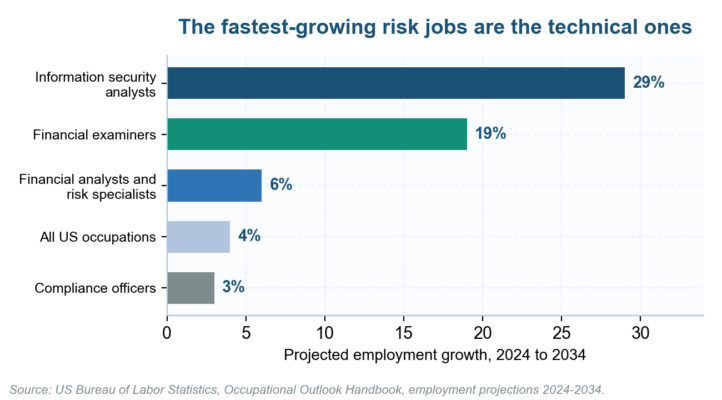
Figure 1. Technical risk specialisms are pulling away from generalist compliance roles.
Our read is that this rewards early specialisation more than it used to. A candidate who can say they work on cyber risk, model risk or third-party risk will beat a candidate who says they are interested in risk management generally, and the projections explain why.
Growth rates on their own will still mislead you. Financial examiners grow at 19 percent but from a small base, producing roughly 5,700 risk management job openings a year, whereas compliance quietly offers about 33,300 of them despite barely growing at all.
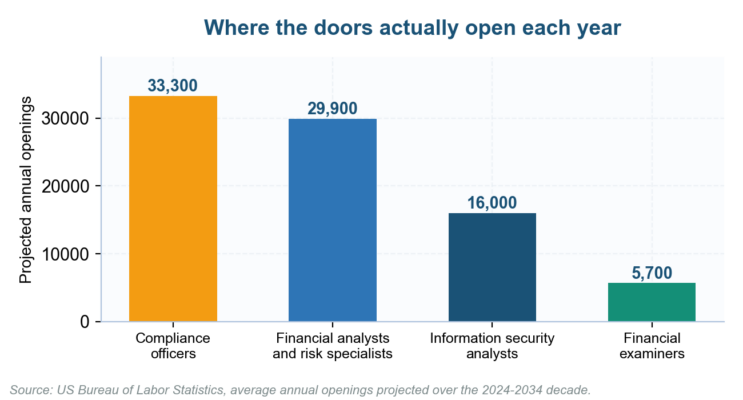
Figure 2. The slowest-growing occupation on the list still has the most doors.
What Risk Management Jobs Pay Across the United States
Pay inside a single risk management job title varies more than pay between titles, which is why salary averages are close to useless for planning. The federal wage data for financial risk specialists shows the problem more plainly than any recruiter survey.
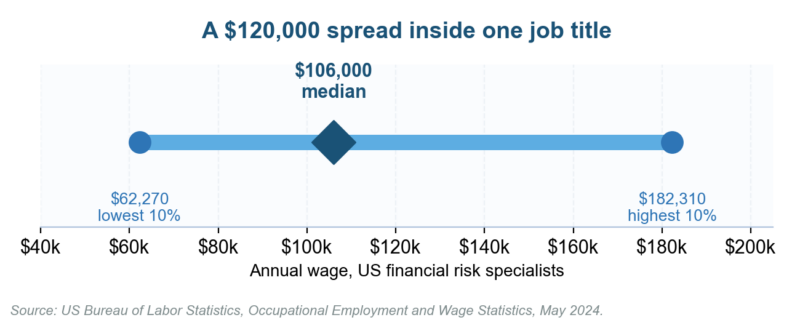
Figure 3. The tenth and ninetieth percentiles sit almost $120,000 apart.
Three things move a candidate up that range. Regulated industry rather than general commerce, a quantitative or technical specialism rather than a generalist remit, and profit-and-loss proximity, meaning the risks you cover are the ones that show up in earnings calls.
Geography matters less than it did, though not as little as remote-first candidates hope. Money-center banking, insurance and technology hubs still carry a clear premium, and O*NET’s occupational profile is a useful cross-check on state-level wages before you negotiate an offer.
Five Risk Management Job Families and What Each One Wants
Having established that the risk management job market is plural, the practical step is choosing which part of it you are entering. These five families cover most postings, and each screens for a noticeably different profile at the resume screening stage.
| Job family | What the work is | Typical employers | What gets you shortlisted |
| Financial and market risk | Credit, liquidity, market and model risk measurement | Banks, asset managers, insurers, exchanges | Quantitative degree, FRM or CFA progress, Python or R, stress testing exposure |
| Operational and enterprise risk | Process failure, RCSA, risk register, appetite and board reporting | Any regulated firm, large corporates, healthcare systems | Audit or operations background, framework literacy, clear writing |
| Technology and cyber risk | Controls over systems, third-party technology, AI and data | Everyone, with the deepest benches in banking and tech | CRISC or CISM, NIST CSF fluency, evidence of control testing |
| Compliance and regulatory | Obligations mapping, monitoring, regulator interaction | Banks, insurers, pharma, energy, public sector | Rule-specific knowledge, examination experience, high-volume openings |
| Resilience and continuity | Impact tolerance, recovery, crisis response, third-party concentration | Financial services, utilities, logistics, hospitals | ISO 22301 familiarity, exercise experience, incident history |
Pick one family and let the others go for eighteen months. Candidates who describe themselves as open to any risk management job read as unfocused to a hiring manager who is filling one specific gap on one specific team this quarter.
If you are undecided about which risk management job to chase, follow the regulation. Firms staff up wherever a supervisor has just moved, which is why business resilience roles and third-party risk teams have absorbed budget faster than generalist compliance since 2024.
Degrees That Open Risk Management Jobs, and the Ones That Do Not
Education screens candidates in rather than winning offers, and the screening is blunter than most graduates expect. A bachelor’s degree is the practical floor for a risk management job in the United States, and the subject matters considerably more than the institution.
| Qualification | What it actually buys you | Where it falls short |
| Finance, economics or accounting bachelor’s | Passes the screen for most financial and enterprise risk roles, and speaks the language of the numbers | Little exposure to controls, systems or regulation, which is where the daily work sits |
| Statistics, mathematics or engineering | Strongest route into quantitative, model and market risk, and the hardest profile to substitute | Employers may doubt commercial judgment and written communication |
| Computer science or information systems | Best positioned for the fastest-growing technology and cyber risk demand | Needs deliberate framework study to translate technical control work into risk language |
| Master’s in risk management | Useful for career changers and for candidates without a quantitative first degree | Rarely outweighs two years of relevant experience, and seldom repays its cost on its own |
| MBA | Helps at the manager-and-above transition, particularly for strategy-facing roles | Close to irrelevant for a first risk management job and expensive as an entry ticket |
Our position is unpopular with universities and consistent with what we see in hiring. A master’s degree taken instead of work experience is usually a poor trade, whereas the same degree taken alongside three years of audit or operations work is a genuine accelerator.
What no degree covers is the framework layer, and that gap is easy to close for free. Working knowledge of ISO 31000, the COSO ERM components and the risk management process puts a graduate ahead of most peers at interview.
Certifications That Move a Risk Management Job Application
Certifications are the most over-recommended item in career advice and the most widely misunderstood. They rarely win a first risk management job, because employers reasonably read a credential without experience as evidence of study rather than of judgment under real pressure.
Comparing the Main Risk Management Job Credentials
Where credentials pay back is the three-to-six-year mark, when a practitioner needs to prove depth in a chosen domain. The table below sets out the main risk management job credentials and the profile each one actually serves in the US market.
| Credential | Awarding body | Who it genuinely helps | Practical notes |
| FRM | GARP | Financial, market, credit and model risk in banks and asset managers | Two exams; Part 1 pass rate was 47 percent in November 2025, so budget real study time |
| CRISC | ISACA | Technology and cyber risk, control design and IT audit crossover | Strong signal in the fastest-growing segment of the market |
| CIA | The IIA | Internal audit, and the audit-to-risk transition that many practitioners make | Often the most efficient route for career changers already inside a firm |
| RIMS-CRMP | RIMS | Enterprise and operational risk generalists, insurance-adjacent roles | Requires experience, so it validates a practitioner rather than creating one |
| PRM | PRMIA | Quantitative risk, as an alternative to FRM | Smaller recognition footprint in US hiring than FRM |
| CFA | CFA Institute | Investment risk and buy-side roles | Expensive in time; only worth it if the target job is investment-facing |
Costs are not trivial and belong in the decision. GARP charges a one-time enrollment fee on top of per-exam fees that rise the later you register, and the study hours are the larger cost for most candidates already holding a full-time risk management job.
Which Risk Management Job Credential to Take First
Choose by the job family you picked, not by prestige. A candidate targeting a cyber risk management job who studies the FRM has spent a year signalling for the wrong market, and our comparison of FRM and PRM covers where each one fits. Buy-side candidates should weigh the CFA program instead of either.
For a technology risk management job the practical choice is between ISACA’s CRISC and its security-management sibling, which we set out in CRISC versus CISM and in a wider CISSP, CISM and CRISC comparison for candidates weighing all three. Either route assumes working fluency in NIST Cybersecurity Framework 2.0 rather than testing for it.
Generalists have two credible routes into a risk management job. The IIA’s CIA suits anyone moving across from audit, while the RIMS-CRMP validates existing enterprise risk practice, and our note on whether GRC certification repays its cost covers what the salary evidence actually shows.
Project-side practitioners ask about the PMI route often enough to deserve an answer. We compared PMP and PMI-RMP for risk roles, and the short version is that they help project risk specifically rather than risk management broadly, alongside PRMIA’s quantitative credential for modelling work.
Skills That Decide Risk Management Job Offers
Credentials get a candidate read; skills get them hired. The original version of this advice listed analytical skills, communication and attention to detail, which describes almost every office job ever posted and helps no risk management job candidate at all.
| Skill | Why it decides the offer | How to evidence it in one line |
| Data handling | Most risk work starts with messy data from three systems that disagree | Name the tool and the volume: reconciled 40,000 monthly transactions in SQL |
| Framework fluency | Lets you structure a problem in the firm’s language on day one | Cite the standard you have applied, not the one you have read |
| Control testing | The difference between describing a risk and proving whether it is managed | Describe a control you tested and what the testing found |
| Written judgment | Risk is a writing job; boards read what you produce, not what you think | Point to a paper or memo that changed a decision |
| Scenario thinking | Regulators and boards now ask for severe but plausible, not average | Describe a scenario you designed and the tolerance it breached |
| Stakeholder handling | Most findings are unwelcome; the skill is landing them without a fight | Give an example where a business owner accepted a finding you raised |
Notice that every right-hand cell names a specific artifact. A candidate who can point to a risk register they built or an RCSA they ran outperforms one who claims strong analytical skills, because the first claim is checkable and the second is not.
Indicator work is the most underrated item on that list. Practitioners who understand key risk indicators and how they feed board dashboards get pulled into reporting early, which is where visibility and promotion actually live inside most corporate risk functions.
Breaking Into a Risk Management Job Without Risk Experience
Here is the fact that reframes the entire search. Most practitioners did not start in risk, they moved in from an adjacent function, which means the honest question is not how to get experience but how to reframe the experience you already have.
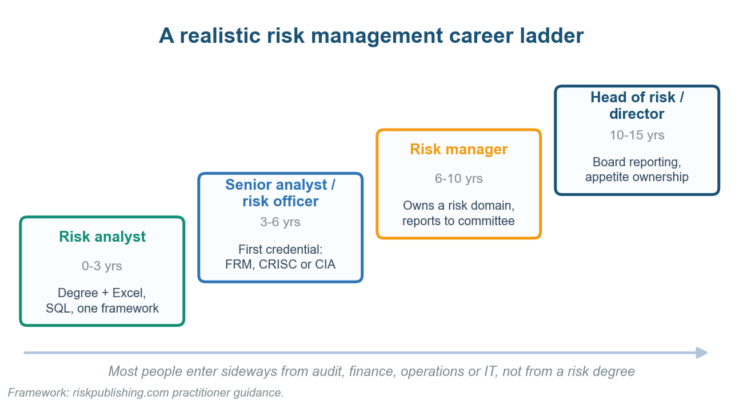
Figure 4. The entry point is usually lateral rather than graduate-scheme.
| Coming from | The bridge to a risk management job | First move to make |
| Internal audit | Already tests controls and writes findings; the closest adjacent function there is | Target second-line roles and take the CIA if you do not hold it |
| Accounting or finance | Owns the numbers that risk quantifies, and understands materiality | Move toward credit, model or financial risk and start FRM Part 1 |
| IT or security operations | Understands the systems where most operational loss now originates | Target technology risk, learn NIST CSF, take CRISC |
| Operations or process roles | Knows where the process actually breaks, which second-line staff often do not | Volunteer for the RCSA cycle and own a register section |
| Insurance or claims | Fluent in loss data, exposure and transfer, which enterprise risk teams need | Target enterprise or resilience roles and pursue RIMS-CRMP |
| Consulting or law | Strong writing and regulatory reading, the two hardest skills to teach | Target compliance or regulatory risk where volume of openings is highest |
The move that works inside a firm is smaller than people think. Ask to join the next risk and control self-assessment cycle as a business participant, and you convert operational knowledge into risk vocabulary at your employer’s expense rather than your own.
Outside a firm, build one artifact rather than five courses. A single worked risk assessment of a real public organisation, with a register, scoring and a page of recommendations, gives an interviewer something concrete to interrogate for a full twenty minutes.
Applications and Interviews for a Risk Management Job
Bridging from preparation to the process itself, most rejections happen at the resume stage for reasons that have nothing to do with capability. Risk management job applications fail on vagueness far more often than they ever fail on genuine experience gaps.
| Interview question | What is being tested | What a strong answer contains |
| Walk me through a risk you identified | Whether you can separate cause, event and consequence | A named process, a quantified impact, and what changed afterwards |
| How would you assess a new third-party vendor? | Structure under ambiguity | Criticality first, then data access, concentration and exit, not a questionnaire |
| A business head disagrees with your rating. What now? | Backbone and proportionality | Evidence, escalation path, and a willingness to be wrong on the facts |
| How do you set a risk appetite threshold? | Whether you understand the business, not just the method | A number tied to an objective, and what happens when it breaks |
| What would you do in your first ninety days? | Whether you have thought about this specific firm | Read the register and the last audit report, meet owners, change nothing yet |
Two habits lift a risk management job application immediately. Mirror the exact risk vocabulary of the posting, and lead every bullet with a verb and a number rather than a responsibility statement copied straight from the wording of the original job description.
For the appetite question in particular, read the firm’s own public disclosures first. Filings and worked appetite statements give you the phrasing a panel expects, and candidates who quantify a threshold aloud separate themselves inside the first ten minutes of a panel.
Where Risk Management Job Searches Go Wrong
A candidate we coached last year had four certifications, six years in operations and forty rejections behind him. Nothing was wrong with the profile; the applications simply never said which risk management job he wanted or what he had personally produced.
| Mistake | Why it costs the offer | The correction |
| Applying across all five job families | Reads as unfocused to a manager filling one specific gap | Choose one family and rewrite the resume around its vocabulary |
| Certifications stacked before experience | Signals study rather than judgment, and cannot be interrogated at interview | Pair every credential with one applied example from real work |
| Adjectives instead of artifacts | Analytical and detail-oriented describe everyone and prove nothing | Name a register, a test, a scenario or a paper you produced |
| Ignoring the regulated middle market | Everyone applies to the same twenty brand-name employers | Target insurers, utilities, hospital systems and mid-tier banks |
| Treating networking as collecting | Connection requests without context convert at almost nothing | Ask three practitioners for a thirty-minute conversation about their week |
| No view on AI | Panels now ask, and a blank answer reads as disengaged | Have a position on model risk and AI governance in your target domain |
The thread running through all six is specificity. Risk hiring managers spend their working lives distinguishing vague assertions from evidenced ones, so a vague risk management job application is being read by just about the least forgiving audience it could possibly find.
Risk Management Job Questions Candidates Keep Asking
What qualifications do you need for a risk management job?
A bachelor’s degree in finance, economics, statistics, engineering or computer science covers the screen for most US risk management job postings. Beyond that, employers weigh relevant experience and one domain-specific credential far more heavily than the degree subject or the awarding institution itself.
Can you get a risk management job without experience?
Directly from graduation it is difficult outside formal analyst programs at large banks and insurers. The realistic route is one to three years in audit, finance, operations or IT, then a lateral move that reframes that experience in risk vocabulary.
Which risk management job certification is worth the most?
It depends entirely on the domain you are targeting. FRM leads for financial and model risk, CRISC for technology and cyber risk, CIA for the audit-to-risk transition, and RIMS-CRMP for enterprise generalists who already have real experience worth validating formally.
How much does an entry-level risk management job pay?
The bottom tenth of US financial risk specialists earned under $62,270 in May 2024, which is a fair proxy for an entry-level risk management job. Median pay reaches $106,000, so the early climb is steeper than the starting number suggests.
Do you need a master’s degree for a risk management job?
No, and taking one instead of working is usually a poor trade. A master’s helps career changers and candidates without a quantitative first degree, but three years of applied experience beats it for most hiring panels working in this field today.
Which industries hire the most for risk management jobs?
Banking, insurance and asset management remain the deepest employers by headcount, followed some way behind by healthcare, energy, utilities and technology. Compliance-heavy sectors generate the highest raw volume of risk management job openings, at roughly 33,300 compliance postings a year nationally.
Is AI reducing the number of risk management jobs?
Not so far, though it is changing the work itself. Federal analysis of AI and employment through 2034 expects automation to absorb data gathering and first-pass testing, while creating fresh demand in model risk and AI governance. That is where we would concentrate if we were entering the field today.
Where Risk Management Jobs Are Heading Through 2030
The clearest signal in the projections is that technical risk keeps pulling steadily away from procedural risk. The federal projections through 2034 put security-facing roles far ahead of compliance roles. The two-year outlook in the World Economic Forum Global Risks Report 2026 points in the same direction.
Artificial intelligence is creating a domain rather than eliminating one. The NIST AI Risk Management Framework has given firms a vocabulary for AI oversight, and practitioners who pair it with an AI governance framework are filling roles that did not exist in 2023.
Disclosure pressure is pulling risk work closer to the board and raising the premium on writing. Since the SEC cybersecurity disclosure rule compressed materiality judgments into four business days, firms have paid more for people who can reason and write quickly under pressure.
Expect employers to keep testing for integration rather than for silo depth alone. Candidates who can connect a control finding to an integrated risk management program and to reputational exposure are being promoted faster than technically stronger specialists who cannot.
Build the Risk Management Job Profile Employers Search For
Pick one job family this week, then produce one artifact before you send another application. A register you built, a control you tested or a scenario you designed will carry a risk management job interview further than a fourth certification ever will.
We advise risk teams on how they structure and staff these functions, which shapes what we tell candidates about the other side of the table. Look through our advisory services or get in touch if you are building a team rather than joining one.
Candidates preparing alone should work through an enterprise risk management framework, then the three lines model and GRC fundamentals, in that order. Those three supply most of the vocabulary that any risk management job panel will actually test you on.
Round it off with the domain you chose. Cyber candidates should sit with NIST CSF against ISO, operational candidates with operational risk management and its banking application, and anyone facing tooling questions with the ERM platform comparison

Chris Ekai is a Risk Management expert with over 10 years of experience in the field. He has a Master’s(MSc) degree in Risk Management from University of Portsmouth and is a CPA and Finance professional. He currently works as a Content Manager at Risk Publishing, writing about Enterprise Risk Management, Business Continuity Management and Project Management.