
An activity risk assessment and management plan is implemented in five moves: identify the hazards in the task, assess likelihood and severity, select controls working down the hierarchy from elimination to PPE, assign each control an owner, and verify it in a pre-task check before work starts each shift.
In 2022, 39 American workers died in trenches and excavations, the worst toll since 2005 and more than double the 15 recorded in 2021. On July 14, 2022, the Department of Labor announced enhanced nationwide enforcement after 22 deaths in the first six months alone.
| Activity Risk Assessment and Management Plan: Key Takeaways |
| A risk assessment and management plan is implemented through controls, and the tier those controls sit on decides whether it works. PPE is the weakest of the five and belongs last. |
| The NIOSH hierarchy of controls ranks elimination, substitution and engineering controls above administrative measures and PPE, because the top three work without relying on the worker. |
| US trench and excavation deaths hit 39 in 2022, the worst since 2005. After OSHA announced enhanced enforcement on July 14, 2022, the toll fell to 15 in 2023 and 12 in 2024. |
| One cubic yard of soil can weigh about 3,000 pounds. No hard hat controls that, which is why OSHA requires a protective system in trenches deeper than five feet. |
| OSHA requires a competent person to inspect an excavation before each shift and again after rain. That pre-task check, not the written document, is what makes the plan real. |
| Write controls as verifiable states rather than intentions. Be careful is not a control; a trench box rated for the soil class, installed before entry, is one. |
Then the number fell. OSHA later reported trench fatalities dropping to 15 in 2023 and 12 in calendar year 2024, a decline of roughly 70 percent from the 2022 peak. The activity did not get safer on its own.
What changed was enforcement of a specific requirement: a competent person inspecting the excavation before each shift. That inspection is an activity risk assessment, performed daily, and it is the clearest evidence available that this discipline works when it is actually run.
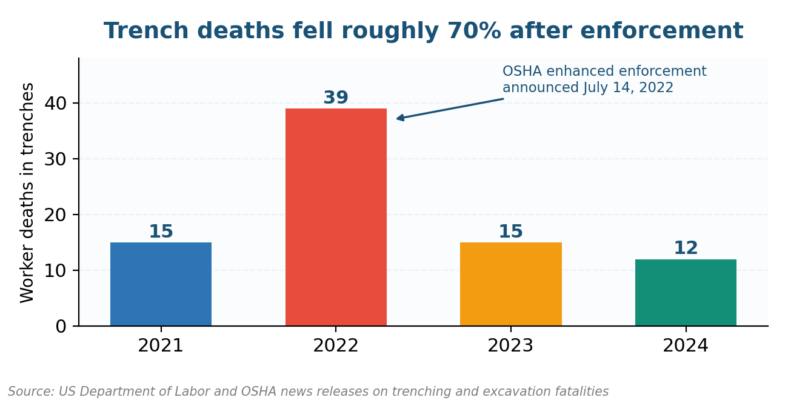
Figure 1. The same work, the same hazards, a different inspection regime.
What an Activity Risk Assessment and Management Plan Contains
The document itself is short, which surprises people expecting a manual or a bound procedure. A working plan covers one activity, names its hazards, states the controls, assigns owners, and defines exactly what has to be true before work starts.
Scope it to the task, not the project. A plan covering all of site operations is a policy, while a plan covering excavation of a trench in Type C soil to eight feet is something a crew leader can actually check against on a Tuesday morning.
| Element | What it states | How it gets checked |
| Activity definition | The specific task, location, depth or scale, and duration | Does the description match the work now being done? |
| Hazard list | What can cause harm, in plain language | Walk the area; can you find a hazard not on the list? |
| Assessment | Likelihood and severity, using a stated scale | Is the scale the same one other activities use? |
| Controls | The measure, its tier, and what must be true | Is it installed and verifiable, or just intended? |
| Owner | The named person accountable for each control | Is that person on site today? |
| Pre-task check | The conditions that must hold before work starts | Was it signed before entry, or backfilled after? |
The last row is the one that separates a live plan from a filed one. Our guide to hazard identification and risk assessment covers the identification stage in more depth, and the risk assessment tool page covers the formats teams use to record it.
Hazard, Risk, Control: Three Words Most Plans Blur
Before the method, a vocabulary problem worth fixing. The earlier version of this article used hazard and risk interchangeably, which is common and which quietly breaks the assessment, because you cannot rate a hazard and you cannot eliminate a risk.
| Term | What it means | Worked example in a trench |
| Hazard | The thing with potential to cause harm | Unsupported soil face at eight feet |
| Risk | The combination of how likely harm is and how bad | Likely collapse causing fatal crush injury |
| Control | The measure that changes likelihood or severity | A trench box rated for the soil class |
| Residual risk | What remains after controls are working | Struck-by risk from spoil placed near the edge |
| Owner | The person accountable for the control operating | The competent person named on the permit |
Keeping these apart changes what a plan can do. You eliminate or control hazards, you rate and accept risks, and confusing the two produces the familiar plan where every line reads as a worry rather than an instruction. The definition of hazard and risk assessment guide works through more examples.
Why the Hierarchy of Controls Decides Whether the Plan Works
Here is where most plans fail, including the earlier version of this article, which offered helmets and gloves as its main mitigation. Protective equipment is real, it is often necessary, and it is the weakest control available, ranked last for a reason.
The NIOSH hierarchy of controls ranks five tiers by effectiveness: elimination, substitution, engineering controls, administrative controls, and finally PPE. The top three keep working without depending on a tired person doing the right thing under pressure at the end of a shift.
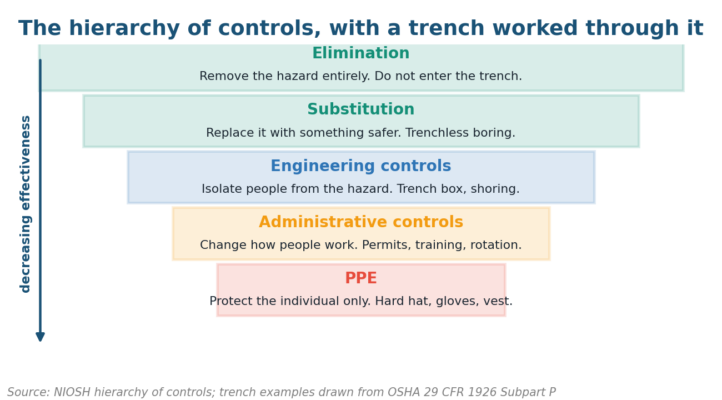
Figure 2. Every tier is legitimate. The order is not negotiable.
The trench makes that argument concrete in a way no policy statement can. One cubic yard of soil can weigh roughly 3,000 pounds, about the weight of a small car, which is exactly why OSHA’s trenching guidance requires a protective system beyond five feet of depth.
No hard hat on the market controls three thousand pounds of falling soil. A trench box does the job, because it is an engineering control that removes the worker from the hazard’s path entirely, rather than asking the worker to somehow withstand it.
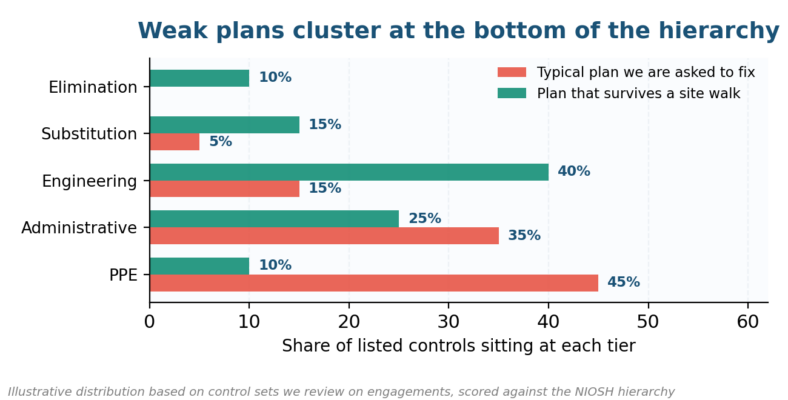
Figure 3. Count the tiers in your own plan before you defend it.
Score your control list by tier. If most entries are training, signage, supervision and PPE, the plan is asking people to be careful in a dangerous place, and our workplace safety risk management playbook covers how to move that distribution upward.
How to Implement the Risk Assessment and Management Plan
Bridging from principle to practice: this is the sequence we run on site, and the order matters because each step feeds the one after it. A crew can complete the whole cycle for a routine activity in a single afternoon.
| Step | What you do | Who leads | Evidence it leaves |
| 1 | Define the activity narrowly, with location and scale | Supervisor | One-line scope on the plan header |
| 2 | Walk the area and list hazards with the crew present | Crew and supervisor | Hazard list with names of who walked it |
| 3 | Rate likelihood and severity on the standard scale | Supervisor | Scored entries using the site matrix |
| 4 | Select controls starting at elimination, not at PPE | Competent person | Controls tagged by hierarchy tier |
| 5 | Name an owner for every single control | Supervisor | Named person against each line |
| 6 | Brief the crew and record who attended | Supervisor | Signed briefing sheet with date |
| 7 | Run the pre-task check before work starts each shift | Competent person | Signed check completed before entry |
| 8 | Re-check after any change: weather, method, people | Competent person | Second entry on the same check sheet |
| 9 | Review after completion or after any near miss | Safety lead | Updated plan with the change noted |
Step four is where the discipline lives. Working down from elimination forces the question of whether the task is necessary at all, and on excavation work the honest answer is sometimes trenchless boring rather than a person in a hole.
Step seven is the legal core on regulated activities, not merely good practice. Under 29 CFR 1926.651, a competent person must inspect the excavation before the shift starts and again after every rainstorm, removing workers if conditions have changed.
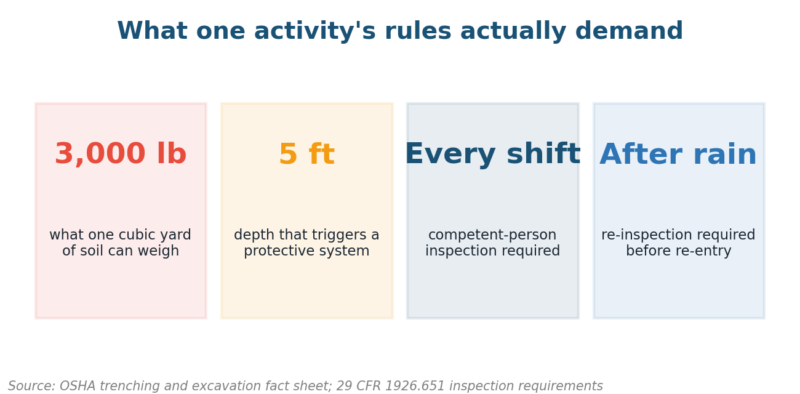
Figure 4. These numbers are requirements, not guidance.
Step nine is skipped most often. A near miss is free information about which control failed, and a plan that never changes after one is a plan nobody is reading. Feed those events into incident management rather than into a drawer.
Writing Controls That Survive a Site Walk
A control has to be checkable by someone who was not in the planning meeting and has never met the crew. That single test eliminates most of what gets written into these plans, and applying it is the fastest quality improvement available.
Run every line of your control list through five short questions before the plan goes out to the crew. Anything failing one of them is an intention rather than a control, and it will not survive contact with an inspector:
- Can a person standing on site confirm it is in place, right now, without asking anyone?
- Does it name a physical state or a specific action rather than an attitude?
- Is the tier stated, so the reviewer can see how much of the plan rests on PPE?
- Does it have one named owner, not a department?
- Would it still be true if the most experienced person on the crew were absent?
| Weak control wording | Wording that can be verified |
| Take care when working near the edge | Spoil placed a minimum of two feet back from the trench edge |
| Ensure workers are trained | Competent person named on the permit, with training record on file |
| Use appropriate protective equipment | Trench box rated for Type C soil installed before any entry |
| Monitor weather conditions | Re-inspection completed and signed after any rainfall before re-entry |
| Follow safe working practices | Ladder within 25 feet of every worker in a trench four feet or deeper |
| Be aware of underground services | Utility locate completed and marked, with ticket number recorded |
The right-hand column shares one property worth naming explicitly. Each entry describes a specific physical state that a stranger could walk up and photograph, which is exactly what an inspector, an insurer or a plaintiff’s expert will later ask you to evidence.
Matching the Plan to the Activity
Different activities carry different mandatory triggers, and a generic template will miss them every single time. Before writing anything at all, check which specific standard governs the task in question, because that standard usually dictates the shape of the pre-task check for you.
| Activity | Mandatory trigger to check | Control that usually does the work |
| Excavation | Protective system beyond five feet; pre-shift inspection | Trench box, shoring, or benching to soil class |
| Working at height | Fall protection duty at the applicable threshold | Guardrails or engineered anchor, not just a harness |
| Confined space entry | Permit, atmospheric testing, attendant, rescue plan | Ventilation plus continuous atmospheric monitoring |
| Hot work | Permit, fire watch, and post-work watch period | Removing combustibles from the area entirely |
| Silica-generating work | Exposure control method for the specific task | Water suppression or on-tool dust extraction |
| Machine operation | Guarding and energy control before servicing | Fixed guarding and lockout, not procedural care |
Notice the third column stays in the top three tiers throughout. That is not editorial preference, it reflects how these standards are written, and our concrete pouring risk assessment and injection molding risk assessment guides work two of these through end to end.
Scale drives the rest. A single-shift task needs one page and a signature, while a multi-week activity needs the same structure plus a review trigger, which is the point where a full risk management plan takes over from the activity sheet.
Common Questions About the Risk Assessment and Management Plan
Who should write an activity risk assessment and management plan?
The supervisor who owns the task, with the crew who will perform it in the room. Plans written centrally by someone who has not seen the location consistently miss site-specific hazards, and the crew stops treating the document as anything other than paperwork.
How often should the plan be reviewed?
Before every shift for regulated activities, and again whenever the method, the weather, the people or the ground conditions change. A calendar-based annual review is the wrong instinct here, because activity risk changes with site conditions rather than with dates on a schedule.
What is the difference between a JHA and a risk assessment and management plan?
A job hazard analysis breaks a task into steps and finds the hazard in each, which is the identification engine. The plan wraps that analysis in ratings, controls, owners and a pre-task check. OSHA’s job hazard analysis booklet covers the JHA method.
Do small employers legally need a written plan?
Requirements vary by the activity involved rather than by company headcount. The OSH Act’s general duty clause applies to every covered employer, and specific standards such as PPE hazard assessment require a documented assessment regardless of how small the company is.
What scoring scale should the assessment use?
Whatever scale the rest of your organization already uses, so activity scores aggregate with everything else. If you have no scale yet, start with a five-by-five, and our comparison of 5×5 and 4×4 matrices explains the tradeoff before you commit.
How do you show the plan was actually implemented?
Signed pre-task checks dated before work started, a briefing sheet listing everyone who attended, and photographs of the installed engineering controls. Backfilled paperwork is obvious to any competent investigator, and it actively damages the defense it was meant to support.
Does ISO 45001 require this kind of plan?
Yes, in substance if not in the same wording. ISO 45001 requires hazard identification and control selection that follows the hierarchy, and unlike ISO 31000 it is certifiable, so an external auditor will ask to see your controls tiered and evidenced.
Red Flags to Watch, and Green Lights to Chase
Seven patterns account for most of the activity plans we get asked to review after an incident or a citation. Each one has a cheap fix if it is caught before the work actually starts, and a far more expensive one afterwards.
| Red flag | Why it happens | The fix |
| Controls are mostly PPE and training | Those are the cheapest to write and require no engineering | Score the list by tier and rebuild the top half |
| One plan covers the whole project | A template was reused to save time | Split by activity; scope each to a checkable task |
| Pre-task check signed after the shift | The form is treated as a record, not a gate | Move the signature line above the entry authorization |
| Hazards written as risks | The vocabulary was never separated | Rewrite each entry as a source of harm, then rate it |
| No named owner per control | Ownership sits with a department | Name a person; departments cannot inspect anything |
| Never updated after a near miss | Near misses are logged elsewhere | Route near misses back to the activity plan within 48 hours |
| Generic template with no standard cited | Nobody checked which rule governs the task | Name the governing standard in the plan header |
The third row is the one that turns a safety document into evidence against you. A check signed after entry proves the gate was purely decorative, and it is trivially exposed by comparing the signature time against the equipment logs.
The green light is equally simple to spot on a site walk. When a crew member can point at a control and tell you who owns it and what makes it valid today, the plan is working, whatever the document itself looks like.
Three Shifts Reshaping How Crews Plan Risk
Activity risk work is changing faster than the paperwork around it suggests, and three shifts are already visible on the sites we walk. Each one pushes the assessment closer to the exact moment and place where the work actually happens.
Pre-task checks are moving to phones, with timestamps and location attached. That removes the backfilling problem in one step, because a check completed at the trench at 06:40 is a different evidentiary object from a form signed in the site office.
Control tiering is becoming a reporting metric rather than just a training principle. Clients increasingly ask what share of their controls sit above the administrative line, which turns the hierarchy from a poster on the wall into something a board can track quarterly.
Enforcement data keeps proving the basic point better than any argument does. The trench numbers moved because inspections actually happened, not because some new technology arrived, and OSHA’s excavation emphasis program remains the clearest case study in the value of a daily check.
If your activity plans read like warnings rather than instructions, that is fixable in a week. We rescore control sets against the hierarchy, rewrite weak lines into verifiable states, and rebuild the pre-task check as a gate. See our services, then send us a note with one plan you would not want an inspector to read.

Chris Ekai is a Risk Management expert with over 10 years of experience in the field. He has a Master’s(MSc) degree in Risk Management from University of Portsmouth and is a CPA and Finance professional. He currently works as a Content Manager at Risk Publishing, writing about Enterprise Risk Management, Business Continuity Management and Project Management.