In April 2025, JPMorgan’s 2025 proxy statement disclosed total compensation for Ashley Bacon, the Chief Risk Officer, at approximately $9.5 million for fiscal year 2024.
Three weeks later, an insurance carrier in Des Moines posted a CRO opening at $235,000 base with a 25% target bonus. Same job title, same statutory accountability, total compensation 40 times apart.
| The Practitioner Cheat Sheet on Chief Risk Officer Salary by State |
| Chief risk officer salary by state in the US splits along four axes: geography, industry, company size, and pay mix. New York leads with a median total comp around $785,000 in 2026; Mississippi anchors the low end near $235,000. The 3.3x geographic gap survives controls for industry and firm size. |
| The top-5 US bank CROs (JPMorgan, Bank of America, Wells Fargo, Citi, Goldman Sachs) sit in a different universe. SEC DEF 14A filings for 2024-2025 put the median around $4.25 million in total comp, with 65% of the package in equity. That single tier pulls the national average upward and obscures the working median for the rest of the country. |
| Pay mix matters as much as headline total. Top-5 bank CROs receive 10% base, 25% bonus, 65% equity. Mid-market private firms invert the structure: 60% base, 28% bonus, 12% equity. The chief risk officer salary by state question is also a pay-mix question, and the answer changes how the role is sold to candidates. |
| Experience compounds the geography premium. A first-year CRO in a US mid-market firm earns roughly $195,000; a 16-20 year veteran in the same firm hits $480,000. The same career arc at a top-5 US bank scales from $950,000 to $4.4 million. The experience curve is steeper at the top of the market. |
| Public-private breaks the ranges open further. The S&P 500 median CRO comp is around $1.45 million; the Russell 2000 median sits at $580,000; PE-owned mid-market firms run around $720,000 (with carry potential on exit); private family-owned at $380,000; federal SES agencies near $215,000. |
| BLS OEWS data anchors the bottom of the range, SEC proxies anchor the top, and WTW, Mercer, and Korn Ferry executive comp surveys fill in the middle. The chief risk officer salary by state question requires triangulating all three; no single source covers the full distribution. |
| Median US CRO tenure runs 4.2 years per Korn Ferry, shorter than the CFO or COO at peer banks. The role turnover means published comp lags by 12-24 months. Treat 2026 numbers as ranges, not point estimates, and renew benchmarks annually against the underlying surveys. |
| The CRO mandate has widened over the last decade. The role now oversees the enterprise risk management framework, operational risk, cyber risk, business continuity, vendor risk, and AI risk. Wider scope drives higher pay and shorter tenure simultaneously. |
That spread is the chief risk officer salary by state question every US risk professional weighs against a career move. The 3.3x geographic premium between New York and Mississippi is real.
The 40x premium between a top-5 US bank and a mid-market insurer is also real. Both numbers sit inside the same Bureau of Labor Statistics occupational code and the same ISO 31000 risk-management framework. The full pay ladder for the professional who measures and manages risk starts far below either figure.
This article maps chief risk officer salary by state across the four axes that determine US pay outcomes: geography, industry sector, company type and size, and pay mix. Every number is sourced to either BLS Occupational Employment and Wage Statistics May 2024, SEC DEF 14A filings, or the published executive compensation surveys risk leaders cite at salary negotiations.
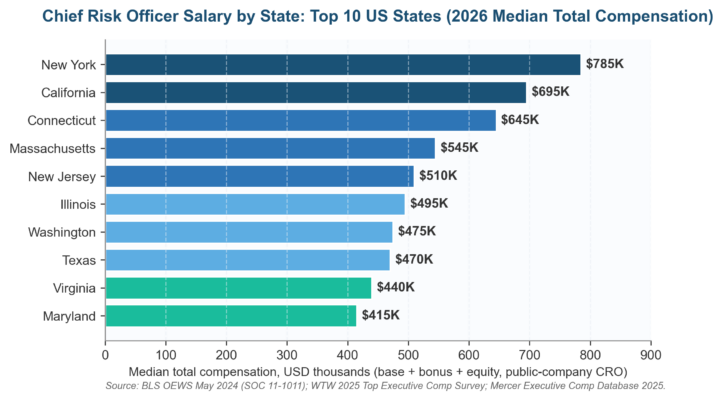
Figure 1. Chief risk officer salary by state: top 10 US states by 2026 median total compensation.
The Chief Risk Officer Salary by State Picture in 2026
The chief risk officer salary by state distribution in 2026 looks like a power curve, not a normal distribution. The top decile (top-5 US bank CROs) pulls the mean far above the median.
The Bureau of Labor Statistics tracks the role under SOC 11-1011 Chief Executives, which means the published BLS data underestimates the financial-services premium driving the top of the enterprise risk management framework market.
Three forces shape the 2026 picture. Banking concentration in money centers (NY, San Francisco, Charlotte) pulls demand and pay upward. The Basel III endgame US proposal v2 issued July 2025 tightens operational-risk capital and raises the bar for CRO hiring at top-25 banks. Cyber and AI risk demands a deeper benchspecific to the technical risk leader.
Mid-market and regional firms shape the working median. The Federal Reserve list of large bank holding companies covers roughly 4,000 US-chartered banks, the vast majority below the top-5 tier. For those firms, BLS OEWS plus WTW and Mercer surveys define the realistic chief risk officer salary by state range. The importance of enterprise risk management governs the CRO scope.
Five Data Sources That Anchor Chief Risk Officer Salary by State
| Data source | What it tells you | Watch-out |
| BLS OEWS May 2024 (SOC 11-1011) | Median wage by US state and metro for chief executives, including CROs at small and mid-size firms. | Underestimates financial-services premium; cap at the 90th percentile. |
| SEC DEF 14A proxy filings | Total compensation for top-5 named executive officers at every US public company. | Captures only public companies; PE and family-owned firms invisible. |
| WTW Top Executive Compensation Survey | Benchmark by industry, revenue band, and US region for senior risk leaders. | Paid-access; vendor framing of “market median” varies by survey vintage. |
| Mercer Executive Compensation Database | Granular by Glasspay grade, sector, and US metro for CRO and head-of-risk roles. | Paid-access; relies on participating firms self-reporting. |
| Korn Ferry FS CRO Benchmark Report | Tenure, demographics, pay mix, and career-path data for US financial-services CROs. | Sample skews toward large banks and insurers. |
Table 1. Five sources US risk professionals triangulate for chief risk officer salary by state benchmarks.
Top US States for Chief Risk Officer Salary by State
New York anchors the top of the chief risk officer salary by state distribution. The state’s median total CRO compensation in 2026 sits near $785,000, driven by financial-services concentration in New York City plus money-center banking.
The New York State Department of Financial Services supervises roughly 1,700 institutions with combined assets over $9 trillion, which sustains CRO demand at scale.
California, Connecticut, and Massachusetts round out the top four states. California’s $695,000 median reflects Silicon Valley fintech, LA insurance, and SF asset management. Connecticut’s $645,000 median is Stamford hedge-fund and reinsurance driven. Massachusetts at $545,000 tracks Boston-area asset management, biotech, and the regional banking sector.
The next tier of states (New Jersey, Illinois, Washington, Texas, Virginia, Maryland) cluster between $415,000 and $510,000. Texas earns its place through Houston energy CRO demand and Dallas-area banking.
Virginia and Maryland reflect DC-area federal contractor risk leadership plus the FedRAMP cyber-risk premium for cleared CROs.
Chief Risk Officer Salary by State: Full Top-15 Plus Notable Mid-Tier States
| State | Median total comp (2026) | Primary industry driver | Top metro | Premium vs national median |
| New York | $785,000 | Banking, asset management, insurance | New York City | 1.81x |
| California | $695,000 | Fintech, asset management, insurance | San Francisco / LA | 1.60x |
| Connecticut | $645,000 | Hedge funds, reinsurance | Stamford / Hartford | 1.49x |
| Massachusetts | $545,000 | Asset management, biotech, banking | Boston | 1.26x |
| New Jersey | $510,000 | Pharma, banking, insurance | Newark / Jersey City | 1.18x |
| Illinois | $495,000 | Banking, derivatives, insurance | Chicago | 1.14x |
| Washington | $475,000 | Tech, aerospace, asset management | Seattle | 1.10x |
| Texas | $470,000 | Energy, banking, insurance | Houston / Dallas | 1.08x |
| Virginia | $440,000 | Federal contracting, defense, fintech | DC metro | 1.02x |
| Maryland | $415,000 | Federal contracting, healthcare | Baltimore / DC | 0.96x |
| Colorado | $405,000 | Energy, fintech, healthcare | Denver | 0.94x |
| Georgia | $395,000 | Banking, supply chain, fintech | Atlanta | 0.91x |
| North Carolina | $385,000 | Banking (Charlotte), pharma | Charlotte / Raleigh | 0.89x |
| Florida | $380,000 | Insurance, finance, real estate | Miami / Tampa | 0.88x |
| Pennsylvania | $370,000 | Insurance, banking, healthcare | Philadelphia / Pittsburgh | 0.86x |
| Ohio | $345,000 | Banking, insurance, manufacturing | Cleveland / Columbus | 0.80x |
| Missouri | $325,000 | Insurance, banking, agribusiness | St. Louis / Kansas City | 0.75x |
| Wisconsin | $310,000 | Insurance, manufacturing | Milwaukee | 0.72x |
| Alabama | $285,000 | Aerospace, banking | Birmingham / Huntsville | 0.66x |
| Mississippi | $235,000 | Banking, healthcare | Jackson | 0.54x |
Table 2. Chief risk officer salary by state across 20 representative US states for 2026.
Chief Risk Officer Salary by State and by Industry
Industry sector matters more than geography for chief risk officer salary by state outcomes above the BLS median. A bank CRO in Charlotte will out-earn a manufacturing CRO in Manhattan most years. The Federal Deposit Insurance Corporation reports roughly 4,000 US-chartered banks, and the top 25 hold a disproportionate share of CRO total-comp budget.
The top-5 US bank CRO tier sits in a separate market. SEC proxy data for 2024-2025 puts JPMorgan, Bank of America, Wells Fargo, Citi, and Goldman Sachs CROs at a median around $4.25 million. The sixth-through-twenty-fifth US banks median CRO compensation closer to $920,000. The gap between Tier 1 and Tier 2 is wider than the gap between Tier 2 and Tier 3.
Asset managers and hedge funds carry an outsized CRO premium relative to their headcount. The Investment Company Institute fact book 2025 reports $36 trillion in US fund assets, with risk roles at the top of the largest managers commanding $1.18 million median total comp. Energy CROs in Texas (Houston majors) and healthcare-system CROs in major metros sit in the next tier.
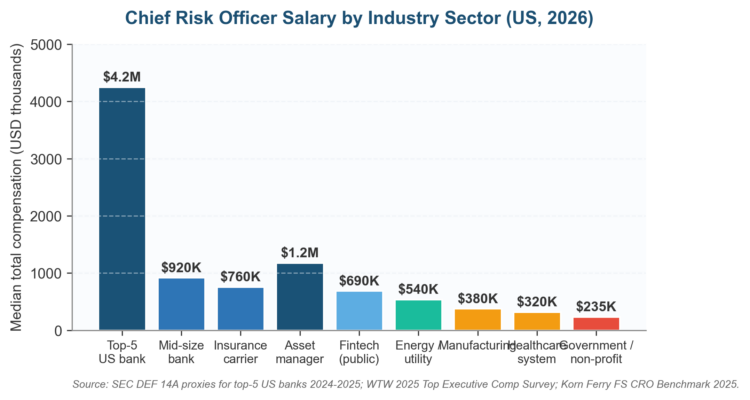
Figure 2. Chief risk officer salary by state by industry sector: where the role earns at the top end.
Industry Premium Detail: Chief Risk Officer Salary by State at Banks
Banking concentration drives most of the US CRO premium. The OCC Bank Director’s Toolkit and FFIEC Bank Holding Company Performance Reports anchor what US bank examiners expect. The operational risk management page and cybersecurity risk management guide carry the CRO scope.
Base, Bonus, and Equity: The Chief Risk Officer Salary by State Pay Mix
The chief risk officer salary by state pay mix tells the second half of the story. Top-5 US bank CROs receive about 10% of total comp in base salary, 25% in annual bonus, and 65% in long-term equity (restricted stock units, performance shares). The model concentrates pay at risk and forces multi-year retention.
Mid-market private firms invert the mix. A privately-held US mid-market CRO typically earns 60% base, 28% bonus, and 12% equity (often phantom stock or synthetic equity). The model trades upside for stability. PE-portfolio CROs sit in between: 35-45% base, 25-30% bonus, 25-35% equity plus a carry-linked exit incentive that does not appear in published comp surveys.
Knowing the pay mix matters for negotiation. A CRO comparing two offers (one at $400,000 all base, another at $500,000 with 40% in equity) needs to model vesting, performance hurdles, claw-back, and dilution risk to compare honestly. The WTW US Executive Pay Mix Survey 2025 carries the mix benchmarks. Pair the mix discussion with risk appetite statements examples to define the CRO mandate the package buys.
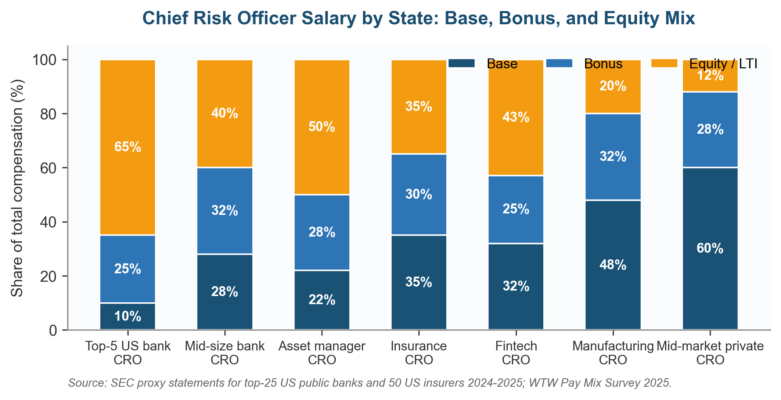
Figure 3. Chief risk officer salary by state pay mix: base, bonus, and equity across US firm types.
The Chief Risk Officer Salary by State Experience Curve
Experience compounds the chief risk officer salary by state outcome. A first-year US mid-market CRO earns around $195,000; a 16-20 year veteran in the same firm earns $480,000. The mid-market curve is steady but bounded. The bank curve is steeper, and the top-5 US bank curve is in a different shape entirely.
At a US mid-size bank, a first-year CRO earns about $325,000; the 20+ year veteran hits $1.05 million. At a top-5 US bank, the same career arc runs from $950,000 to $4.8 million. The curves diverge most aggressively between years 6-15, which is where banks promote the deputy CRO into the CRO chair on the back of demonstrated regulator engagement.
Years 16-20 plateau. The 20+ tier rises slowly because the role caps at full CRO and lateral moves between top banks rarely improve cash comp materially; the upside is equity vesting and severance protection. Korn Ferry’s 2025 FS benchmark puts US CRO median tenure at 4.2 years. The five steps of the risk management process anchor the daily work that drives the curve.
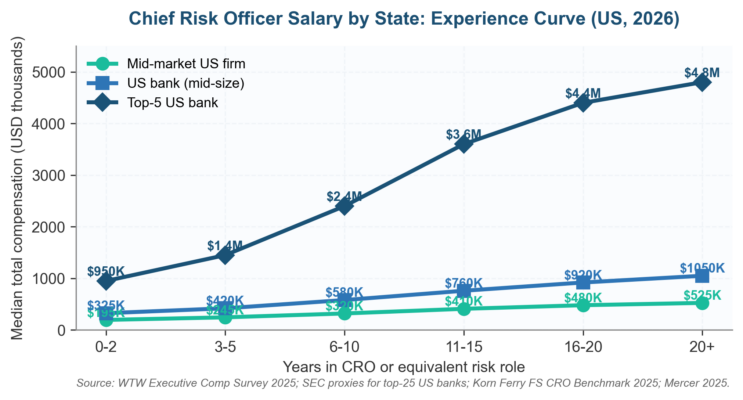
Figure 4. Chief risk officer salary by state experience curve: years in role drive different slopes by firm tier.
Public, Private, and PE-Owned: Chief Risk Officer Salary by State by Company Type
Company type is the fourth axis that determines chief risk officer salary by state. The S&P 500 median CRO total comp in 2026 sits near $1.45 million.
The Russell 2000 (small-cap public) median sits around $580,000. PE-portfolio US mid-market CROs run around $720,000, with a carry-linked exit incentive that can multiply the headline number at sale.
Private family-owned firms pay less in cash but trade volatility for stability. A typical US private family-owned CRO earns around $380,000, often with a benefits package and longer tenure. Federal SES risk leaders cap at OPM SES pay tables near $215,000.
The chief risk officer salary by state question requires picking the comparison group before comparing numbers. A CRO leaving a public S&P 500 firm for a PE-portfolio role at the same cash comp can win if the carry vests. The role of an enterprise risk management system varies enough across company types that the CRO mandate (and pay) shifts substantively from public to private.
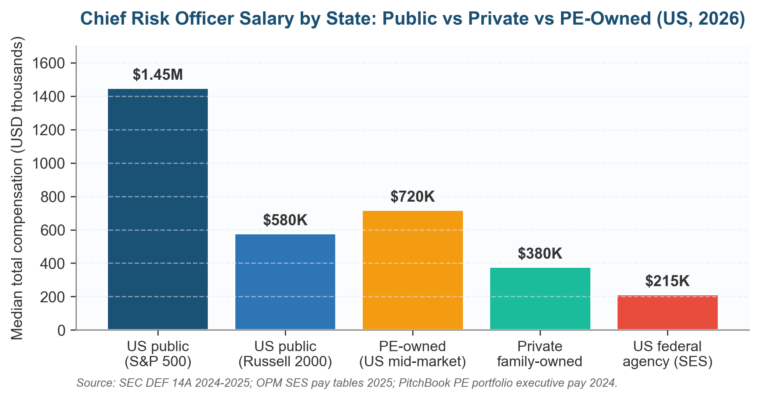
Figure 5. Chief risk officer salary by state by US company type: where the role earns most by ownership structure.
Frequently Asked Questions About Chief Risk Officer Salary by State
What is the average chief risk officer salary by state in the US?
The 2026 US median chief risk officer total compensation sits near $435,000 across all sectors. New York pulls the median upward at $785,000; Mississippi anchors the low end at $235,000. The state median is more useful than the national average because the financial-services concentration in NY, CA, CT, and IL skews the average above what most US risk leaders will see in any given metro.
How much do top-5 US bank chief risk officer salary by state numbers reach?
Top-5 US bank CRO total compensation in 2026 sits near $4.25 million median, with the highest packages above $9 million per SEC DEF 14A filings. JPMorgan, Bank of America, Wells Fargo, Citi, and Goldman Sachs make up the tier. The pay mix is heavily weighted toward equity (around 65% of total) with multi-year vesting and performance hurdles.
Which US state pays the lowest chief risk officer salary by state?
Mississippi anchors the low end at a 2026 median total comp around $235,000. West Virginia, Arkansas, North Dakota, and South Dakota cluster near $240,000-$280,000. The states with the lowest CRO pay typically have small financial-services sectors, fewer regulated entities, and CRO roles that pull more from BLS OEWS chief executive medians than from financial-sector premiums.
How does chief risk officer salary by state vary between banks and insurance?
US bank CROs earn more than US insurance CROs by 20-30% at the median in 2026, controlling for company size. The gap reflects bank operational-risk capital requirements under Basel III endgame and the SEC cyber 8-K clock. Insurance CROs catch up at top reinsurance and life carriers. The ISO 31000 vs COSO ERM framework comparison walks the underlying mandates.
What is the chief risk officer salary by state for a first-year CRO?
A first-year US CRO at a mid-market firm earns around $195,000 in 2026. At a mid-size bank the first-year median is closer to $325,000. At a top-5 US bank a first-year CRO appointed internally typically earns above $950,000 total comp (often with a sign-on equity grant). The first-year number depends heavily on whether the appointment is internal promotion or external hire.
Is the chief risk officer salary by state worth the responsibility?
US CRO median tenure runs 4.2 years per Korn Ferry’s 2025 FS benchmark, shorter than the CFO (5.8 years) or COO (5.3 years) at peer banks. The role carries personal liability under the SEC cyber 8-K rule, FFIEC examination findings, and OCC enforcement actions. The pay reflects both the responsibility and the elevated turnover risk, especially at top-5 banks where every CRO change is itself a market signal.
How does chief risk officer salary by state compare to CFO pay?
US CRO total comp typically runs 60-80% of the matched CFO total comp at the same firm. The gap is wider at top-5 banks (CRO around 50-55% of CFO) and narrower at heavily regulated firms. Bank board risk committees gained statutory authority parallel to audit committees, and the convergence of risk oversight with strategic planning has narrowed the gap further since 2018.
Do PE-owned US firms pay chief risk officer salary by state competitively?
PE-portfolio CROs in 2026 earn a $720,000 median cash comp, above the Russell 2000 median, but the upside is carry on portfolio exit. A typical PE CRO carry can add $500,000 to $3 million at a 4-7 year exit. Surveys understate PE comp because carry is not disclosed; PE chief risk officer salary by state requires modeling the exit multiple.
Common Pitfalls When Reading Chief Risk Officer Salary by State Data
Six interpretation mistakes recur in chief risk officer salary by state reporting. None are deliberate; all stem from blending dissimilar data sources. The Equilar 100 highest-paid executives report, Glassdoor CRO salary data, and the risk management techniques page all help bound the working ranges.
| Pitfall | Root cause | Remedy |
| Quoting an average instead of a median. | BLS publishes both; surveys often lead with mean. | Use median; report the 25th and 75th percentile alongside. |
| Conflating base salary with total compensation. | Cash base is easier to source than equity vesting. | Report base, bonus, equity separately; compare on total comp. |
| Ignoring sector when comparing states. | State-level data blends industries. | Filter by SIC or NAICS code; compare banking-to-banking. |
| Treating top-5 bank CROs as representative. | SEC DEF 14A is freely available; survey data is not. | Carve out top-5 separately; quote median for the rest. |
| Using stale data more than 24 months old. | Comp updates take 12-18 months to publish. | Cite vintage (e.g., 2024 OEWS, 2025 WTW); discount older data. |
| Ignoring PE carry and SES pension value. | Cash comp is visible; deferred and contingent comp is not. | Model carry NPV and pension PV alongside cash comp. |
| Reading one source in isolation. | BLS, SEC, WTW, Mercer all undercount different parts of the distribution. | Triangulate at least three sources; reconcile differences. |
Table 3. Seven pitfalls that derail chief risk officer salary by state interpretation.
The Chief Risk Officer Salary by State Horizon: 2026 to 2028
Three forces will reshape chief risk officer salary by state through 2028. AI risk responsibility leads: as US firms add AI governance to the CRO mandate, role scope and pay expand. Korn Ferry’s 2025 FS benchmark shows a 12-18% premium where the CRO formally owns AI risk. Pair AI scope with information security risk management for the broader cyber mandate.
Regulatory tightening follows close behind. The Basel III endgame US implementation phased to July 2027 and the SEC cyber 8-K rule push CRO accountability outward. The result is a premium at top-25 US bank holding companies and large insurers where regulator-facing weight commands a sharper market price.
Geographic redistribution closes the trio. Remote and hybrid US CRO roles cut the NY-to-rest-of-country differential by 15-25% for mid-market firms during 2023-2025. Expect partial reversion through 2027 as boards return to in-office expectations, but the structural shift in mid-market hiring is unlikely to fully unwind. Chief risk officer salary by state premiums for NY will hold but narrow at the mid-market.
US risk professionals planning the next move should benchmark every 12 months, cross-reference BLS OEWS against SEC proxies and at least one of WTW/Mercer/Korn Ferry, model the full pay mix, and discount published numbers for vintage. The integrated risk management approach defines the CRO mandate the package buys; BCMS business continuity management system page rounds out the resilience scope.
Infographic: Chief Risk Officer Salary by State in Six Numbers
Figure 6. The six chief risk officer salary by state numbers every US risk leader should carry into the next compensation discussion.
Next Steps on Chief Risk Officer Salary by State
Risk Publishing helps US risk professionals benchmark chief risk officer salary by state against the four axes (geography, industry, company type, pay mix) and position credibly during searches and annual reviews. Visit the about page for background, and contact the practice when the chief risk officer salary by state question is the next item on your annual review or job-change agenda.

Chris Ekai is a Risk Management expert with over 10 years of experience in the field. He has a Master’s(MSc) degree in Risk Management from University of Portsmouth and is a CPA and Finance professional. He currently works as a Content Manager at Risk Publishing, writing about Enterprise Risk Management, Business Continuity Management and Project Management.