
USAA grew its membership to 14.3 million military families in 2025 and its net worth to $38.6 billion, yet there is one construction coverage it still will not sell: builders risk insurance.
In a case logged by the consumer group United Policyholders in April 2026, a member starting a major renovation was told to cancel the homeowners policy rather than add construction coverage.
That gap explains why so many service members search whether USAA offers builders risk insurance and leave confused.
The short answer is no, USAA does not underwrite it. The longer answer covers what USAA does provide during a build, what this coverage costs in 2026, and which carriers actually sell it to USAA members.
| Key Takeaways |
| USAA does not offer this coverage; its 14.3 million members must buy this coverage from a specialist carrier. |
| Builders risk insurance protects a structure under construction against fire, theft, wind, and water, perils a standard homeowners policy drops once a home is vacant or gutted. |
| A major renovation can suspend USAA homeowners coverage after 30 days of vacancy, leaving an uninsured gap that this policy is built to fill. |
| Typical builders risk insurance runs 1% to 4% of total project cost; a $500,000 custom home budgets $5,000 to $20,000. |
| Top 2026 alternatives include Travelers, Nationwide, Zurich and its US Assure program, Chubb, and The Hartford, all rated A or higher by AM Best. |
The Short Answer: USAA Does Not Sell Builders Risk Insurance
The core question has a direct answer. USAA does not offer builders risk insurance, and it never has as a standalone policy or a rider.
Its product shelf runs to auto, homeowners, renters, life, and travel insurance, plus banking, but construction-phase coverage sits outside that lineup.
Any USAA member building or gutting a home needs a separate policy from another carrier.
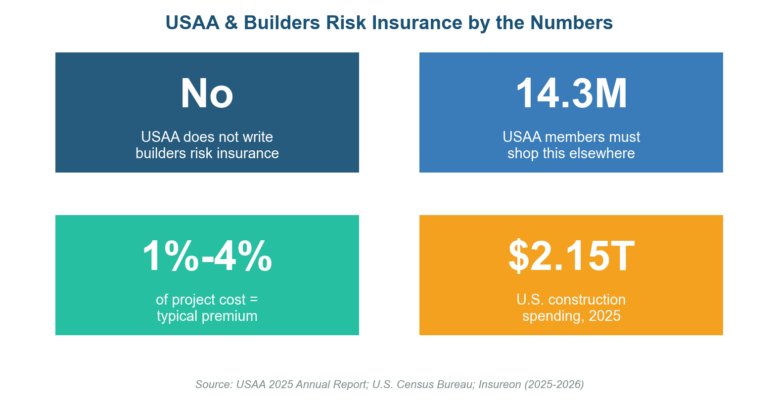
Figure 1. USAA does not write builders risk insurance, so its 14.3 million members shop a specialist market.
This is not a knock on USAA. The insurer outscored every ranked home insurer in J.D. Power’s 2025 study, though its military-only membership keeps it outside the official rankings, and it draws fewer regulatory complaints than its size predicts, per NAIC data.
This product simply belongs to a specialty commercial line that USAA, built around personal lines for the military community, has chosen not to write.
What This Coverage Actually Covers
Before weighing alternatives, it helps to know what you are buying. Builders risk insurance, which IRMI also calls course of construction insurance, protects a building while it is being built or renovated.
It covers the structure, the materials staged on site, and often the materials in transit to the job, against losses a finished-home policy was never designed to absorb.
| Builders risk insurance typically covers | Builders risk insurance typically excludes |
| The structure under construction | Wear, tear, and gradual deterioration |
| Materials, fixtures, and supplies on site | Faulty workmanship, design, or materials |
| Materials in transit or in temporary storage | Earthquake and flood (endorsement needed) |
| Fire, lightning, wind, hail, theft, vandalism | Mechanical breakdown and employee theft |
| Optional soft costs: lost rent, loan interest | Loss after the project is complete |
What a standard builders risk policy covers, and the gaps to buy back by endorsement.
The covered perils read like a construction site’s worst days: fire, windstorm, hail, theft, vandalism, and explosion.
Theft leads the claim count by a wide margin; the NICB logs more than 11,000 construction-equipment thefts a year, and the National Equipment Register puts annual losses as high as $1 billion with under 7% of stolen gear ever recovered.
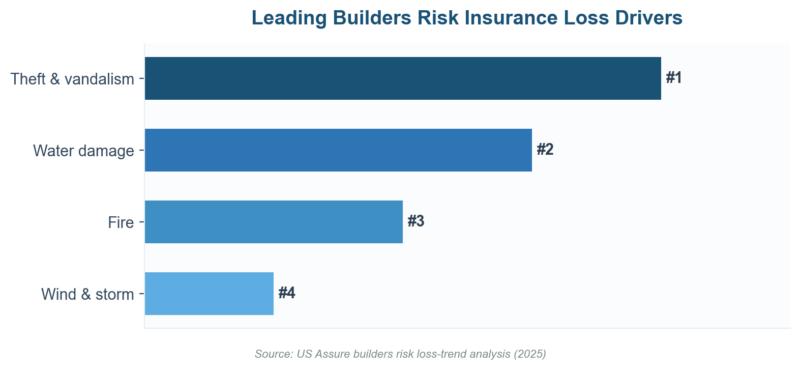
Figure 2. Theft, water, fire, and storm rank as the top construction-coverage loss drivers.
Coverage usually runs only through the construction period, then converts to a permanent property policy at completion.
The owner, the general contractor, or the lender can carry it, and lenders almost always require it before releasing construction funds. Knowing the line between a hazard and a risk keeps owners from assuming protection they do not actually hold.
Why USAA Skips This Coverage and the Gap It Leaves
Understanding the coverage makes USAA’s absence from it easier to read. A standard homeowners policy, as the Insurance Information Institute explains, assumes someone lives in a finished, occupied house.
The moment a home is gutted, vacated, or extended, that assumption breaks, and most homeowners policies, USAA’s included, pull back coverage instead of expanding into construction cover.
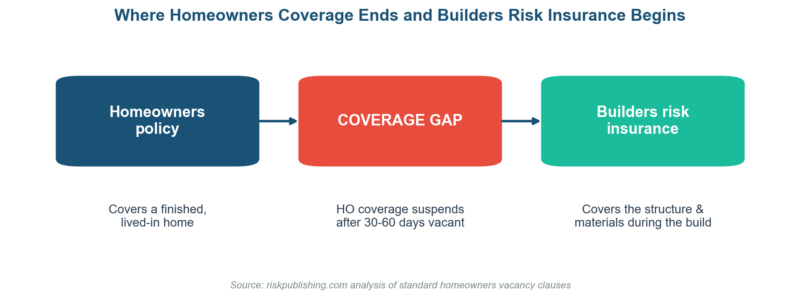
Figure 3. The window between a lapsed homeowners policy and an active builders risk insurance policy is where projects go uninsured.
USAA’s own contract spells out the limit. It suspends coverage for vandalism, malicious mischief, and glass breakage once a dwelling sits vacant beyond 30 days before a loss.
A down-to-the-studs renovation trips that clause fast. The United Policyholders case shows the result: USAA asked the member to drop the homeowners policy, not stretch it into construction cover.
That leaves a dangerous window. Between the day a homeowners policy lapses and the day a builders risk policy starts, an uninsured fire or theft can wipe out a project.
Closing it is textbook risk transfer: move the construction-phase exposure to a carrier that prices it, because a personal-lines policy will not quietly stretch to cover the build.
When the Coverage Isn’t an Option: What USAA Offers Instead
USAA will not write this coverage, but it still plays a useful role during a build, provided you set expectations correctly. That role shifts from insuring the construction to insuring the property around it, which still matters for the land, your liability, and the finished structure after work wraps up.
| During construction | Does USAA cover it? | What fills the gap |
| Damage to the structure being built | No | Builders risk insurance |
| Home vacant during major renovation | Limited / suspended | USAA unoccupied-home policy |
| Small remodel, owner still living in home | Often, case by case | Existing homeowners policy |
| Personal liability and the land | Yes | USAA homeowners policy |
| Belongings and identity theft | Yes | USAA homeowners policy |
How USAA coverage holds or drops during a build, and where the construction policy takes over.
For homes that sit empty during work, USAA offers unoccupied and vacant home coverage aimed at the vandalism and maintenance risks empty properties attract.
For owners who keep living on site through a smaller remodel, the existing homeowners policy may hold, though USAA underwriters decide case by case. The safe move is to confirm in writing before the first wall comes down.
USAA can also keep covering what a construction policy never touches. Personal liability, the land itself, and your belongings stay within the homeowners or renters policy, and USAA bundles extras like identity-theft protection up to $5,000.
The practical play is to pair USAA’s personal-lines strength with a dedicated builders risk policy from a construction specialist.
What Builders Risk Insurance Costs in 2026
Cost is usually the next question once members accept they must shop elsewhere. The good news is that this coverage is modest relative to a project’s value, and 2026 pricing is softening in calmer regions.
Most policies land between 1% and 4% of total construction cost, the baseline Insureon and other brokers use when they quote a build.
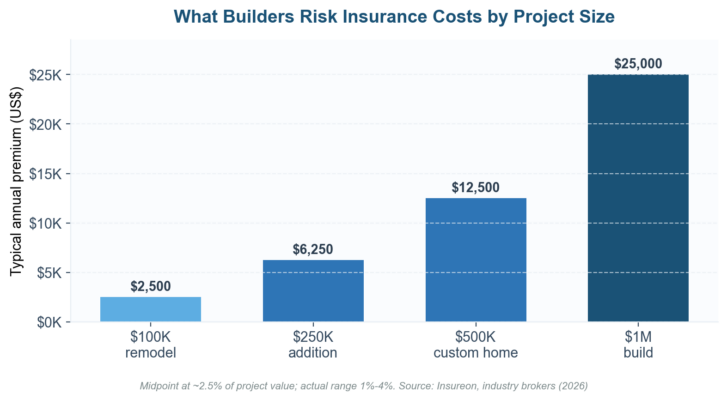
Figure 4. Construction premiums scale with project value, typically 1% to 4% of total cost.
Real numbers make the percentage concrete. A $100,000 remodel might run $1,000 to $5,000 in premium, while a $500,000 custom home typically budgets $5,000 to $20,000. Smaller contractors often pay near $1,259 a year for routine jobs.
A quantitative read of project value, duration, and location drives every quote a carrier returns.
| Cost driver | Effect on a builders risk insurance premium |
| Project location | Catastrophe-zone sites (hurricane, wildfire, flood) price highest |
| Total completed value | Higher rebuild value raises the limit and the premium |
| Construction type | Combustible wood frame costs more than masonry or steel |
| Project duration | Longer builds extend exposure and raise cost |
| Deductible and endorsements | Higher deductibles cut premium; flood or wind buy-backs add to it |
The factors carriers weigh when they price this coverage.
Location is the single biggest lever. Carriers map each site against hurricane, wildfire, tornado, and flood models, so a Gulf Coast build prices higher than an inland one.
Industry analysts expect builders risk insurance rates to soften 5% to 7% in non-catastrophe zones through 2026, while high-hazard projects still face 5% to 15% increases. Material costs and project length push premiums the same way.
Best Builders Risk Insurance Providers for USAA Members
With USAA out of the picture, the market still offers strong, financially solid options. The carriers below all hold A or higher AM Best ratings and write this coverage across the United States, including the states where most military families are stationed. The names many older guides cite still hold up, alongside a few additions covered below.
| Builders risk insurance provider | AM Best rating | Best fit |
| Travelers | A++ (Superior) | Owners and contractors, all 50 states |
| Nationwide | A+ (Superior) | General contractors; #1 for construction (MoneyGeek) |
| Zurich / US Assure | A+ (Superior) | Residential and commercial up to $75 million |
| Chubb | A++ (Superior) | High-value and complex commercial builds |
| The Hartford | A+ (Superior) | Mid-market owners and remodelers |
| State Farm | A++ (Superior) | Homeowners and owner-builders |
Leading providers for USAA members in 2026.
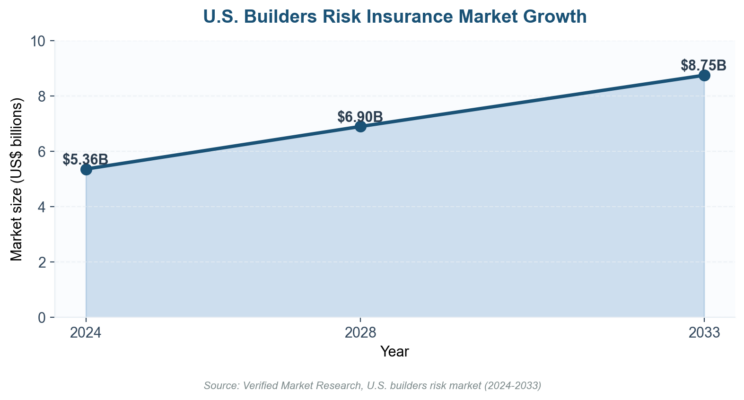
Figure 5. A growing U.S. builders risk insurance market means more carriers competing for USAA members’ projects.
Travelers, the second-largest commercial property-casualty insurer in the country, carries AM Best’s top A++ rating and covers contractors in all 50 states.
Nationwide, a Fortune 100 mutual marking its centennial in 2026, ranks first for construction coverage in MoneyGeek’s analysis. Both write this coverage for owners and contractors alike.
Zurich is the oldest builders risk insurance writer in the world, and its program reaches U.S. buyers through US Assure, which underwrites residential and commercial projects up to $75 million. Chubb suits high-value and complex commercial builds, while The Hartford, in business since 1810, remains a dependable mid-market choice.
Demand explains the crowded field. The U.S. construction-insurance market reached about $5.36 billion in 2024 and is on track for $8.75 billion by 2033, per Verified Market Research.
Rising construction values and supply-chain volatility in materials keep pushing more projects toward dedicated coverage over improvised endorsements.
Choosing the Right Policy: A Practitioner’s Checklist
Picking a carrier is only half the job; the policy terms decide whether you are actually covered. We approach this the way we would any risk assessment, defining the exposure first and then matching the coverage to it line by line.
The questions below separate a policy that pays at claim time from one that quietly disappoints.
- Match the limit to full completed value, not just current spend, so a late-stage fire is fully covered.
- Confirm the term covers your real timeline, with an extension option for the delays that hit most builds.
- Buy back the exclusions that matter on your site, such as wind, flood, or earthquake, before a storm exposes the gap.
- Add soft costs like lost rent, loan interest, and re-permitting, which a bare-bones policy ignores.
- Name every interested party, owner, contractor, and lender, to avoid a coverage fight in the middle of a claim.
In practice, a policy bought on price alone often fails on scope, leaving owners to absorb losses they assumed were covered.
Treat the purchase the way you would any third-party risk decision, reading the exclusions as carefully as the premium and grounding it in a clear risk mitigation plan before you sign.
Where the Market Is Heading
The coverage you buy in 2026 will not look like the policy of five years ago. Three forces, climate, technology, and material costs, are reshaping how carriers price and monitor construction risk.
USAA members shopping this coverage should read the direction of travel before locking in a multi-year build, because the terms are moving faster than the headlines suggest.
| Force reshaping builders risk insurance | Effect on premiums | What buyers should do |
| Climate and catastrophe modeling | Wider gap between calm and exposed sites | Confirm wind and flood terms early |
| Site monitoring (IoT, drones) | Premium credits for monitored sites | Adopt sensors to earn discounts |
| Rising material costs | Higher rebuild value, risk of underinsurance | Revisit limits mid-project |
Three forces reshaping the market pricing through the rest of the decade.
Climate is rewriting the rate map. Carriers now lean on catastrophe models for wildfire, hurricane, and severe storms, widening the gap between calm and exposed regions.
The same key risk indicators that flag a portfolio’s drift now show up in builders risk underwriting, as insurers price the weather a project will actually face across its build window.
Technology brings the second shift. Insurers increasingly use IoT sensors and drone imagery to monitor active sites, catching water leaks and theft before they become claims, which feeds directly into stronger operational risk management.
Expect premium credits for owners who adopt site monitoring, mirroring the telematics discounts already common in auto insurance and broader business continuity planning.
Material costs drive the third. When lumber, steel, or copper prices spike, the cost to rebuild after a loss climbs with them, and an underinsured policy leaves owners short.
Smart buyers now revisit limits mid-project and treat supply-chain risk as part of their insurance math, not a separate procurement worry handled by another team.
Coverage Mistakes That Leave Owners Exposed
Even buyers who shop carefully fall into the same traps, usually because this coverage behaves differently from the homeowners coverage they already know.
The errors below show up again and again in denied claims, and every one is avoidable with a little upfront discipline and a frank conversation with the broker before the policy binds.
- Letting the homeowners policy lapse before the builders risk insurance policy is bound, opening an uninsured gap.
- Insuring only the spent-to-date amount instead of full completed value, leaving late-stage losses underpaid.
- Ignoring soft costs, so loan interest and lost rent during a rebuild come straight out of pocket.
- Assuming flood or earthquake is included when both are standard exclusions that require a separate endorsement.
- Forgetting to extend the term when the project runs long, the single most common cause of a coverage lapse.
The fix in each case is the same: read the policy as a risk document, not a receipt. Mapping the build against a basic risk identification checklist catches most of these before they bite.
A short call with the carrier to confirm limits, term, and exclusions costs nothing and prevents the dispute that follows a surprise denial after a fire or theft.
Your Questions Answered
Does USAA offer builders risk insurance for new construction?
No. USAA does not offer builders risk insurance for new construction, renovation, or any course-of-construction project, as a standalone policy or a homeowners rider.
Members building or gutting a home must buy it from a specialist carrier such as Travelers, Nationwide, or Zurich’s US Assure program, then convert to a USAA homeowners policy once the build is complete.
Can I keep my USAA homeowners policy during a renovation instead of this coverage?
Sometimes, but not for major work. USAA homeowners coverage may hold through a small remodel if you keep living in the home, yet it suspends key protections once the house is vacant beyond 30 days.
For a down-to-the-studs project, USAA typically moves you to unoccupied-home coverage, leaving a separate policy to handle the construction itself.
Who needs this policy, the owner or the contractor?
Either party can carry the coverage, and the construction contract should say which one does. Owners often buy it on custom homes and major renovations, while general contractors carry it on spec and commercial builds.
Lenders almost always require proof of coverage before releasing construction funds, so the named insured should match whoever holds the financial risk.
How much does builders risk insurance cost for a custom home?
Builders risk insurance for a custom home generally runs 1% to 4% of total construction cost. A $500,000 build typically budgets $5,000 to $20,000, depending on location, materials, and project length.
Sites in hurricane, wildfire, or flood zones price at the higher end, while inland, low-hazard projects in 2026 are seeing modest rate relief.
What does the policy not cover?
Builders risk insurance excludes wear and tear, faulty workmanship and design, mechanical breakdown, employee theft, and usually flood and earthquake. It also stops at project completion, when a permanent property policy takes over.
Many exclusions, including wind in coastal zones or flood, can be added back by endorsement, so read the exclusions list before assuming a peril is covered.
How long does the policy last?
Such a policy usually runs for the construction period, commonly three, six, or twelve months, and ends when the project is finished and occupied.
Most carriers allow one extension if the build runs long, but it must be requested before the term expires. Letting the policy lapse mid-project is a leading cause of denied claims.
Is this coverage the same as contractor’s general liability?
No. Builders risk insurance covers physical damage to the project itself, the structure and materials, while general liability covers third-party bodily injury and property damage the contractor causes. A complete construction program carries both.
Owners should confirm their contractor’s liability coverage separately, since the policy will not pay an injured visitor’s claim.
Where can USAA members buy builders risk insurance?
USAA members can buy it from any major construction insurer or broker, since USAA does not sell it. Strong 2026 options include Travelers, Nationwide, Chubb, The Hartford, and Zurich’s US Assure program, plus online marketplaces like Insureon for smaller projects. Comparing two or three quotes on identical limits and terms is the fastest route to a fair price.
The question that started this guide has a clean answer. USAA does not offer this coverage, but that gap is easy to close once you know where to look.
Pair USAA’s award-winning personal lines with a dedicated builders risk policy from a construction specialist, and your project stays covered from groundbreaking to move-in day without an exposed week in between.
Get Your Builders Risk Insurance Strategy Right
riskpublishing.com helps U.S. homeowners, contractors, and risk managers turn construction coverage from a guessing game into a plan.
We map the exposures, compare your coverage options, and align them with your broader enterprise risk management and risk management techniques.
Explore our risk assessment methodology and the five steps of the risk management process, or reach the team through our contact page for a builders risk insurance review.

Chris Ekai is a Risk Management expert with over 10 years of experience in the field. He has a Master’s(MSc) degree in Risk Management from University of Portsmouth and is a CPA and Finance professional. He currently works as a Content Manager at Risk Publishing, writing about Enterprise Risk Management, Business Continuity Management and Project Management.