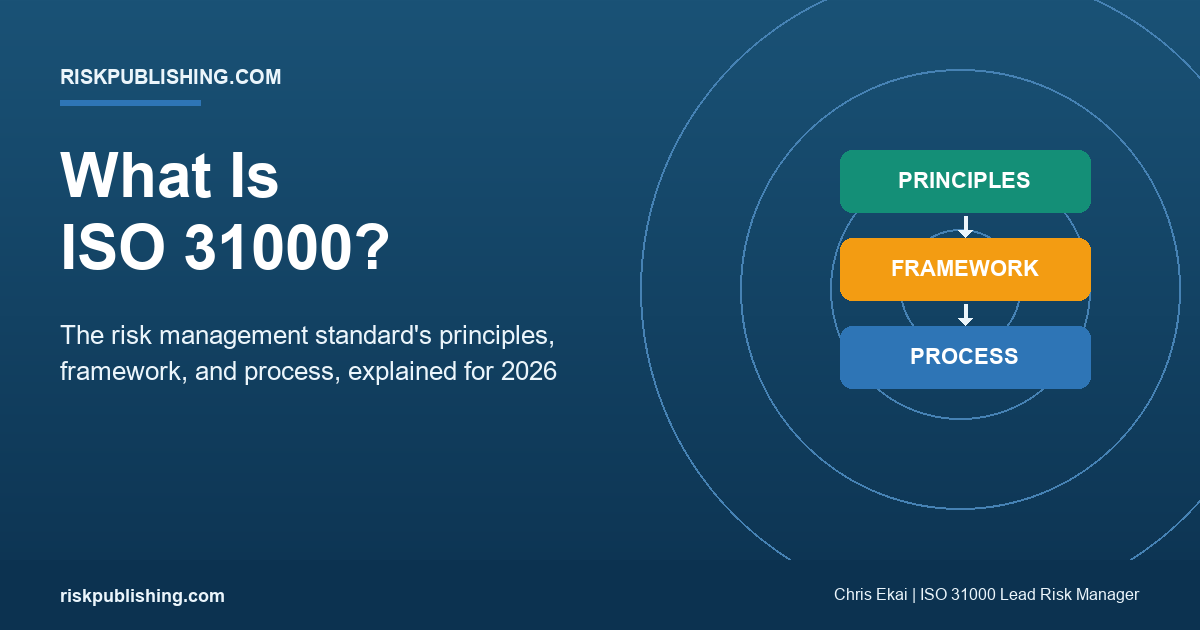
What Is ISO 31000?
ISO 31000: Key Takeaways ISO 31000:2018 is the current international risk management standard: eight … Read more
Enterprise risk management (ERM) is the discipline of identifying, assessing, and treating the full portfolio of risks that could prevent an organization from meeting its strategic objectives — financial, operational, strategic, compliance, and emerging risks alike. Unlike siloed risk functions, ERM gives boards and executives a single, integrated view of exposure so capital, controls, and management attention can be allocated where they move the needle most.
A mature ERM programme rests on three foundations. First, a governance framework — typically ISO 31000 or COSO ERM — that defines roles, escalation paths, and the three lines of defence. Second, a clear risk appetite statement that translates board tolerance into quantitative limits business units can actually manage against. Third, a repeatable risk management lifecycle covering identification, assessment, treatment, monitoring, and reporting.
Operationally, ERM depends on disciplined risk assessment — inherent vs residual scoring, control effectiveness testing, and scenario analysis — to keep the risk register honest. It also connects to sibling disciplines: business continuity management covers how the organisation survives disruption, information security management handles cyber and data risks, and governance, risk, and compliance (GRC) integrates the tooling and reporting that sits above all three.
Use this hub to explore frameworks, practitioner templates, certification guides (CRISC, FRM, PRM), and software comparisons. Whether you’re stood up a new ERM function or maturing an existing one, the resources below cover the methods, metrics, and reporting practices used by risk teams across financial services, healthcare, technology, and the public sector.
ISO 31000: Key Takeaways ISO 31000:2018 is the current international risk management standard: eight … Read more

Key Takeaways # Takeaway 1 A risk management plan is the governing document that … Read more
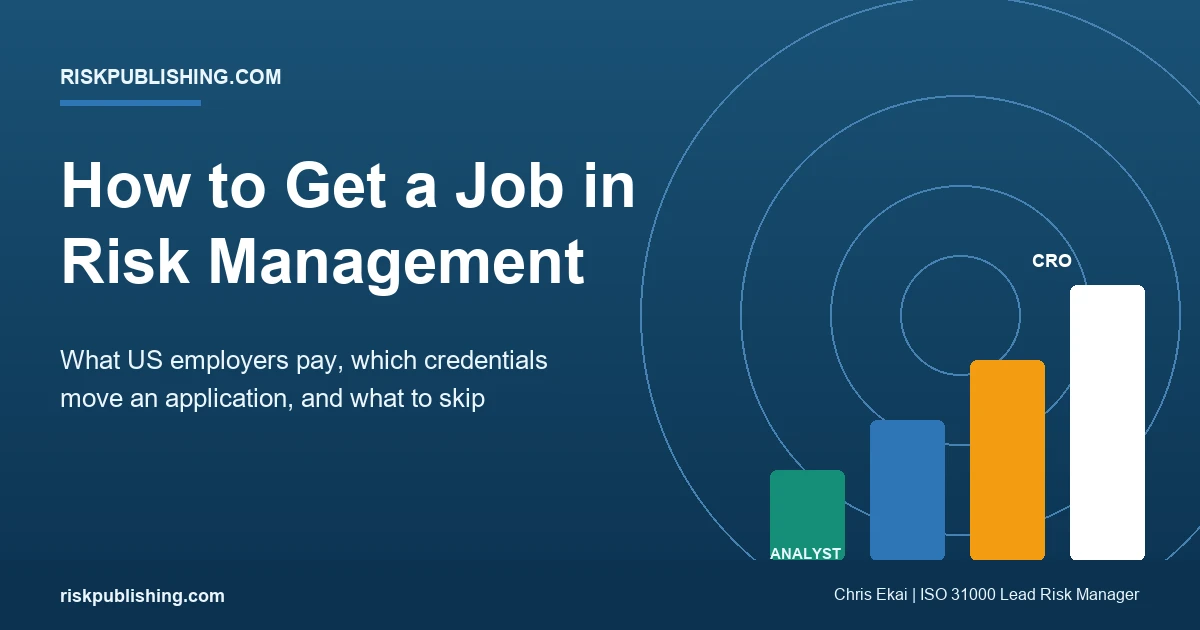
The US Bureau of Labor Statistics put the median wage for financial risk specialists … Read more

Risk management software can be a powerful tool for identifying, assessing, and mitigating risks. … Read more

Measuring risk in private equity can be more complex than in public markets due … Read more
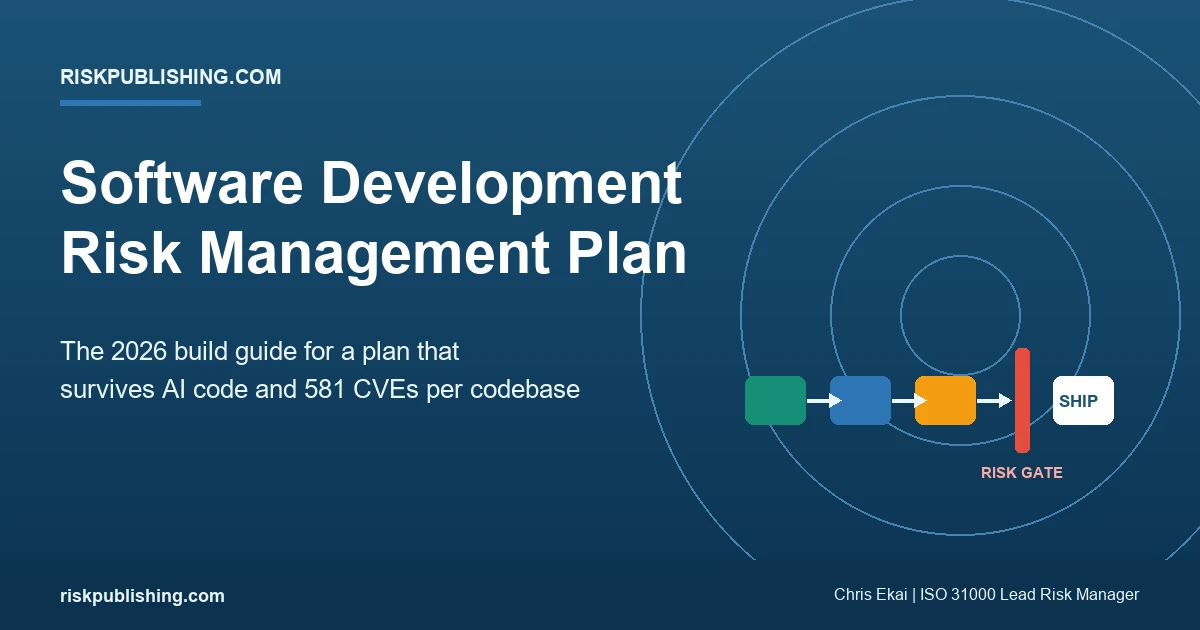
On 25 February 2026, Black Duck published its Open Source Security and Risk Analysis … Read more
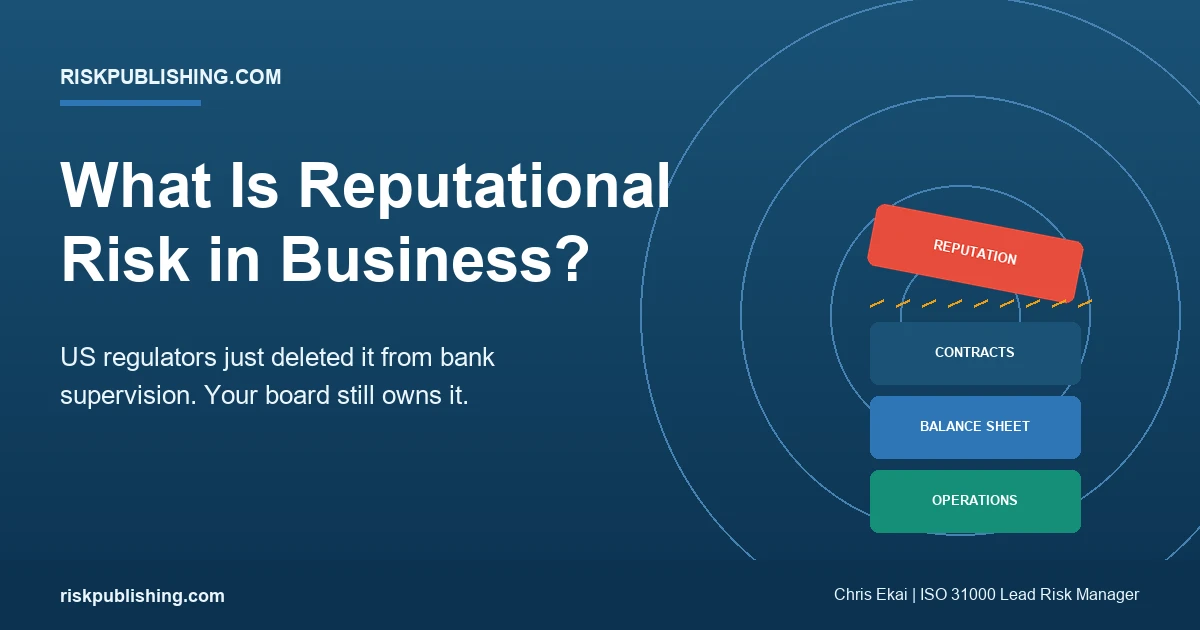
Cracker Barrel unveiled a simplified logo on 19 August 2025, dropping the Uncle Herschel … Read more
A risk management program is the permanent structure an organization uses to find, rate, … Read more

Risk response planning is the step that turns a scored risk register into commitments: … Read more

Enterprise Risk Management (ERM) is a comprehensive and integrated framework for managing risks and … Read more
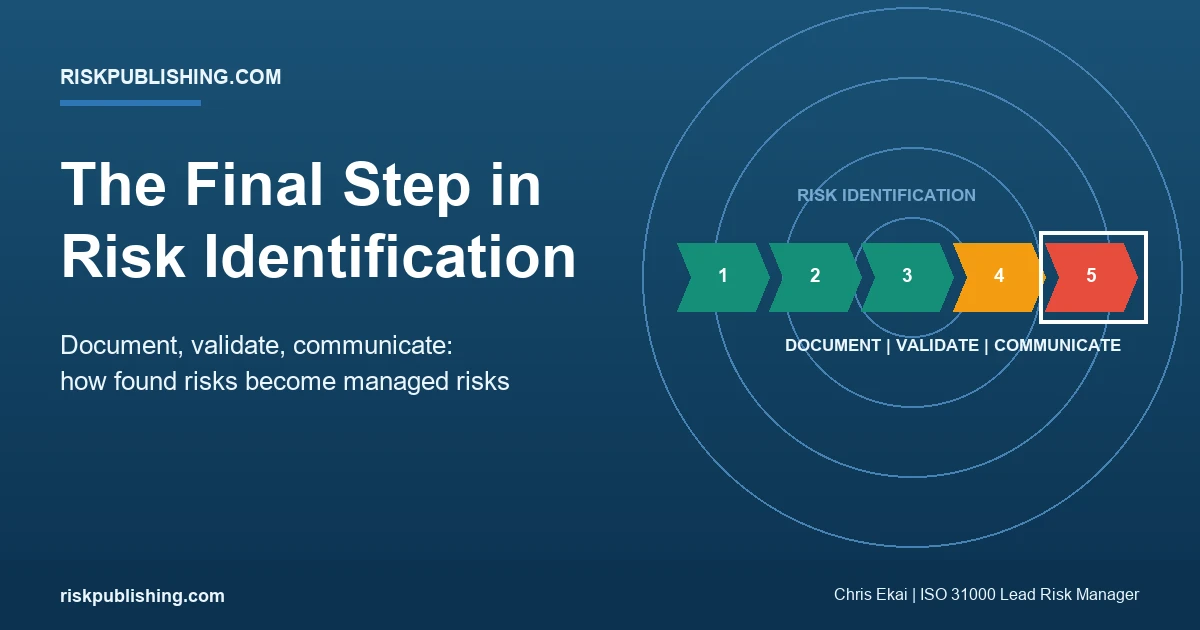
The final step in the risk identification process is documenting the identified risks in … Read more

Risk response is a process in risk management that involves identifying, assessing, and controlling … Read more