
How Do You Manage Risk
How do you manage risk? Set the scope and appetite first, then identify what … Read more
Enterprise risk management (ERM) is the discipline of identifying, assessing, and treating the full portfolio of risks that could prevent an organization from meeting its strategic objectives — financial, operational, strategic, compliance, and emerging risks alike. Unlike siloed risk functions, ERM gives boards and executives a single, integrated view of exposure so capital, controls, and management attention can be allocated where they move the needle most.
A mature ERM programme rests on three foundations. First, a governance framework — typically ISO 31000 or COSO ERM — that defines roles, escalation paths, and the three lines of defence. Second, a clear risk appetite statement that translates board tolerance into quantitative limits business units can actually manage against. Third, a repeatable risk management lifecycle covering identification, assessment, treatment, monitoring, and reporting.
Operationally, ERM depends on disciplined risk assessment — inherent vs residual scoring, control effectiveness testing, and scenario analysis — to keep the risk register honest. It also connects to sibling disciplines: business continuity management covers how the organisation survives disruption, information security management handles cyber and data risks, and governance, risk, and compliance (GRC) integrates the tooling and reporting that sits above all three.
Use this hub to explore frameworks, practitioner templates, certification guides (CRISC, FRM, PRM), and software comparisons. Whether you’re stood up a new ERM function or maturing an existing one, the resources below cover the methods, metrics, and reporting practices used by risk teams across financial services, healthcare, technology, and the public sector.
How do you manage risk? Set the scope and appetite first, then identify what … Read more
Why is risk management important? Because it converts survivable surprises into managed events: it … Read more

In organizations, risk can be defined as the potential for events or actions to … Read more

Risk tolerance is a concept in finance and investing that refers to the uncertainty … Read more
What Is Risk Identification What is risk identification? It is the step in the … Read more

Risk culture is the system of shared values, attitudes, and behaviors that shapes how … Read more
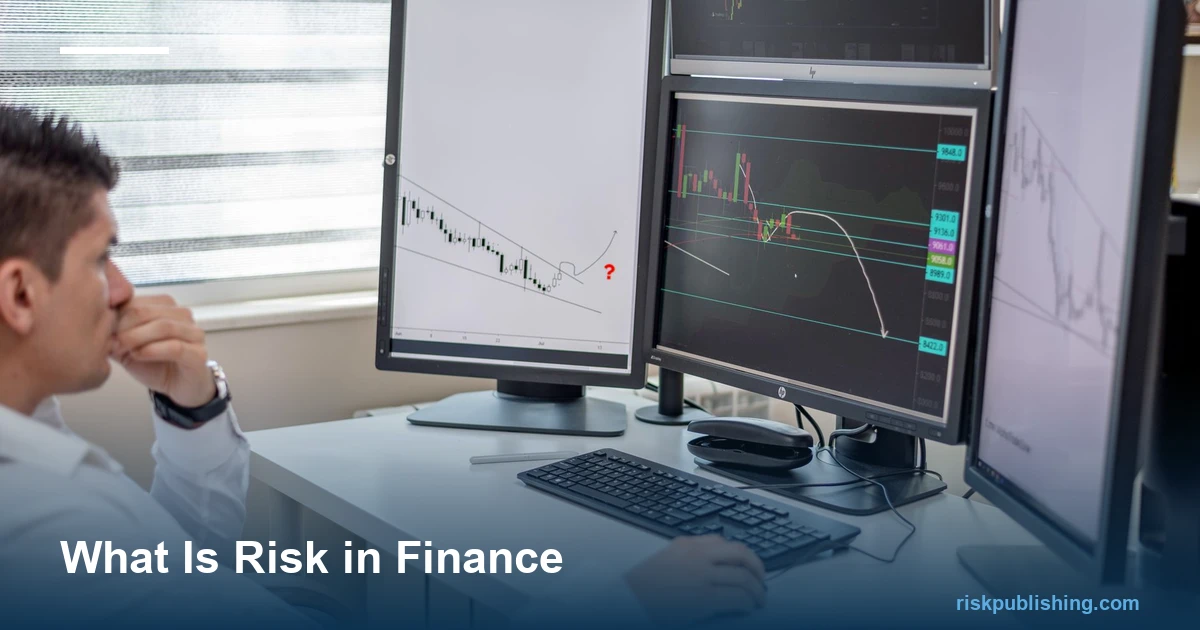
Risk in finance is the chance that an investment’s actual return differs from the … Read more

Risk appetite is a concept in risk management that refers to the level and … Read more

Integrated risk management is the practice of running one risk taxonomy, one scoring scale … Read more

Enterprise Risk Management(ERM) provides organizations with a systematic approach to identifying, assessing, prioritizing, and … Read more

Risk controls refer to the policies and procedures put in place by organizations to … Read more

A currency swap is a financial instrument that enables two parties to exchange currencies … Read more