In April 2026, U.S. banking regulators retired SR 11-7, the model-risk rulebook that had governed risk teams for 15 years, replacing it with SR 26-2. Three months earlier, Gartner had retired its two-decade-old Integrated Risk Management Magic Quadrant.
The ground under enterprise risk is moving, and the software is moving with it. Buyers now choose enterprise risk management software in a market Gartner reframed and analysts re-scored within the past year. Before any shortlist, nail down the enterprise risk management framework the platform must serve, using the five-stage build in our guide.
Most programs are not keeping pace. The AICPA and NC State 2025 State of Risk Oversight survey found only 35% of US organizations run a complete enterprise risk management process, and just 11% see risk management as a competitive advantage.
Enterprise risk management software is how the strongest programs close that gap, automating data collection, enforcing accountability, and giving boards the real-time visibility they now demand. The right platform turns a quarterly compliance ritual into a live strategic function. The wrong sequence is buying first, so settle the operating model before buying a platform.
This guide compares the 10 best enterprise risk management software platforms for 2026 across risk depth, automation and AI, framework coverage, reporting, integrations, and pricing. It draws on the October 2025 Gartner GRC Magic Quadrant, the May 2026 Forrester Wave, and verified practitioner reviews.
|
Key Takeaways |
|
The category was just re-scored. Gartner replaced its IRM Magic Quadrant with a GRC Tools quadrant (October 2025) naming five Leaders: Archer, Optro (formerly AuditBoard), Diligent, IBM OpenPages, and LogicGate. |
|
Maturity lags ambition. Only 35% of US organizations have a complete ERM process and 32% rate their oversight as mature, the core business case for enterprise risk management software. |
|
The market is ERM-specific or GRC-broad. Pure ERM software runs about $6 billion in 2025 toward $12 billion by 2030 (14.8% CAGR); the wider GRC platform market is roughly $49–72 billion. The difference is scope, not disagreement. |
|
Match the platform to your size and stack. Mid-market buyers gravitate to LogicGate and Optro; large regulated enterprises to MetricStream, Archer, and IBM OpenPages; ServiceNow shops to ServiceNow IRM. |
|
AI and resilience are the 2026 dividing lines. Agentic AI, continuous controls monitoring, and the convergence of ERM, cyber, and operational resilience now separate the leaders from the legacy suites. |
Why Enterprise Risk Management Software Matters in 2026
Three forces are reshaping what organizations need from enterprise risk management software, and none of them rewards a spreadsheet. Each pushes risk data toward a single, governed, board-visible system.
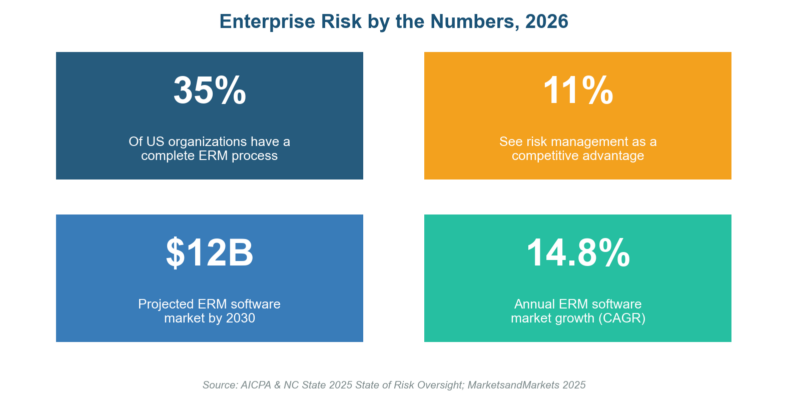
Figure 1. The maturity and market numbers that make enterprise risk management software a board-level priority.
Regulatory acceleration. Cyber-disclosure rules, the new SR 26-2 model-risk guidance, and operational-resilience expectations now span multiple regulators at once. The SEC’s climate-disclosure rule, cited in older guides, was abandoned in 2025, so do not build a program around it.
Interconnected risk. Cyber incidents cascade into operational outages, supplier failures trigger reputational damage, and geopolitical shifts move financial exposure overnight. Modern enterprise risk management software must connect registers across domains rather than treat them as silos. Our guide to integrated risk management covers the taxonomy and scoring work that has to exist before any platform can join those registers.
Board-level scrutiny. Risk committees now expect quantified exposures and audit-trail accountability. NACD’s 2025 survey found 77% of directors discuss the financial implications of cyber incidents, a 25-point jump from 2022, which is why board-ready reporting is now a core feature. Before comparing platforms it helps to be clear on why enterprise risk management matters to a board in the first place.
The Enterprise Risk Management Software Market: Size and Growth
Before comparing platforms, set expectations on the market, because the headline numbers diverge wildly. The gap is about scope, not analyst disagreement.
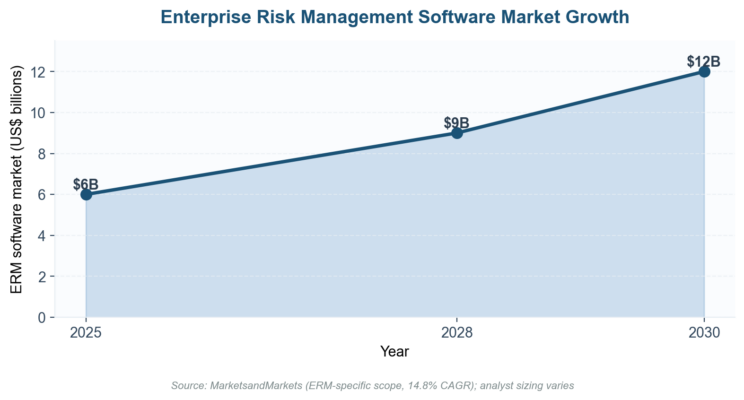
Figure 2. Enterprise risk management software market growth on the ERM-specific definition.
On the narrow, ERM-specific definition, MarketsandMarkets puts the market near $6 billion in 2025, growing to about $12 billion by 2030 at a 14.8% CAGR. Other firms model 8% to 15% depending on what they count.
Widen the lens to full GRC and EGRC platforms and the figures jump to roughly $49 to $72 billion, because that scope bundles audit, compliance, policy, and IT risk. Most enterprise risk management software is now sold as a module inside one of those broader suites.
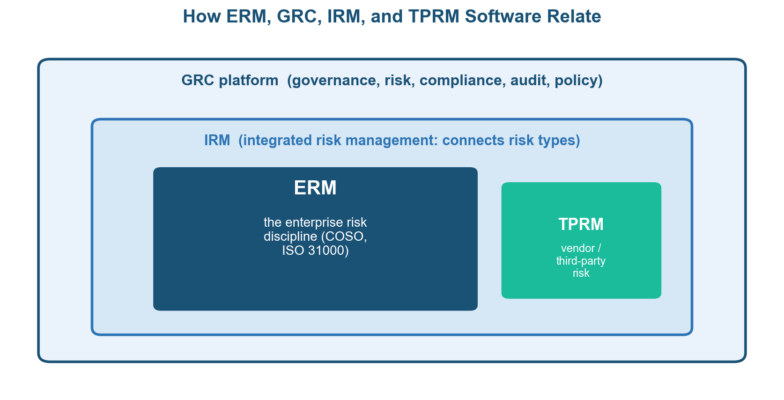
Figure 3. Where enterprise risk management software sits among GRC, IRM, and TPRM tools.
Three drivers explain the growth: multi-jurisdiction regulation, the spread of AI governance and ESG reporting demands, and a board-level shift that treats risk technology as infrastructure rather than overhead.
How We Evaluated These Enterprise Risk Management Software Platforms
Choosing enterprise risk management software is a multi-year commitment with high switching costs, so our method weights what practitioners use daily over demo-friendly features. Before comparing platforms at all, it helps to settle how to choose risk assessment software against the method you already run. The criteria align with the ISO 31000 risk process.
|
Criterion |
Weight |
What we assessed |
|
Risk management depth |
25% |
Identification, qualitative and quantitative assessment, treatment tracking, KRIs, scenario and bow-tie analysis |
|
Framework coverage |
20% |
Native COSO ERM, ISO 31000, NIST CSF, Basel, SOX, EU AI Act mapping without duplication |
|
Reporting and analytics |
20% |
Board dashboards, heat maps, Monte Carlo simulation, audit-committee exports |
|
Integration and architecture |
15% |
APIs, pre-built connectors, SSO, cloud or on-prem flexibility |
|
Usability and adoption |
10% |
Interface, learning curve, role-based views, no-code configuration |
|
Pricing and total cost |
10% |
License model, implementation cost, three-year total cost of ownership |
Table 1. The weighted criteria behind our enterprise risk management software rankings.
Scores draw on the 2025 Gartner Magic Quadrant for GRC Tools, the Forrester GRC Wave (Q2 2026), Gartner Peer Insights, and verified customer reviews. No vendor paid for placement.
Best Enterprise Risk Management Software: Top 10 Platforms for 2026
The October 2025 Gartner quadrant is the freshest map of the field, naming five Leaders, six Challengers, and five Niche Players, with no Visionaries. Use it to anchor a shortlist, then read the profiles for fit.
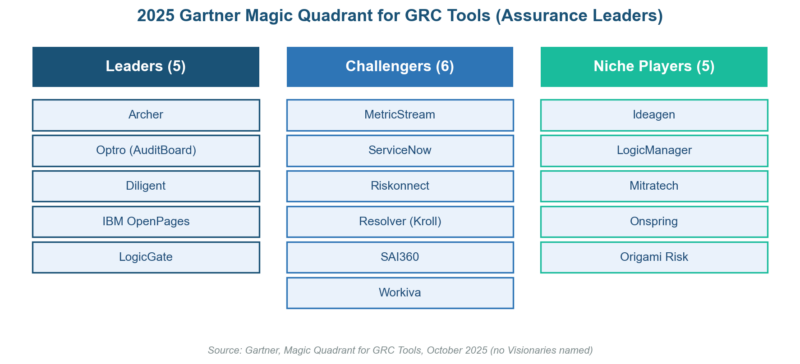
Figure 4. The 2025 Gartner GRC Tools Magic Quadrant reshaped the enterprise risk management software field.
Each profile below names who the enterprise risk management software serves best, its core strength, and indicative pricing. Nearly all pricing is quote-based, so treat the ranges as planning figures, not list prices.
1. LogicGate Risk Cloud: Best ERM Software for No-Code Configurability
Best for: mid-market to enterprise teams that want fast, configurable workflows without developers. LogicGate was named a Leader in the 2025 Gartner GRC quadrant and a Leader in the Forrester GRC Wave (Q2 2026).
Its no-code builder lets risk teams configure assessments, approval chains, and dashboards themselves, across 11 modules spanning ERM, cyber, third-party risk, compliance, and AI governance. Pre-built KRI dashboards make monitoring accessible to non-technical stakeholders.
Pricing: roughly $50,000 to $200,000 a year by modules and users.
2. MetricStream: Best ERM Software for Large, Multi-Entity Enterprises
Best for: large global enterprises running multi-entity programs across geographies. MetricStream creates a single source of truth for enterprise-wide risk and excels at mapping many regulatory frameworks at once.
AI-powered analytics and predictive modeling distinguish it at the enterprise tier, and Forrester rated it a Strong Performer in 2026. The trade-off is complexity, with implementations that typically run six to twelve months.
Pricing: roughly $150,000 to $500,000-plus a year.
3. Archer: Best ERM Software for Deep, Configurable GRC
Best for: large, highly regulated enterprises with mature programs. Now operating independently of RSA, Archer has anchored enterprise GRC for two decades and remains a 2025 Gartner Leader with an extensive out-of-the-box framework library.
Its operational risk depth, audit-trail granularity, and access controls suit financial services and critical infrastructure. A completed cloud migration modernized deployment, though some large clients still run on-premise.
Pricing: roughly $100,000 to $400,000-plus a year.
4. Riskonnect: Best ERM Software for Risk-and-Insurance Convergence
Best for: organizations uniting risk, insurance, business continuity, and TPRM on one platform. Riskonnect serves more than 2,700 customers and has absorbed Ventiv, Camms, and Castellan to widen its footprint.
A Forrester Consulting study found a 280% three-year ROI, driven by less manual aggregation and faster reporting. It is strongest in insurance, healthcare, and financial services with pre-built taxonomies.
Pricing: roughly $75,000 to $300,000 a year.
5. ServiceNow IRM: Best ERM Software for ServiceNow Shops
Best for: enterprises already standardized on ServiceNow ITSM. Built on the Now Platform, ServiceNow IRM wires risk workflows directly into IT service management, security operations, and HR on a single data model.
It emphasizes automated evidence collection, continuous monitoring, and workflow accountability. The trade-off is platform lock-in: the value compounds only when the broader ServiceNow stack is already in place.
Pricing: roughly $100,000 to $350,000 a year, atop the platform subscription.
6. Optro (formerly AuditBoard): Best ERM Software for Audit-Led Programs
Best for: organizations entering risk through internal audit and SOX. Rebranded from AuditBoard in March 2026 after its acquisition by Hg, Optro is a 2025 Gartner Leader and a 2026 Forrester GRC Wave Leader.
Connected risk and audit workflows save weeks of evidence collection, and the interface earns high satisfaction scores. Teams following the three lines of defense find the audit-to-risk bridge especially useful.
Pricing: roughly $50,000 to $150,000 a year by module.
7. IBM OpenPages: Best ERM Software for AI-Infused, Regulated Scale
Best for: large regulated enterprises in banking, insurance, and pharma. OpenPages is a 2025 Gartner Leader that centralizes operational, third-party, ESG, IT, and financial-control risk in one model.
Embedded watsonx AI drives predictive analytics and automated classification, supporting model risk management obligations. The depth comes with implementation complexity and premium pricing.
Pricing: roughly $150,000 to $500,000-plus a year.
8. Diligent: Best ERM Software for Board-Linked Governance
Best for: organizations where board oversight of risk is a governance requirement. Diligent, built on the HighBond platform, bridges board governance and enterprise risk, and Forrester named it a 2026 GRC Wave Leader with top scores for AI and agents.
Risk reporting flows straight to directors through the board portal without reformatting, and the platform aligns to NIST CSF and ISO/IEC 27001. That governance-to-risk link is its clearest differentiator.
Pricing: roughly $75,000 to $250,000 a year.
9. SAI360: Best ERM Software for EHS-and-Compliance Convergence
Best for: highly regulated industries needing risk, ethics, and EHS in one suite. SAI360 combines ERM, compliance, environment-health-safety, and learning management, with a Visionary-to-Challenger analyst profile.
Its differentiator is compliance training tied directly to identified risks, which suits organizations running compliance risk assessments alongside operational risk in a single platform.
Pricing: roughly $60,000 to $200,000 a year by module.
10. Resolver: Best ERM Software for Operational and Incident Risk
Best for: organizations where operational risk events and incidents are the primary concern. Now a Kroll business, Resolver pairs a user-friendly interface that drives high adoption with strong incident-to-risk linking.
Its risk-matrix and incident-management capabilities, plus ISO 31000 alignment and flexible deployment, make it a practical mid-market choice. Kroll ownership has expanded its enterprise reach.
Pricing: roughly $40,000 to $150,000 a year.
Beyond the top 10, regulated and specialized buyers will also weigh Workiva for disclosure-driven risk, Onspring and Origami Risk for configurable RMIS, and Ncontracts, Quantivate, or 360factors for US banking and credit-union programs.
Enterprise Risk Management Software Comparison Matrix
Use this matrix to scan the field, then dig into the two or three platforms that fit your size and stack. Quadrant positions reflect the October 2025 Gartner GRC Tools report.
|
Platform |
Best for |
2025 Gartner GRC |
Deployment |
Indicative price |
|
LogicGate |
No-code, mid-market to enterprise |
Leader |
Cloud |
$50K–$200K/yr |
|
MetricStream |
Large multi-entity programs |
Challenger |
Cloud / hybrid |
$150K–$500K+/yr |
|
Archer |
Deep, configurable GRC |
Leader |
Cloud / on-prem |
$100K–$400K+/yr |
|
Riskonnect |
Risk + insurance + TPRM |
Challenger |
Cloud |
$75K–$300K/yr |
|
ServiceNow IRM |
ServiceNow ITSM shops |
Challenger |
Cloud |
$100K–$350K/yr |
|
Optro (AuditBoard) |
Audit-led programs, SOX |
Leader |
Cloud |
$50K–$150K/yr |
|
IBM OpenPages |
Regulated, AI-infused scale |
Leader |
Cloud / on-prem |
$150K–$500K+/yr |
|
Diligent |
Board-linked governance |
Leader |
Cloud |
$75K–$250K/yr |
|
SAI360 |
EHS + compliance |
Challenger |
Cloud |
$60K–$200K/yr |
|
Resolver (Kroll) |
Operational and incident risk |
Niche Player |
Cloud |
$40K–$150K/yr |
Table 2. Enterprise risk management software comparison matrix for 2026.
Choosing Enterprise Risk Management Software by Organization Size
The right platform depends on scale, risk maturity, and budget far more than on feature counts. A Fortune 500 bank and a 200-person SaaS firm face entirely different decisions, so map your profile to the tiers below.
|
Organization profile |
Recommended platforms |
Annual budget |
|
Small enterprise (100–500 staff) |
Resolver, LogicGate (starter) |
$15K–$50K |
|
Mid-market (500–5,000 staff) |
LogicGate, Optro, SAI360 |
$50K–$200K |
|
Large enterprise (5,000–50,000) |
MetricStream, Archer, Riskonnect, ServiceNow |
$150K–$500K+ |
|
Regulated (banking, insurance, pharma) |
IBM OpenPages, MetricStream, Archer |
$200K–$500K+ |
|
Board-governance-focused |
Diligent, Riskonnect |
$75K–$250K |
Table 3. Matching enterprise risk management software to organization size and budget.
Resist buying for an aspirational future state. Most over-spend comes from mid-market buyers purchasing enterprise capability they will not use for years, so buy for where you are today plus roughly 18 months.
What Separates Good Enterprise Risk Management Software From Great
Every vendor claims AI, real-time dashboards, and ISO 31000 alignment. Three less glamorous capabilities actually separate effective enterprise risk management software from expensive shelfware.
Automated Data Collection in ERM Software
Gartner’s finding that only 18% of risk owners supply quality data exposes the central adoption problem. The best platforms pull risk data automatically from source systems into a central risk register rather than relying on manual surveys, with LogicGate, ServiceNow, and MetricStream leading on pre-built connectors.
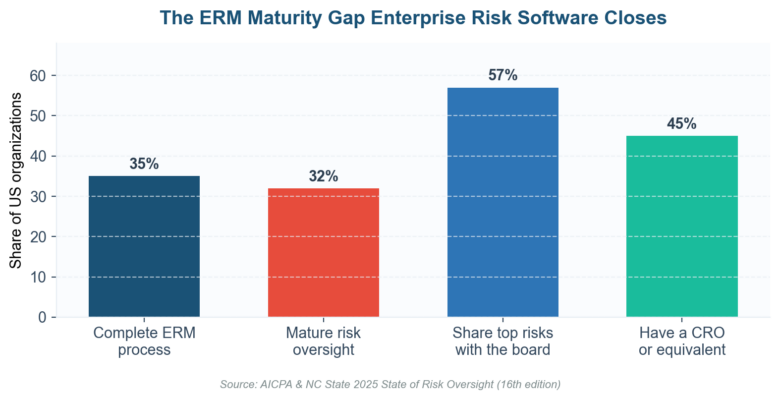
Figure 5. The maturity gap enterprise risk management software is meant to close.
Multi-Framework Mapping in ERM Software
Few organizations live under a single standard. Enterprise risk management software that maps one control to many frameworks, so a single test satisfies COSO, ISO 31000, SOX, and Basel at once, removes duplicated effort. MetricStream, Archer, and IBM OpenPages map deepest.
Quantitative Analysis in ERM Software
Mature programs need more than heat maps. Monte Carlo simulation, scenario analysis, and bow-tie capability separate platforms serving high-maturity programs, with IBM OpenPages, MetricStream, and Riskonnect offering the deepest quantitative tooling.
Enterprise Risk Management Software Pricing: What to Budget
Enterprise risk management software pricing is notoriously opaque, since vendors prefer custom quotes and published rates rarely reflect negotiated deals. The figures below aggregate practitioner deal data and review-site signals.
|
Platform |
Entry price |
Enterprise price |
Implementation |
Watch for |
|
LogicGate |
$50K/yr |
$200K+/yr |
8–16 weeks |
Module add-ons escalate quickly |
|
MetricStream |
$150K/yr |
$500K+/yr |
6–12 months |
Custom config and integration services |
|
Archer |
$100K/yr |
$400K+/yr |
4–12 months |
On-prem maintenance and migration fees |
|
Riskonnect |
$75K/yr |
$300K+/yr |
3–9 months |
Vertical modules priced separately |
|
ServiceNow IRM |
$100K/yr |
$350K+/yr |
3–6 months |
Requires ServiceNow platform investment |
|
Optro (AuditBoard) |
$50K/yr |
$150K+/yr |
4–8 weeks |
Full ERM needs multiple modules |
|
IBM OpenPages |
$150K/yr |
$500K+/yr |
6–18 months |
watsonx and premium support tiers |
|
Resolver (Kroll) |
$40K/yr |
$150K+/yr |
4–8 weeks |
Advanced analytics tier upgrades |
Table 4. Indicative enterprise risk management software pricing and hidden costs.
Implementing Enterprise Risk Management Software: A 90-Day Roadmap
The platform is the easy part; a disciplined rollout earns the return. This phased approach applies to any enterprise risk management software on the list and aligns with risk-process best practice.
- Discovery and foundation (days 1–30): define your risk taxonomy and risk appetite, map current workflows, scope data integrations, and agree a RACI governance model with the CRO.
- Configuration and pilot (days 31–60): build assessment workflows and KRI dashboards, pilot with two or three business units, and validate every data feed before scaling.
- Enterprise rollout (days 61–90): extend to all units, switch on automated data collection and board reporting, and stand up a business-as-usual support model with a continuous-improvement cadence.
Budget 30% to 40% of the project for change management, not software, and put the CRO or head of ERM in charge rather than IT. A documented risk appetite statement must exist before you configure a single threshold.
Where Enterprise Risk Management Software Programs Stall
Most failed deployments share a handful of root causes, and none is the technology itself. Check your plan against the traps below before they check it for you.
- Buying aspirational capability: scope inflated by enterprise demos shown to mid-market buyers. Buy for today plus 18 months.
- Underestimating change management: budgeting for software but not adoption. Measure adoption rates, not deployment milestones.
- Ignoring source data quality: garbage in, garbage out applies doubly to risk data. Audit and automate collection before launch.
- Picking on analyst rankings alone: a Gartner Leader can be overengineered for a mid-market team. Weigh demos and reference calls too.
- Treating it as an IT project: when IT owns procurement, the result is a sound platform nobody in the risk function uses.
Enterprise Risk Management Software Trends for 2026–2028
The category is evolving faster than at any point in its history. Three shifts will decide which platforms lead by 2028, and reading them now protects a multi-year purchase.
The risks driving those purchases keep climbing. Protiviti and NC State rank cyber threats first and third-party risk second among the top enterprise risks for 2026.
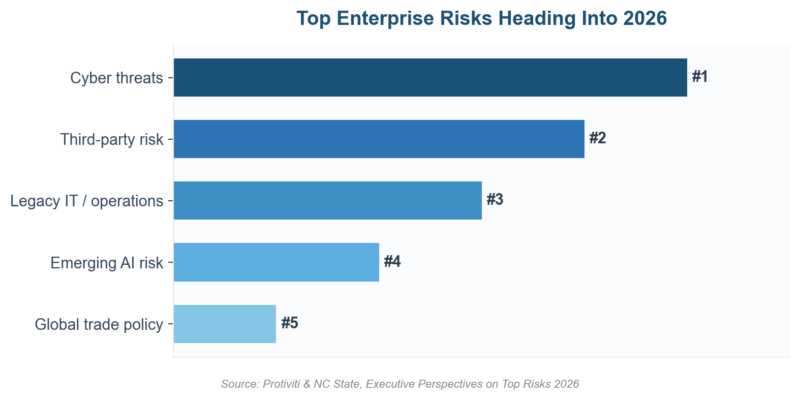
Figure 6. The risk agenda shaping enterprise risk management software priorities for 2026.
Agentic AI Becomes the ERM Software Co-Pilot
Every major platform is shipping AI that drafts risk descriptions, suggests treatments, and generates board reports, with IBM (watsonx), Diligent, and Optro moving toward agentic monitoring. The real challenge is governing AI outputs so human judgment still validates them.
ERM Software Converges With Cyber and Resilience
The siloed era of separate tools for enterprise, cyber, and continuity risk is ending. Platforms that unify these under one data model, with ServiceNow and Riskonnect ahead, will take share from point solutions as operational-resilience expectations harden.
Real-Time Risk Sensing Reshapes ERM Software
Static quarterly assessments are giving way to continuous monitoring fed by external data such as geopolitical, supply-chain, and regulatory-change feeds. MetricStream and Archer are investing heavily here, turning enterprise risk management software from backward-looking into forward-looking.
Frequently Asked Questions About Enterprise Risk Management Software
What is enterprise risk management software?
Enterprise risk management software is a platform that helps an organization identify, assess, treat, monitor, and report risk to its objectives across every domain. It centralizes risk registers, appetite thresholds, KRIs, scenario analysis, and board reporting, replacing spreadsheets and siloed registers. Most platforms align to the COSO ERM and ISO 31000 frameworks.
How much does ERM software cost?
Pricing is almost always quote-based and varies widely. Mid-market platforms such as LogicGate, Optro, and Resolver typically run $40,000 to $200,000 a year, while large-enterprise suites like MetricStream, Archer, and IBM OpenPages reach $150,000 to $500,000-plus depending on modules, users, and implementation services.
What is the difference between ERM, GRC, and IRM software?
ERM is the discipline of managing risk to objectives. GRC is the broader umbrella that adds governance, compliance, policy, and audit on top of risk, while IRM is Gartner’s term for technology that connects risk types across the enterprise. In practice most enterprise risk management software is sold inside a GRC or IRM platform.
Which ERM software is best for small companies?
Smaller organizations usually prioritize fast deployment, pre-built workflows, and low administrative overhead. Resolver and LogicGate’s starter tier are common choices in the $15,000 to $50,000 range, offering intuitive interfaces and configurable templates without the implementation burden of enterprise suites.
Does ERM software need to align with ISO 31000 and COSO?
Yes. Native alignment to ISO 31000 and the COSO ERM framework lets the platform structure risk identification, assessment, and reporting around recognized principles your board and auditors expect. Most leading platforms map to both out of the box, with COSO guiding governance and ISO 31000 guiding the operational risk process.
How long does ERM software implementation take?
Timelines range from four to eight weeks for configurable mid-market tools like Optro and Resolver to six to eighteen months for complex enterprise suites such as MetricStream and IBM OpenPages. A phased 90-day rollout, starting with critical risks and a pilot, reduces deployment risk regardless of platform.
Which ERM software is best for financial services?
Banks and insurers usually need deep framework mapping for Basel, SOX, and model-risk guidance, audit-trail depth, and regulatory content. MetricStream, Archer, and IBM OpenPages dominate large institutions, while Ncontracts, Quantivate, and 360factors serve community banks and credit unions with sector-specific templates.
Can enterprise risk management software use AI?
Increasingly, yes. Leading platforms use AI to draft risk descriptions, score assessments, flag anomalies, and generate board reports, and several are adding agentic features that monitor risk autonomously. The trade-off is governance: AI-generated risk outputs still require human validation and an AI governance framework of their own.
The Bottom Line on Enterprise Risk Management Software
The category was re-mapped in the past year, but the buying logic did not change. The best enterprise risk management software is the one matched to your size, risk domains, and existing stack, not the one highest in a quadrant.
Anchor your shortlist to the 2025 Gartner Leaders and 2026 Forrester picks, then weight automation, framework coverage, and board reporting for your context. Insist on a structured proof of concept and reference calls with similar organizations before you commit.
Above all, remember that software amplifies a program; it does not create one. Pair the platform with a documented risk appetite, named owners, and a strong reporting culture, and enterprise risk management software becomes the backbone of a function the board actually trusts.
Strengthen Your Enterprise Risk Management Program
riskpublishing.com helps US risk officers and boards build enterprise risk programs to a 2026 standard. Start with our guides to the COSO ERM framework, the risk management process, and key risk indicators.
For adjacent tooling, compare our GRC framework guide and third-party risk management software reviews to round out the program.

Chris Ekai is a Risk Management expert with over 10 years of experience in the field. He has a Master’s(MSc) degree in Risk Management from University of Portsmouth and is a CPA and Finance professional. He currently works as a Content Manager at Risk Publishing, writing about Enterprise Risk Management, Business Continuity Management and Project Management.