
On January 29, 2025, PSA Airlines Flight 5342, a Bombardier CRJ-700 operating as American Eagle, collided with a US Army UH-60 Black Hawk on short final to Reagan National Airport.
Sixty-four passengers and crew on the regional jet and three soldiers on the helicopter died. It was the deadliest US commercial aviation accident since Colgan Air 3407 in 2009.
That midair is exactly the event that Key Risk Indicators for Aviation and Airlines are designed to flag in advance. A KRI is a leading metric tied to a defined threshold and a named owner, firing before the incident lands on the NTSB docket.
Most US airline teams track lagging KPIs instead of Key Risk Indicators for Aviation and Airlines, and they like on-time performance but miss the FAA-aligned indicators that warn before the Principal Operations Inspector calls.
This guide gives US Part 121 carrier safety managers, accountable executives, directors of safety, and corporate risk teams a working set of Key Risk Indicators for Aviation and Airlines for 2026.
The framework is anchored to 14 CFR Part 5 SMS, ICAO Annex 19, ISO 31000:2018, and the FAA Aviation Safety Information Analysis and Sharing program. Stats come from the FAA, NTSB, IATA, and the Bureau of Transportation Statistics.
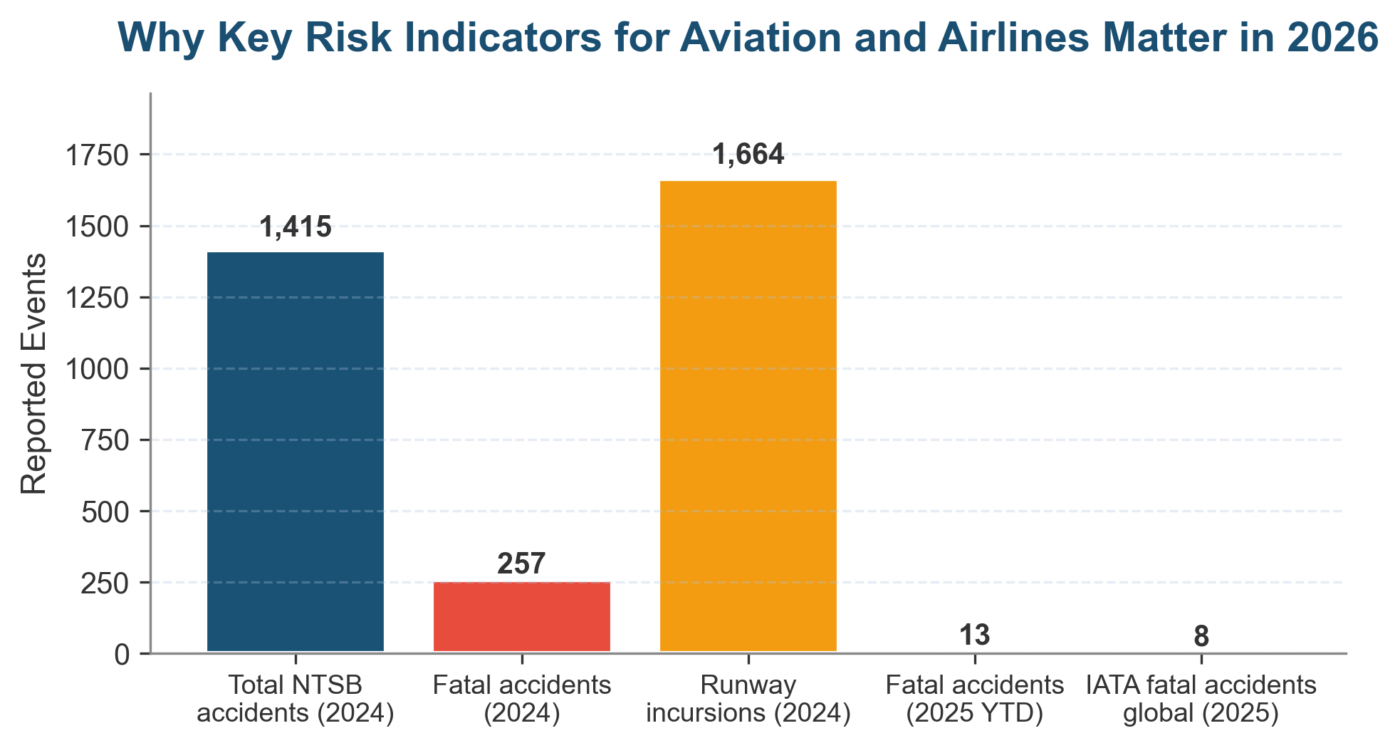
Figure 1. The safety backdrop for Key Risk Indicators for Aviation and Airlines in 2026.
What Key Risk Indicators for Aviation and Airlines Actually Measure
A Key Risk Indicator for Aviation and Airlines is a forward-looking metric that signals a change in safety, compliance, or operational risk exposure before the risk event materializes.
It carries a defined formula, a red-amber-green threshold tied to risk appetite, and a named owner with authority to act.
It is not a KPI and it is not a lagging accident count.
The FAA codified this distinction in 14 CFR Part 5 Subpart C, the Safety Risk Management pillar of SMS. Carriers must identify hazards, assess and analyze the risk, design controls, and monitor for residual risk.
Key Risk Indicators for Aviation and Airlines are the instruments through which Subpart C monitoring actually happens. Without them, the SMS manual is just paper on a shelf.
US carriers running mature programs publish risk appetite statements that name explicit numeric thresholds. “No more than two Category A or B runway incursions per quarter” is a working appetite line.
“Zero fatigue calls above the FAA-approved fatigue risk management plan trigger” is another. Key Risk Indicators for Aviation and Airlines convert those statements into telemetry the CRO can defend in front of the board safety committee.
How Key Risk Indicators for Aviation and Airlines Differ from KPIs
A KPI measures whether operations are hitting their target today, while Key Risk Indicators for Aviation and Airlines look further ahead, like on-time arrival percentage.
A key risk indicator measures whether the conditions for tomorrow’s failure are building, like the percentage of crew pairings that triggered a fatigue threshold last month. The same data feed can produce both, but the framing, the threshold, and the response action differ.
Key Risk Indicators for Aviation and Airlines sit upstream of KPIs in the causal chain. A KRI breaching amber should generate a Safety Action Group review, an Operational Risk Committee tasking, or a control redesign.
A KPI miss generates a service-recovery action. Confusing the two leads to safety dashboards that are full of green KPIs the day before a serious incident.
Where Key Risk Indicators for Aviation and Airlines Sit in FAA Part 5 SMS
Part 5 has four pillars: Safety Policy, Safety Risk Management, Safety Assurance, and Safety Promotion. Key Risk Indicators for Aviation and Airlines feed two of them directly.
They power Safety Risk Management (Subpart C) by surfacing hazards in real time, and they are the core evidence for Safety Assurance (Subpart D), which requires continuous monitoring of safety performance against acceptable levels.
The FAA Principal Operations Inspector now expects to see Key Risk Indicators for Aviation and Airlines mapped to specific Subpart C hazard registers. Carriers that present a flat list of indicators with no traceability fail the SMS effectiveness check.
Mapping every Key Risk Indicators for Aviation and Airlines entry to a hazard, a control, and a Subpart D acceptable level closes that audit gap.
Safety Key Risk Indicators for Aviation and Airlines
Safety indicators are the largest category on a US Part 121 carrier dashboard and the first place a FAA SMS audit looks. They split into operational safety (what happens on the airplane in flight or on the ramp) and maintenance airworthiness (what happens in the hangar or before pushback).
Both subcategories pull data from FOQA, ASAP, MOQA, mandatory occurrence reports, and the airline’s own quality assurance program.
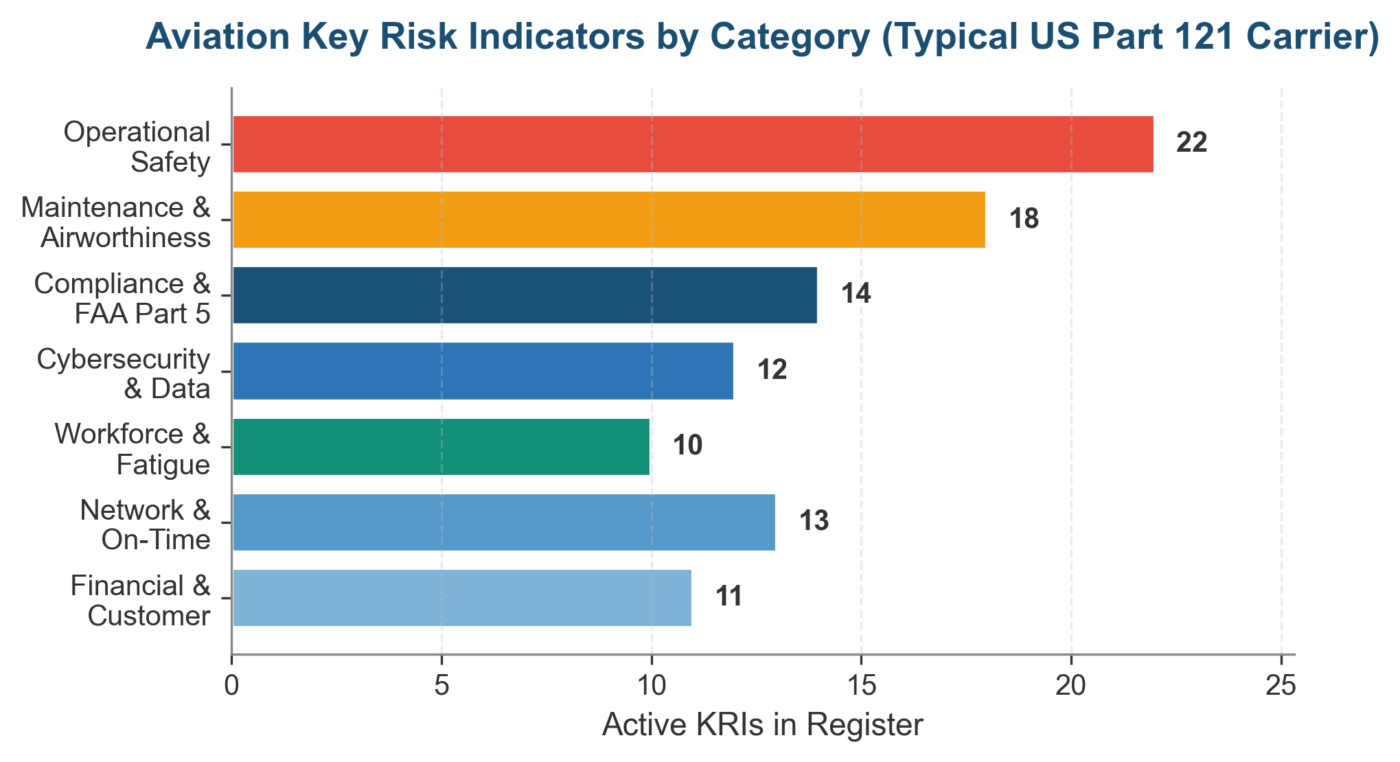
Figure 2. Aviation Key Risk Indicators by category for a typical US Part 121 carrier.
Operational Safety Aviation KRIs
Operational safety Key Risk Indicators for Aviation and Airlines catch precursors to controlled flight into terrain, loss of separation, runway excursion, and loss of control inflight.
The FAA Aviation Safety Information Analysis and Sharing program maintains the industry baseline for many of these metrics, drawing on de-identified FOQA and ASAP data across more than 50 US carriers. Use ASIAS benchmarks to calibrate amber thresholds.
| Aviation KRI | Formula | Amber threshold | Owner |
| Unstable approach rate | Approaches not stabilized by 1,000 ft IMC / 500 ft VMC per 1,000 approaches | Above 0.5 per 1,000 | Director of Operations |
| FOQA exceedance rate | Exceedance events per 1,000 flight hours from flight data monitoring | Above 12 per 1,000 | FOQA Program Manager |
| TCAS RA events | Resolution advisories per 10,000 sectors flown | Above 1.0 per 10,000 | Director of Safety |
| Runway incursion rate | Pilot deviations contributing to Category A-D incursions per 100,000 ops | Above 4 per 100,000 | Chief Pilot |
| GPWS Mode 2-7 warnings | EGPWS hard warnings per 10,000 sectors | Above 0.8 per 10,000 | Flight Standards |
| Loss of separation events | ATC-reported separation losses involving carrier aircraft per quarter | Above 1 per quarter | Accountable Executive |
Each line in the table is a worked example from a US legacy carrier dashboard. The thresholds are not FAA-mandated; they are appetite-driven and benchmarked against ASIAS peer-group medians.
A carrier with a higher tolerance for FOQA exceedances on a new fleet type will set a different number, then walk it down as the fleet matures.
Maintenance and Airworthiness Key Risk Indicators for Aviation and Airlines
Maintenance Key Risk Indicators for Aviation and Airlines catch precursors to mechanical failures the FAA airworthiness directive system was designed to prevent.
They draw on the carrier’s Continuing Analysis and Surveillance System (CASS), the FAA Service Difficulty Reporting feed, and engine condition monitoring data from the OEM. Track them weekly at minimum.
| Aviation KRI | Formula | Amber threshold | Owner |
| Pilot-reported defect rate | Maintenance discrepancies per 1,000 sectors flown | Above 18 per 1,000 | Director of Maintenance |
| MEL dispatch rate | Aircraft dispatched with open Minimum Equipment List items per 1,000 flights | Above 80 per 1,000 | Maintenance Control |
| AOG hours rate | Aircraft-on-ground hours per fleet aircraft per quarter | Above 14 hours | VP Operations |
| Engine in-flight shutdown rate | IFSDs per 100,000 engine flight hours | Above 0.02 per 100,000 | Powerplant Engineering |
| Repeated discrepancy rate | Same defect reported more than twice in 30 days as percentage of discrepancies | Above 4 percent | Quality Assurance |
| Open airworthiness directives | Open AD compliance items overdue beyond compliance date | Any non-zero count | Continuing Airworthiness |
Compliance Key Risk Indicators for Aviation and Airlines
Compliance Key Risk Indicators for Aviation and Airlines feed the FAA Principal Operations Inspector relationship and the carrier’s compliance risk analysis function.
They cover Part 5 SMS itself, Part 117 flight and duty time, Part 121 operating rules, and the carrier’s voluntary disclosure programs.
Compliance is the cheapest place to fail; voluntary disclosure protections only apply when the program is actually working.
FAA Part 5 Compliance Aviation KRIs
Part 5 SMS regulations now require every Part 121 carrier to monitor SMS performance and report findings to FAA on a defined cadence.
The FAA SMS regulation became mandatory on May 28, 2025.
Five compliance KRIs capture whether the program is actually running, not just documented.
| Aviation KRI | Formula | Amber threshold | Owner |
| ASAP report submission rate | Aviation Safety Action Program reports per 1,000 hours flown | Below 2.5 per 1,000 | ASAP ERC Chair |
| Hazard report closure age | Average days from hazard report receipt to closure | Above 45 days | Director of Safety |
| SRM corrective action overdue | Open Subpart C corrective actions overdue beyond target date | Any non-zero count | Accountable Executive |
| FAA finding response time | Mean days to respond to FAA Letter of Investigation | Above 10 working days | Director of Compliance |
| Voluntary disclosure rate | Self-disclosed regulatory deviations per quarter | Below baseline by 25 percent | Director of Compliance |
A falling voluntary disclosure rate is a real red flag, not a green light. The FAA Voluntary Disclosure Reporting Program only protects carriers that actively self-report. Programs that go quiet usually mean the just-culture environment is breaking down, not that the carrier suddenly became compliant.
Cybersecurity Key Risk Indicators for Aviation and Airlines
Aviation cyber risk is no longer a back-office concern. The FAA listed cybersecurity as a top-five hazard area in the 2024 FAA Reauthorization Act, and CISA’s Transportation Systems Sector advisories now treat US carriers and major airport operators as critical infrastructure. The cyber KRI block on the aviation and airline dashboard needs at least eight active metrics.
| Aviation KRI | Formula | Amber threshold | Owner |
| EFB patch rate | Electronic Flight Bag tablets patched within 14 days of critical CVE | Below 95 percent | CIO |
| Phishing click rate | Crew and operations staff clicking simulated phishing per quarter | Above 6 percent | CISO |
| Vendor breach exposure | Open third-party incidents affecting carrier data per quarter | Any non-zero high severity | Vendor Risk Manager |
| GPS spoofing reports | Confirmed crew-reported GPS interference events per month | Above 3 per month | Director of Operations |
| MFA coverage | Operationally critical apps with mandatory multi-factor authentication | Below 100 percent | CISO |
Operational and Commercial Key Risk Indicators for Airlines
The operational and commercial block addresses network reliability, customer experience, financial liquidity, and workforce risk. These metrics often live in finance or commercial planning rather than safety. The operational risk management function should still own the KRI thresholds even when the underlying data sits elsewhere.
Network and On-Time Aviation KRIs
Network reliability KRIs catch the conditions that produced events like the Southwest Airlines December 2022 holiday meltdown and the FAA NOTAM system outage in January 2023. They draw on DOT Bureau of Transportation Statistics filings, the carrier’s own ops control center data, and FAA Air Traffic flow management briefings.
| Aviation KRI | Formula | Amber threshold | Owner |
| A14 on-time arrival rate | Flights arriving within 14 minutes of schedule per DOT reporting | Below 80 percent rolling 30 days | VP Network Operations |
| Mishandled bag rate | DOT-reportable mishandled bag rate per 1,000 passengers | Above 6.5 per 1,000 | Director of Airports |
| Crew misconnection rate | Crew unable to operate scheduled rotation as percentage of pairings | Above 1.2 percent | Crew Scheduling |
| Cancellation rate | Same-day flight cancellations as percentage of scheduled operation | Above 1.8 percent | Director of OCC |
| IROPS recovery time | Median hours to recover schedule after a Category 2 disruption | Above 36 hours | VP Network Operations |
Financial and Customer Airline KRIs
Financial and customer Key Risk Indicators for Aviation and Airlines sit at the intersection of strategic and operational risk.
They cover fuel exposure, labor relations volatility, customer satisfaction precursors, and liquidity.
Pair every commercial KRI with at least one safety KRI on the same dashboard page so the board sees the trade-offs.
| Aviation KRI | Formula | Amber threshold | Owner |
| Jet fuel hedge coverage | Percent of next-12-month consumption hedged or fixed | Below 35 percent | CFO |
| NPS detractor rate | Net Promoter Score detractors as percentage of survey responses | Above 22 percent | VP Customer Experience |
| DOT complaint rate | DOT consumer complaints per 100,000 enplaned passengers | Above 2.5 per 100,000 | Director of Customer Relations |
| Pilot attrition rate | Voluntary pilot separations as annualized percent of workforce | Above 6 percent | VP HR |
| Days cash on hand | Unrestricted cash divided by daily operating expense run rate | Below 90 days | CFO |
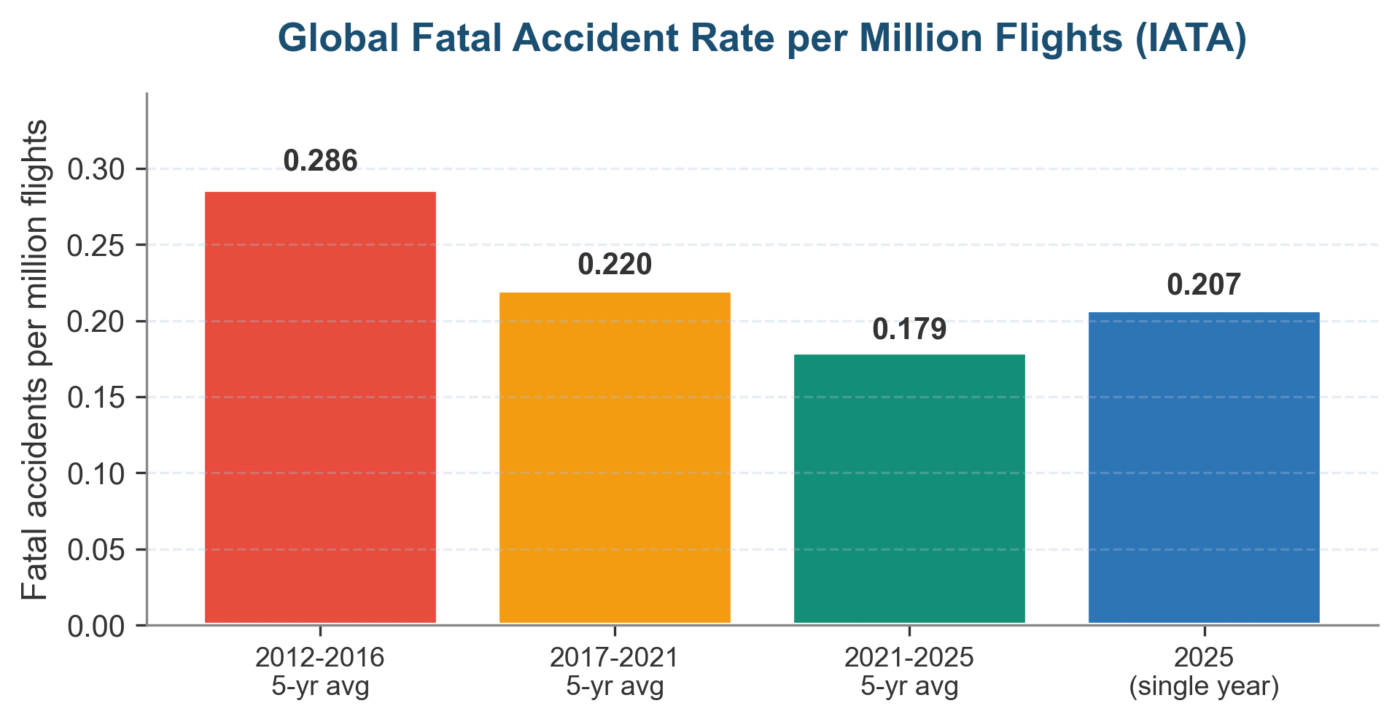
Figure 3. Long-term aviation fatal accident rate per million flights (IATA).
Building an Aviation and Airline KRI Dashboard
A working dashboard for Key Risk Indicators for Aviation and Airlines fits on one page per audience.
The key risk indicator dashboard pattern applies: each KRI has its own row showing the current value, the amber and red thresholds, the 12-week trend, the owner, and the last review date.
Anything else is decoration.
Setting Thresholds for Aviation Key Risk Indicators
Threshold selection is the work that separates a useful aviation KRI register from a vanity dashboard.
Pull three reference points: the FAA reporting threshold for the underlying event, the ASIAS peer-group median, and the carrier’s own 12-month rolling baseline.
Set amber at the worse of (ASIAS median + 1 standard deviation) or (rolling baseline + 25 percent), and red at the FAA reporting line.
Review every threshold quarterly. New aircraft types, new route entries, and seasonal demand all shift the baseline.
A threshold left untouched for two years is no longer a threshold; it is a guess. Document the rationale for each setting in the SMS hazard register so the FAA Principal Operations Inspector can trace the math.
Reporting Aviation and Airline KRIs to the Board
Board reporting for Key Risk Indicators for Aviation and Airlines needs to clear three filters. First, every indicator must trace to a named hazard in the SMS hazard register. Second, every red and amber line needs a current action and an owner.
Third, the report should compare current performance to both the carrier’s risk appetite and to ASIAS peer benchmarks where they exist.
Most US Part 121 carriers run a monthly safety committee at executive level and a quarterly board safety committee. The aviation KRI report goes to both, with two pages: a one-page summary showing red and amber KRIs only, and a backup page with the full register. The ICAO Annex 19 SMS framework provides the structure for the summary.
Frequently Asked Questions on Key Risk Indicators for Aviation and Airlines
Six questions surface in every US Part 121 SMS workshop. The answers below reflect FAA Part 5, ICAO Annex 19, and the published practice of mature US carriers as of May 2026.
How many Key Risk Indicators for Aviation and Airlines should a Part 121 carrier track?
A mature US Part 121 carrier runs 90 to 110 active aviation KRIs across seven categories.
Smaller regional and cargo carriers can run 60 to 80.
Below 50 leaves blind spots FAA SMS audits will flag; above 130 is dashboard noise that hides the signal.
The right number is the one the Safety Action Group can actually review every month.
What is the difference between an aviation KPI and an aviation key risk indicator?
A KPI measures whether today’s operation is hitting target.
A Key Risk Indicator for Aviation and Airlines measures whether the conditions for tomorrow’s failure are building.
On-time arrival is a KPI; unstable approach rate is a KRI.
Both belong on the dashboard, but they trigger different responses and report into different committees.
How often should aviation and airline KRIs be reviewed?
Review operational safety and maintenance Key Risk Indicators for Aviation and Airlines daily at the NOC.
Compliance and cybersecurity KRIs need weekly attention from the director of safety.
The executive safety committee picks up strategic, financial, and workforce airline KRIs monthly, with quarterly threshold recalibration.
The FAA Part 5 Subpart D Safety Assurance pillar requires continuous monitoring, not periodic spot checks.
What FAA frameworks should aviation key risk indicators map to?
Map every entry in your Key Risk Indicators for Aviation and Airlines register to four anchors.
FAA 14 CFR Part 5 gives you Subpart C hazard registers and Subpart D acceptable levels.
ICAO Annex 19 gives the international SARPs and IATA IOSA gives audit-grade definitions for major operational KRIs.
ISO 31000:2018 gives the enterprise risk lens for board reporting. Mapping each Key Risk Indicators for Aviation and Airlines entry to all four closes audit gaps in one pass.
Are runway incursion rates good aviation KRIs?
Runway incursion rate is one of the most useful Key Risk Indicators for Aviation and Airlines for any US carrier.
The FAA Runway Safety program categorizes incursions A through D, where Category A and B are the closest precursors to a runway collision.
After 1,664 incursions in 2024, FAA intensified scrutiny on carriers whose pilot-deviation contribution sits above peer median.
Track total incursions, the pilot-deviation subset, and the Category A and B count separately.
How do small Part 135 operators adapt Key Risk Indicators for Aviation and Airlines?
Part 135 charter and on-demand operators run a slimmer set of 30 to 50 Key Risk Indicators for Aviation and Airlines. The FAA SMS Voluntary Program for Part 135 allows tailored implementation that scales with operation size.
Drop the network and customer commercial KRIs; keep every safety, maintenance, compliance, and cybersecurity indicator. Most NBAA member operators converge on a 35-KRI register that covers the four mandatory SMS pillars without overwhelming a small safety team.
Common Pitfalls in Aviation and Airline KRI Programs
Five failure modes recur across US Part 121 carrier SMS audits. Recognize them before the FAA Principal Operations Inspector does.
| Pitfall | Root cause | Remedy |
| Treating lagging accident counts as KRIs | Confusing safety KPIs with risk indicators; reporting after the event | Build separate leading and lagging registers. Every KRI must trace to a precursor in the ASIAS hazard taxonomy. |
| Stale thresholds left from year one | No quarterly review; thresholds set during SMS implementation and forgotten | Schedule mandatory quarterly threshold review tied to fleet, network, and seasonal changes. Document rationale in the hazard register. |
| Cybersecurity treated as IT problem | Cyber KRIs sit in CIO dashboard, never reach the accountable executive | Pull at least five cyber KRIs into the SMS dashboard. Tie thresholds to CISA Transportation Systems Sector advisories. |
| No traceability to Part 5 hazard register | KRIs treated as compliance checkbox, not as control instruments | Map every Key Risk Indicators for Aviation and Airlines entry to a Subpart C hazard, a control, and a Subpart D acceptable level. |
| Single dashboard for three audiences | NOC, executive, and board getting the same view at different cadences | Build three views from one data spine. NOC view daily, executive weekly, board safety committee monthly. |
| Falling voluntary disclosure rate ignored | Treating ASAP and VDRP report volume drop as good news | Set amber when disclosure rate drops 25 percent below baseline. Investigate just-culture health before assuming compliance improved. |
Looking Ahead: Key Risk Indicators for Aviation and Airlines for 2026-2028
Three forces will reshape Key Risk Indicators for Aviation and Airlines over the next two years.
The first is the post-PSA 5342 NTSB recommendation cycle.
Initial NTSB findings already point to airspace congestion around Reagan National and helicopter route conflicts as causal factors.
Expect new mandatory KRIs around mixed-traffic operations near Class B airports.
FAA SMS expansion is the second pressure. The FAA Reauthorization Act of 2024 tasks FAA with extending SMS principles to Part 135 charter operators, Part 91 Subpart K fractional fleets, and Part 145 repair stations. Carriers should expect supply-chain KRIs covering Part 145 partners to become mandatory by late 2027.
Generative AI integration is the third force. Predictive maintenance, crew scheduling optimization, and fuel planning systems now run on machine-learning models that drift over time.
Expect new Key Risk Indicators for Aviation and Airlines covering model performance, training data freshness, and human-in-the-loop override rates. The IATA Safety Report 2025 already flagged AI integration as a watch item for 2026.
Carriers that make it through this transition cleanly will be the ones treating Key Risk Indicators for Aviation and Airlines as a working instrument set, recalibrated quarterly and reviewed at every level of the organization. Static dashboards built once in 2024 are already obsolete.
Working with Risk Publishing on Aviation and Airline KRI Programs
Risk Publishing supports US Part 121 carriers, regional and cargo operators, fractional fleets, and aviation service providers in building Key Risk Indicators for Aviation and Airlines that hold up to FAA Principal Operations Inspector scrutiny and to board safety committee review.
We design KRI registers, set thresholds against ASIAS benchmarks, build the three-tier dashboard, and integrate the output with the carrier’s enterprise risk management framework.
Continue reading the Risk Publishing aviation and KRI library: 50 key risk indicators every risk manager should track, how to develop key risk indicators, how to use key risk indicators, operational key risk indicators guide, and best practices for utilizing key risk indicators effectively.
Adjacent reading: the definition of risk assessment in aviation, FOD risk assessment template, cyber security key risk indicators examples, supply chain key risk indicators, and key risk indicators developing risk appetite.
To start the conversation, visit the contact page or read more about the practice on the about page. For broader risk-program advisory, the risk management lifecycle and how often should risk assessments be conducted guides give the parent frame this aviation post sits inside.

Chris Ekai is a Risk Management expert with over 10 years of experience in the field. He has a Master’s(MSc) degree in Risk Management from University of Portsmouth and is a CPA and Finance professional. He currently works as a Content Manager at Risk Publishing, writing about Enterprise Risk Management, Business Continuity Management and Project Management.