When Tropical Storm Helene tore through western North Carolina in September 2024, the SBA ultimately approved more than $350 million in disaster loans for the state’s businesses and residents, per its April 18, 2025 release. Florida’s Helene and Milton tally passed $1.4 billion on the same date.
A disaster recovery plan template exists for the businesses those loans could not save. FEMA’s long-standing estimate is that roughly 40% of small businesses never reopen after a disaster, and about a quarter of those that do reopen close within a year, numbers that
ready.gov’s business preparedness program was built to move.
| Disaster Recovery Plan Template: Key Takeaways |
| FEMA estimates roughly 40% of small businesses never reopen after a disaster, and another 25% close within a year of reopening. |
| Hurricane Helene put numbers on the exposure: the SBA approved over $350 million in disaster loans for North Carolina and over $1.4 billion for Florida after Helene and Milton, per its April 2025 releases. |
| The free Word template covers nine sections: activation, contacts, system inventory with RTO and RPO, backups, recovery procedures, alternate work, communications, insurance and aid, and a test log. |
| Set RTO (how fast a system must return) and RPO (how much data you can lose) per system, then sequence recovery in tiers, because everything cannot be Tier 1. |
| Follow the 3-2-1 backup rule and test a restore at least annually; a backup that has never been restored is a hope, not a control. |
| Disaster recovery restores systems; business continuity keeps the business running meanwhile. This template handles the first and links to the second. |
The download below is a fill-in Word plan sized for a small business: contacts, system inventory with recovery targets, backup strategy, step-by-step procedures, and the aid and insurance details that matter in the first 72 hours. Fill it in over two afternoons; the disaster will not schedule an appointment. The
eight-step build guide shows where each section’s answers come from.
Download the Disaster Recovery Plan Template (Word)
The file is
disaster-recovery-plan-template-word-download, free to use and adapt, and built to the same standard as our
business continuity plan template and the
wider template collection. Every bracketed field is a decision to make now instead of during the event.
Need the whole set?
The free file above stays free. The Risk Manager’s Toolkit bundles it with 39 other templates practitioners use: risk register, RCSA, business impact analysis with RTO and RPO, heat map, KRI scorecard, business continuity and disaster recovery plans, ISO 27001 and GDPR assessments. One download, Excel and Word, ready to edit.
Instant download after payment. 30-day refund, no questions. Secure checkout by Lemon Squeezy.
| Template section |
What it captures |
| 1. Purpose, scope, activation |
What triggers the plan and who has authority to activate it |
| 2. Contacts and call tree |
Staff, IT, insurer, landlord, bank, and key suppliers with backups |
| 3. Critical systems inventory |
Each system with its owner, RTO, RPO, and dependencies |
| 4. Backup and restore strategy |
Method, frequency, storage location, and last tested date per data set |
| 5. Recovery procedures |
Numbered steps per system, written for a non-expert to follow |
| 6. Alternate work arrangements |
Where and how the business operates without its premises |
| 7. Communication plan |
Who tells staff, customers, suppliers, insurer, and bank, and by when |
| 8. Insurance, aid, documents |
Policy numbers, SBA and FEMA entry points, key document locations |
| 9. Test and maintenance log |
Restore tests, walk-throughs, gaps found, and fixes dated |
Print one copy and store it off-site along with the cloud version, because the plan that only lives on the server it is meant to recover has failed before it starts. That storage line sits on the template’s cover page for exactly that reason.
Assign the template to two people, never one. The owner usually holds it, but the plan activates most often when the owner is unreachable, so a deputy fills it in alongside and both walk the
readiness checklist together once a year. Shared authorship is cheap redundancy.
Why Small Businesses Need a Disaster Recovery Plan Now
The exposure is national rather than coastal, and it is not shrinking. Lightning alone drove $1.65 billion in insured claims in 2025, and an
NFPA 780 lightning risk assessment is the cheapest way to learn whether your building is one of the exposed ones.
NOAA counted 27 separate billion-dollar weather and climate disasters across the United States in 2024, and
FEMA’s preparedness campaigns keep repeating the same small-business survival statistics because they keep being true.
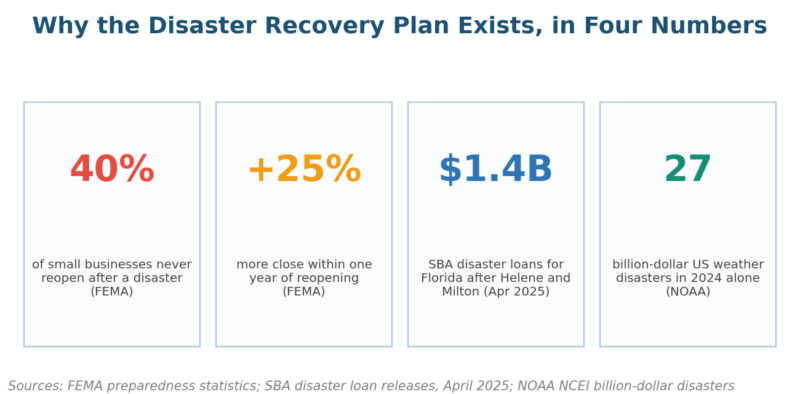 Figure 1. The survival math: the businesses that reopen fast are the ones that planned the first hours in advance.
Loans arrive slower than payroll leaves. SBA disaster lending is real help, and the
Helene assistance program processed thousands of applications, but approval takes weeks while customers drift to whoever is open. The disaster recovery plan is what keeps revenue moving during that gap. Company recovery plans sit inside a wider public system; see how
national disaster risk management shapes the hazards you plan for.
Recovery has a tax and paperwork dimension too. The
IRS extends filing deadlines in declared disaster areas, insurers require documented losses before cleanup, and both favor the owner whose plan said photograph everything first. Section 8 of the template holds those entry points.
The cash math is unforgiving for small firms. A closed storefront still pays rent, loan installments, and key staff while revenue sits at zero, which is
why a continuity plan matters even to a ten-person business: every day cut from recovery time is a day of fixed costs earned back.
Inside the Disaster Recovery Plan Template: Section by Section
The nine sections follow the sequence a real event forces on you, the same discipline
NIST SP 800-34 applies to federal contingency planning scaled down to a business that has no IT department. Contacts come before systems because people move first; backups come before procedures because procedures assume something to restore.
Setting RTO and RPO in the Disaster Recovery Plan Template
Two numbers drive every other decision in the template. RTO is how long a system can stay down before the damage compounds; RPO is how much data you can afford to lose, which is really a statement about backup frequency. Our
RPO versus RTO explainer covers the definitions in depth.
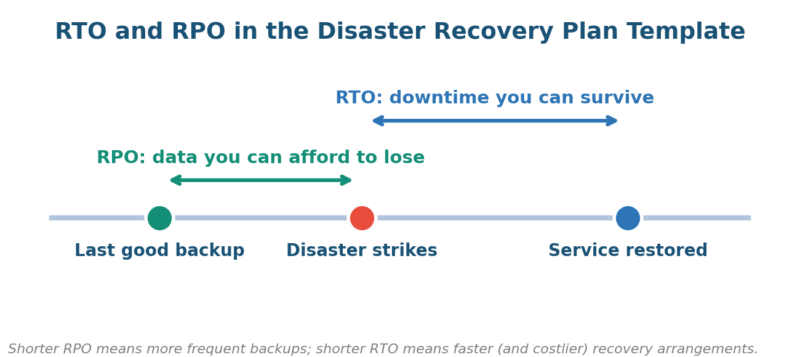 Figure 2. RPO looks backward to the last good backup; RTO looks forward to restored service.
Set both numbers per system, not for the business as a whole. The point-of-sale system might carry a 4-hour RTO and a 1-hour RPO while the archive server tolerates a week, and pricing that difference honestly is what keeps the recovery budget sane. A
business impact analysis supplies the evidence.
Write the recovery procedures for the person who is present, not the person who is expert. The IT provider may be unreachable in a regional event, so each disaster recovery procedure in Section 5 assumes a capable non-specialist following numbered steps with a vendor support line beside them.
Recovery Tiers: Sequencing the Disaster Recovery Plan
Everything cannot be first, so the template’s inventory table sorts systems into tiers by RTO. Tier 1 is whatever produces revenue or meets legal obligations today; if the tier-one list exceeds five systems for a small business, the tiers are aspiration rather than sequence.
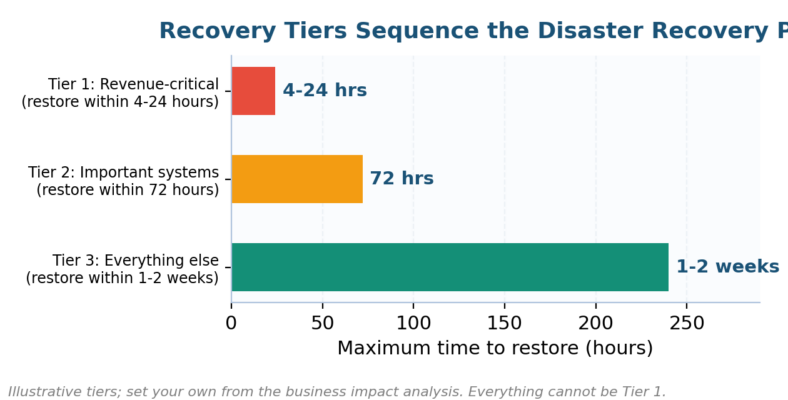 Figure 3. Tiers turn a crisis into a queue: revenue-critical first, important second, everything else after.
| Tier |
What belongs here |
Typical small-business examples |
| Tier 1 (4-24 hrs) |
Revenue-critical and legally required systems |
Point of sale, payment processing, payroll data, phones |
| Tier 2 (72 hrs) |
Important but survivable on workarounds |
Email history, accounting system, e-commerce catalog |
| Tier 3 (1-2 weeks) |
Deferrable systems and archives |
Old project files, marketing assets, archived records |
Tiering is also where the
BIA template pays for itself before any disaster arrives, because the impact numbers it documents are the only defensible way to argue a system down a tier when every department in the building claims Tier 1 status.
Disaster Recovery vs Business Continuity: Where This Template Fits
The two disciplines share a boundary worth drawing before an auditor or insurer asks. Disaster recovery restores systems and data;
business continuity keeps the business serving customers while restoration runs, and our
continuity versus disaster recovery comparison maps the hand-offs in both directions.
| Question |
Disaster recovery answers |
Business continuity answers |
| What failed? |
Systems, data, equipment, premises |
Customer service, cash flow, obligations |
| Core metric |
RTO and RPO per system |
Maximum tolerable downtime per function |
| Key artifact |
This DR plan and its backup strategy |
The BCP and its essential components |
| First hour focus |
Activate, assess, start restores |
Workarounds, communication, decisions |
A small business usually merges both into one binder, and that is fine as long as the sections stay distinct. Growing firms graduate to the fuller structure in our
ISO 22301 guide, where
ISO 22301:2019 defines the certifiable version of the same discipline.
Software enters the picture as the business grows past what a Word document manages. Once you run multiple sites or dozens of systems, the
continuity management platforms we compare and
crisis notification tools automate the call tree and plan upkeep this template handles manually.
Testing the Disaster Recovery Plan Template
An untested plan is a document; a tested plan is a capability. The template’s Section 9 log expects two entries a year minimum, and
DRI International’s professional practices treat exercise evidence as the difference between having a plan and claiming one.
| Test type |
What it proves |
Time cost |
| Restore test |
Backups actually restore, within the RPO you claimed |
2-4 hours, quarterly to annually |
| Walk-through |
Contacts current, steps still match reality |
90 minutes, annually |
| Scenario drill |
People execute under a realistic story |
Half a day, annually |
| Failover test |
Alternate arrangements genuinely work |
Half to full day, when material |
Borrow tested scenarios instead of inventing your own from scratch: our
fifteen ready-made exercise scenarios adapt directly, and the
maturity model gives a scoring rhythm. Banks reading this already recognize the cadence, because
FFIEC examiners have expected tested recovery for years.
Treat every gap a test finds as a win, and say so out loud to the team. A restore that fails in a drill costs an afternoon; the same failure in a real event can cost the business, so the walk-through that surfaces three broken phone numbers just paid for the year’s testing.
What Goes Wrong in Small Business Disaster Recovery (And the Fixes That Work)
The failure patterns repeat across every disaster season, and most are decided months before landfall. Each row below pairs a documented pattern with the template section that prevents it, so the fix is a page number rather than a purchase.
| Pitfall |
Root cause |
Remedy |
| Plan stored only on-site |
Nobody imagined losing the building and server together |
Cover-page rule: cloud copy plus printed off-site copy |
| Backups that never restored |
Testing felt optional; vendor promised it worked |
Section 9: restore test logged at least annually |
| Phone numbers two jobs old |
Contact table never revisited |
Call tree checked at every walk-through |
| Everything rated Tier 1 |
No BIA evidence behind the priorities |
Tier list argued from impact numbers, capped at five |
| Cleanup before photographs |
Adrenaline beats insurance procedure |
Communication plan: insurer and photos before cleanup |
| Aid applications started late |
Owner learns SBA process mid-crisis |
Section 8 pre-lists SBA and FEMA entry points |
Common Disaster Recovery Plan Template Questions Owners Ask
What should a disaster recovery plan template include?
Nine things: activation criteria, a contact call tree, a critical-systems inventory with RTO and RPO per system, the backup strategy, step-by-step recovery procedures, alternate work arrangements, a communication plan, insurance and aid details, and a test log. The free Word download in this post carries all nine as fill-in sections.
Is this disaster recovery plan template really free?
Yes, free to download, use, and adapt for your business with no email gate attached. Replace the bracketed fields, delete what does not apply, and store copies in the cloud and off-site in print. Attribution back to this page is appreciated but never required.
What is the difference between a disaster recovery plan and a business continuity plan?
Disaster recovery restores systems, data, and premises after an event; business continuity keeps customers served while that restoration runs. Small businesses often combine both in one document, which works when the sections stay distinct. Our
side-by-side comparison and the
incident response boundary map all three disciplines.
How do I set RTO and RPO in a disaster recovery plan?
Ask two questions per system: how many hours of downtime start causing real damage (RTO), and how much data loss is survivable (RPO)? Set both from business impact rather than IT convenience, and let the answers drive backup frequency and recovery spending. Numbers belong in the inventory table, not in heads.
How often should a small business test its disaster recovery plan?
Run one backup restore test and one plan walk-through per year at minimum, and add a scenario drill when staffing allows. Update the plan after any test, any staff change, and any new system. The template’s log turns that cadence into two dated lines a year.
Does a small business really need a disaster recovery plan for cyberattacks too?
Yes, and the same template covers it: ransomware is a disaster that destroys data instead of premises, and the recovery still runs on backups, RTO, and communication. Add an
incident response plan for the containment hours before recovery begins, and keep the
Red Cross preparedness basics for the human side.
What’s Coming Next for Small Business Disaster Recovery: 2026 to 2028
Insurers are becoming the enforcement mechanism. Property and business-interruption underwriters increasingly price for documented recovery arrangements, and small firms with a tested disaster recovery plan are starting to see it reflected in terms, the way alarm systems once earned discounts.
Cloud backup has removed the last cost excuse. Continuous, off-site, versioned backup now costs less monthly than a single hour of a technician’s time, which converts the old hardware problem into a pure discipline problem: configure it once, then test the restore.
Federal guidance keeps drifting toward the small end of town.
Ready.gov’s IT disaster recovery guidance already writes for firms without IT departments, and after each major hurricane season the SBA ties more of its outreach to preparedness rather than loans alone. Expect plan documentation to join loan applications as routine paperwork.
Automation will quietly rewrite Section 4 first. Backup tools now verify their own restores and report the result, which means the small business of 2028 will test recovery the way it runs payroll: on a schedule, with an exception report when something breaks, and no heroics required.
Infographic: The Disaster Recovery Plan’s First 72 Hours
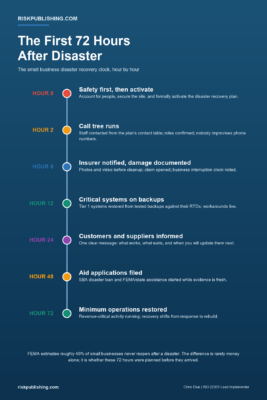 Figure 4. The whole plan compressed to a clock: what a prepared small business does hour by hour.
Pressure-Test Your Disaster Recovery Plan With Risk Publishing
A filled-in template is the start; a plan that survives a hostile walk-through is the goal. Explore
our services or
contact us and we will run your draft disaster recovery plan against the scenarios your region actually produces, gaps documented and fixes dated.
Chris Ekai is a Risk Management expert with over 10 years of experience in the field. He has a Master’s(MSc) degree in Risk Management from University of Portsmouth and is a CPA and Finance professional. He currently works as a Content Manager at Risk Publishing, writing about Enterprise Risk Management, Business Continuity Management and Project Management.