
In 2023, a mid-sized healthcare system in the U.S. Southeast discovered that a single misconfigured cloud server had exposed 2.1 million patient records.
The breach cost the organization $14.7 million in regulatory fines, legal settlements, and remediation. The postmortem revealed something that surprised no one inside the risk profession: the organization employed zero staff with formal risk management training.
The compliance officer had an MBA. The IT director held a computer science degree. Neither had studied risk identification, risk assessment, or controls design. They managed threats by instinct, not methodology.
| What You Will Learn |
|---|
| Georgia State University, the University of Georgia, and the University of Wisconsin-Madison lead the 2025-2026 undergraduate rankings for risk management and insurance programs. |
| Risk management careers are growing 2-6x faster than the national average, with operations research analysts projected at 23% growth through 2033. |
| Median risk manager salaries reached $117,300 in 2025, with Chief Risk Officers earning $200,000+ at mid-career. |
| The global ERM market is projected to grow from $6 billion in 2025 to nearly $12 billion by 2030, a 14.8% CAGR that signals sustained demand for qualified professionals. |
| Certifications like the FRM (97,000 holders), RIMS-CRMP, and CRISC are increasingly expected by employers alongside formal degrees. |
| AI fluency, cloud security, and quantitative risk modeling are the three skill sets employers now prioritize most when hiring risk professionals. |
| Online and hybrid programs from Columbia University, Georgetown, and Boston University offer working professionals flexible paths to graduate credentials. |
That gap between organizational exposure and professional preparation is why the best risk management programs matter. As risk professionals, we know that frameworks like ISO 31000 and COSO ERM do not implement themselves.
They require people who understand probability, regulatory landscapes, financial modeling, and operational resilience.
This article maps the programs that build those people, from undergraduate degrees and graduate specializations to professional certifications and online options, with current data on rankings, salaries, career trajectories, and the skills employers demand in 2026.
Why Risk Management Education Pays Off in Hard Numbers
The business case for formal risk management education has never been stronger. The global enterprise risk management market was valued at $6 billion in 2025 and is projected to reach nearly $12 billion by 2030, growing at a compound annual growth rate of 14.8%, according to MarketsandMarkets.
That growth translates directly into hiring demand. The U.S. Bureau of Labor Statistics projects 17% growth for financial managers and 23% growth for operations research analysts through 2033, both well above the 4% national average for all occupations.
Salary data reinforces the point. Risk managers earned a median of $117,300 in 2025, with entry-level professionals starting near $77,600 and veterans with certifications reaching $190,000+. For financial risk specialists, the average sits at $118,950.
These are not hypothetical figures. They reflect sustained employer demand for professionals who can translate risk appetite statements into operational controls, build KRI dashboards, and quantify tail-risk scenarios using Monte Carlo simulation or scenario analysis.
Figure 1: Risk Management Career Growth Outlook
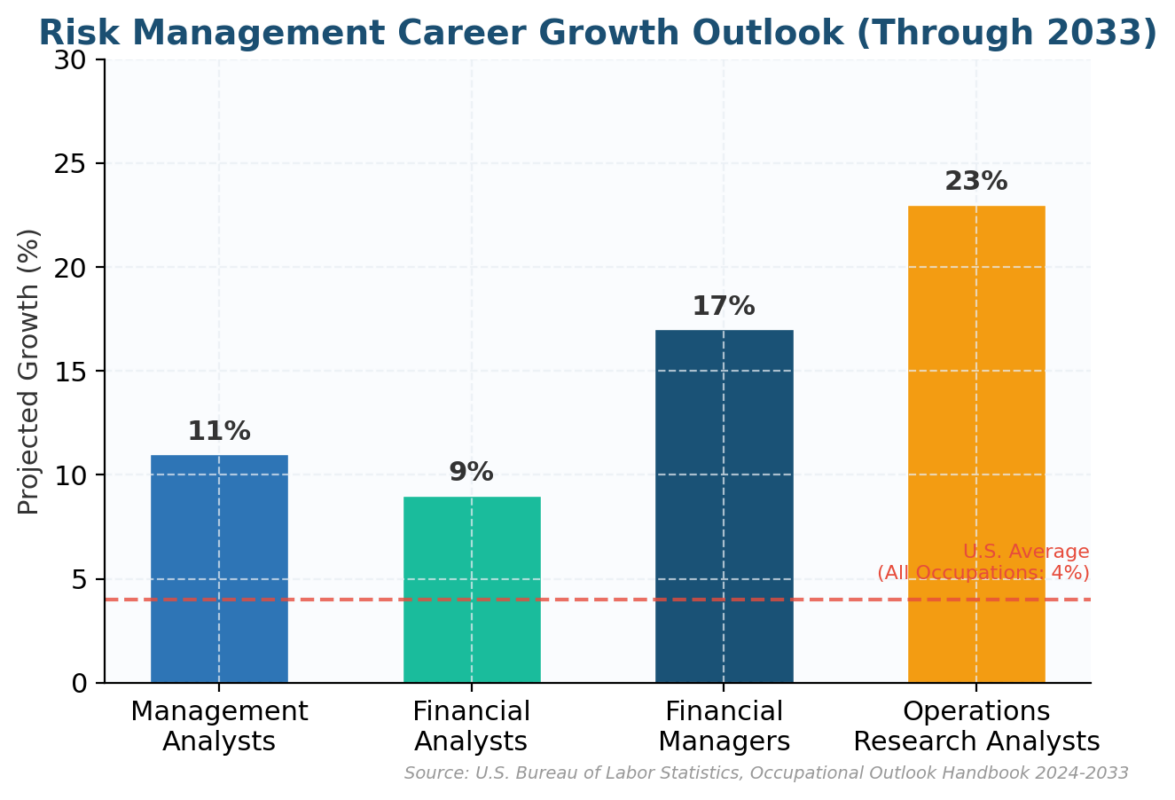
Figure 1: Projected job growth for risk-adjacent roles significantly outpaces the U.S. average. Source: Bureau of Labor Statistics.
Figure 2: Global ERM Market Trajectory
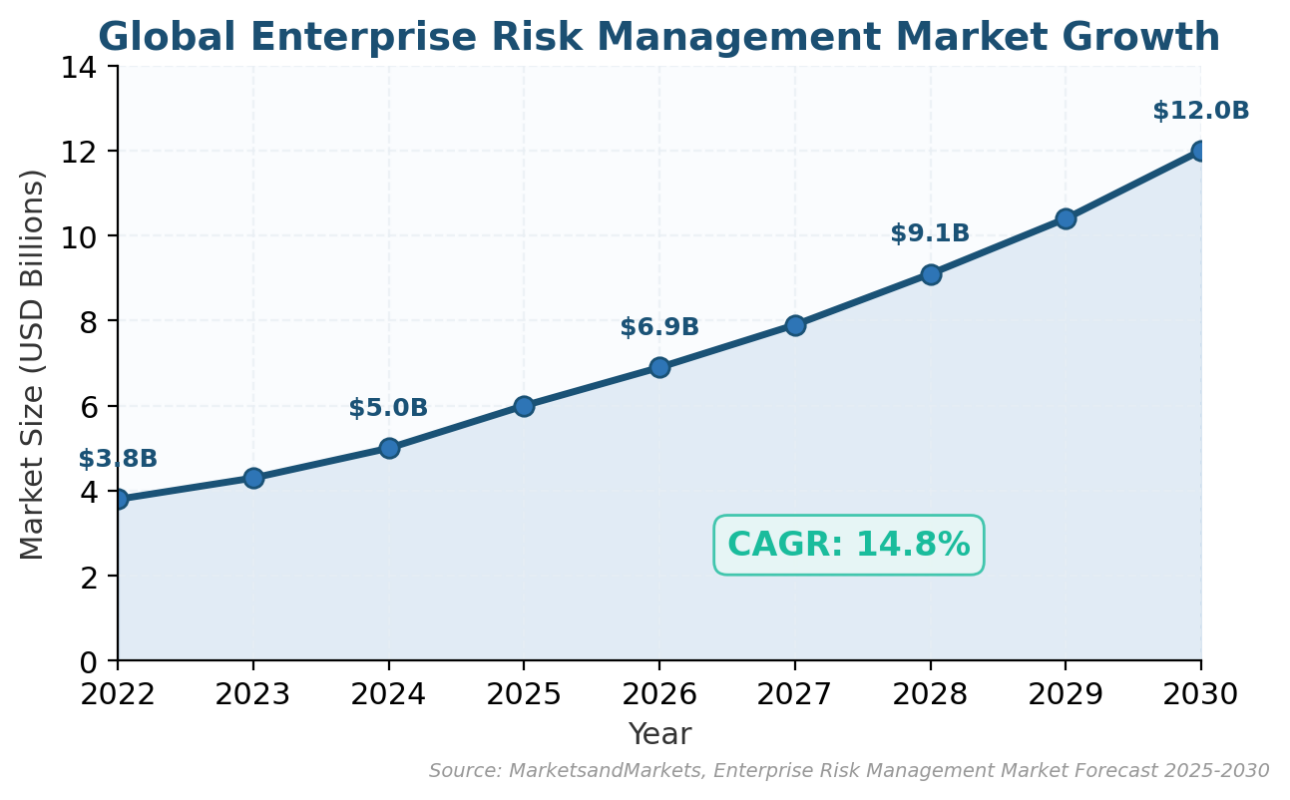
Figure 2: The enterprise risk management market is on track to double by 2030, fueled by cyber risk, ESG compliance, and cloud adoption.
Top Undergraduate Risk Management Programs (2025-2026)
The strongest undergraduate programs combine insurance fundamentals with broader enterprise risk management, quantitative methods, and experiential learning.
Rankings draw from U.S. News & World Report, Best’s Review Top 20, and Business Insurance annual surveys. Here are the programs that consistently appear at the top.
| University | Location | Program Highlights | Key Distinction |
|---|---|---|---|
| Georgia State University | Atlanta, GA | MS in Quantitative Risk Analysis ranked #1 among public programs; undergraduate RMI program ranked #4 nationally | Maurice R. Greenberg School of Risk Science; #3 nationally by Eduniversal |
| University of Georgia | Athens, GA | Top-ranked undergraduate insurance and risk management program with research-intensive faculty | Consistently ranked #1-2 by U.S. News for undergraduate insurance programs |
| Univ. of Wisconsin-Madison | Madison, WI | Risk management and insurance program with hands-on actuarial and analytics labs | Strong Midwest employer pipeline; dual emphasis on insurance and ERM |
| St. John’s University | New York, NY | Greenberg School ranked #11 undergraduate, #1 by Business Insurance for graduate volume | One of 17 Centers of Actuarial Excellence designated by the Society of Actuaries |
| Temple University | Philadelphia, PA | Risk management and insurance major within the Fox School of Business | Strong industry connections in the Philadelphia/NYC insurance corridor |
| Florida State University | Tallahassee, FL | Top-ranked public university RMI program with internship partnerships | Best’s Review Top 20; strong placement in Southeast insurance markets |
| Illinois State University | Normal, IL | Katie School of Insurance and Financial Services; AACSB-accredited | Best’s Review Top 20; specialized insurance and financial services focus |
| Appalachian State University | Boone, NC | Brantley Risk and Insurance Center with dedicated career services | Named among top 10 by PropertyCasualty360; strong industry advisory board |
Figure 3: How Top Programs Compare
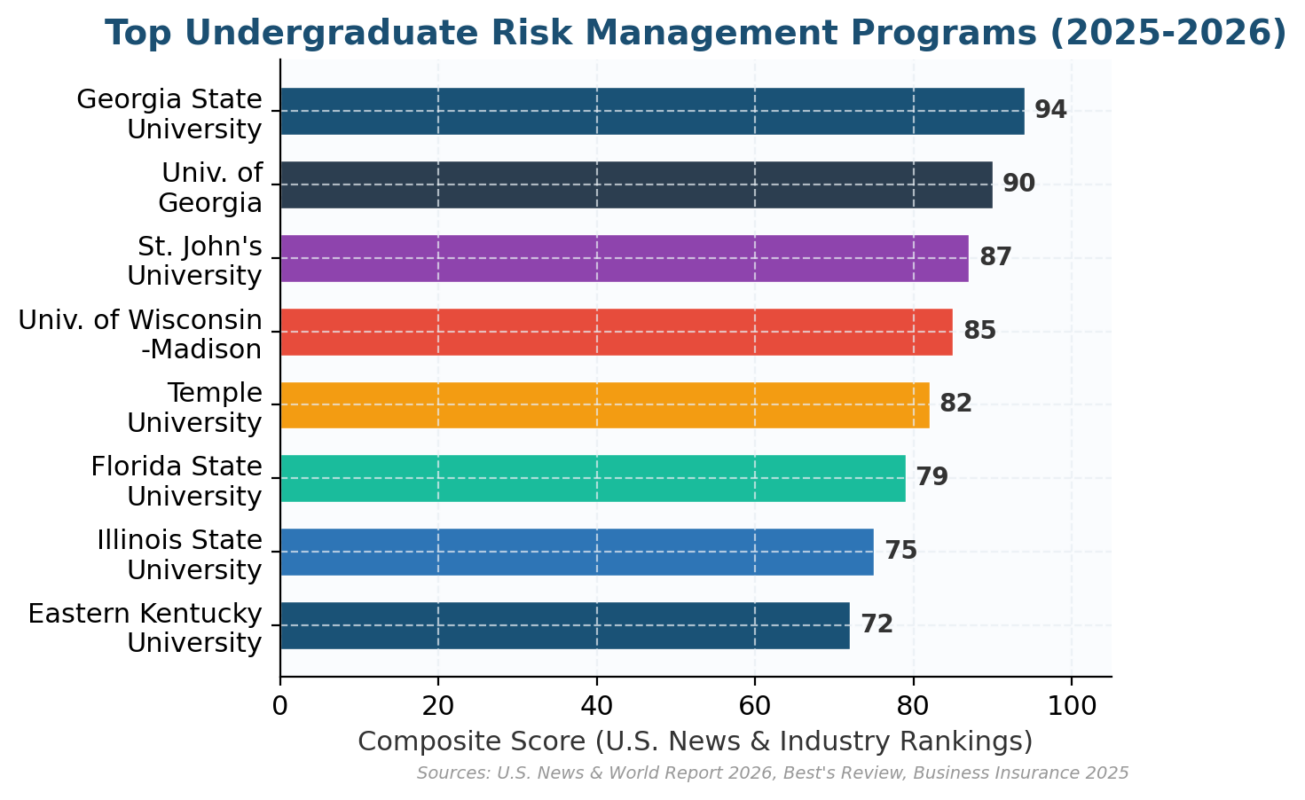
Figure 3: Composite scores based on U.S. News rankings, Best’s Review Top 20, and Business Insurance 2025 surveys.
Graduate Programs That Build Senior Risk Leaders
A bachelor’s degree opens the door; a graduate program positions you for leadership. The best master’s programs in risk management go beyond theory to develop professionals who can design ERM frameworks, lead business impact analyses, and present risk quantification to boards. The following programs stand out for their rigor, industry alignment, and career outcomes.
| Institution | Degree | Curriculum Focus | Format & Duration |
|---|---|---|---|
| Columbia University | MS in Enterprise Risk Management | ERM strategy, financial risk, operational risk, cyber risk, data analytics | Full-time (3 semesters) or part-time (6 semesters); NYC campus |
| Georgia State University | MS in Quantitative Risk Analysis | Quantitative methods, predictive analytics, insurance economics, actuarial science | On-campus; ranked #1 public, #3 nationally by Eduniversal |
| Georgetown University | MPS in Cybersecurity Risk Management | Cyber risk, information assurance, digital forensics, policy frameworks | 100% online; 33 credit units; 2-5 year completion |
| Univ. of Washington | MS in Computational Finance & Risk Mgmt | Quantitative finance, derivatives pricing, portfolio risk, stochastic modeling | On-campus; heavy quantitative/programming emphasis |
| Boston University | MS in Risk Management | Insurance operations, enterprise risk, compliance, analytics | Online available; ranked #12 nationally for online management programs |
| Imperial College London | MSc in Risk Mgmt & Financial Engineering | Quantitative risk, derivatives, financial engineering, machine learning | 1-year full-time; globally ranked (#11 Times Higher Ed) |
For professionals who cannot commit to a full master’s degree, certificate programs offer a middle path.
New York University’s Graduate Certificate in Risk Management and Columbia’s Certificate of Professional Achievement in ERM both provide focused credentials that align with ISO 31000 principles and can be completed in under a year.
Professional Certifications: The Credentials Employers Actually Check
Degrees signal foundational knowledge. Certifications signal current competence. In a field where regulatory expectations shift annually and emerging risks like AI governance and ESG compliance reshape the profession, employers increasingly look for specific credentials alongside formal education.
The three lines model assigns clear accountability across risk ownership, risk oversight, and independent assurance, and certifications help practitioners demonstrate readiness for each line.
| Certification | Issuing Body | Focus Area | Global Holders | Best For |
|---|---|---|---|---|
| FRM | GARP | Financial risk measurement, market risk, credit risk, operational risk, Basel frameworks | 97,000+ | Banking, asset management, financial services risk professionals |
| RIMS-CRMP | RIMS | Enterprise risk management, risk financing, claims management, organizational resilience | 8,000+ | Corporate risk managers, insurance buyers, ERM practitioners |
| CRISC | ISACA | IT risk identification, risk assessment, risk response, monitoring, IS controls | 30,000+ | IT risk managers, cybersecurity professionals, audit staff |
| PRM | PRMIA | Risk governance, quantitative methods, financial instruments, risk management practices | 12,000+ | Quantitative risk analysts, portfolio risk professionals |
| CISA | ISACA | IS audit, governance, acquisition, development, operations, asset protection | 50,000+ | IT auditors, compliance officers, IS governance professionals |
| ISO 31000 LRM | PECB | ISO 31000 risk management framework implementation, risk assessment methodology | 15,000+ | ERM practitioners, consultants, public sector risk managers |
Figure 4: Global Reach of Key Risk Certifications
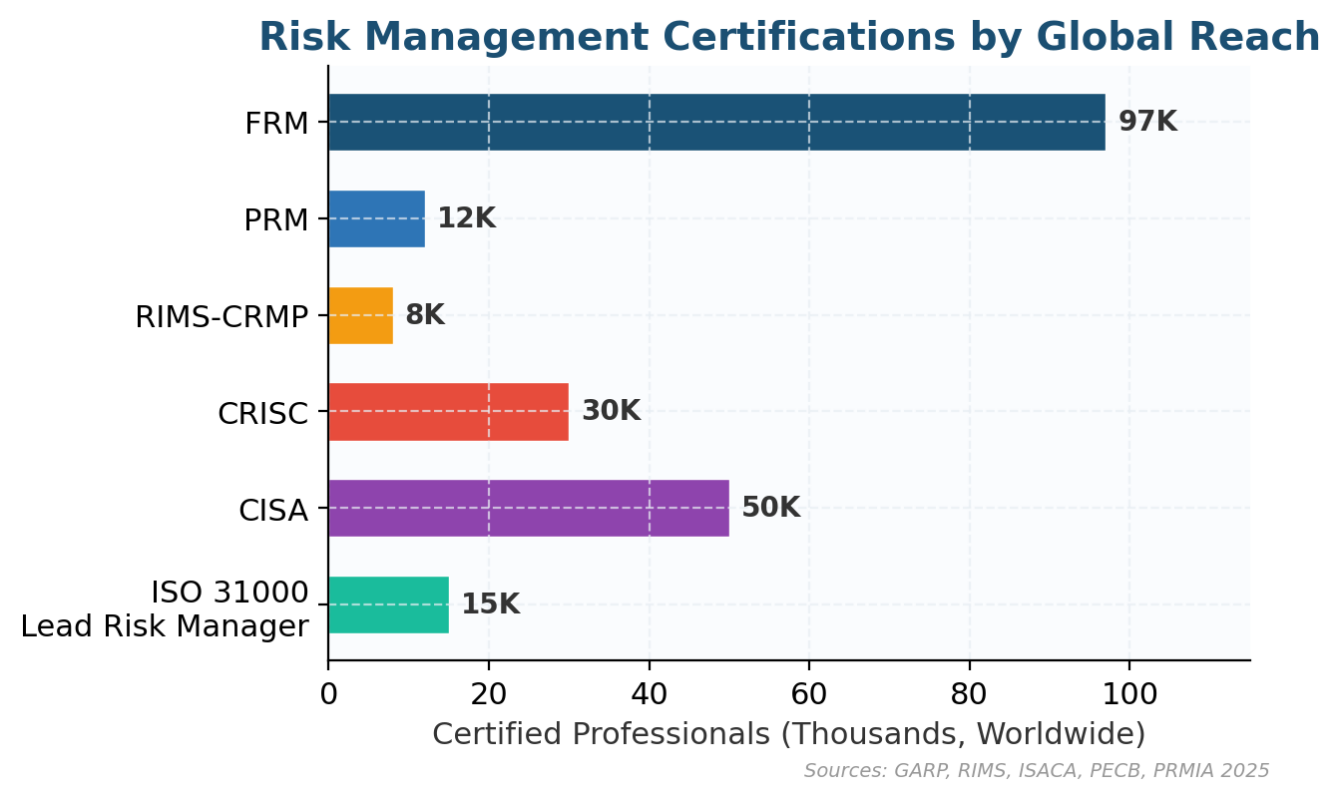
Figure 4: The FRM dominates in financial services, while CRISC and CISA lead in IT/cyber risk. RIMS-CRMP is growing fastest in enterprise risk management.
Choosing Your Path: Online, Campus, or Hybrid
The debate over online versus campus programs has largely been settled by results. Both formats produce competent risk professionals. The real question is which format fits your career stage, learning style, and professional obligations.
Working professionals with 5+ years of experience often benefit more from online programs that let them apply concepts immediately to their current roles. Early-career professionals may gain more from campus programs that offer internship pipelines, face-to-face mentorship, and structured networking.
| Factor | Online Programs | Campus Programs |
|---|---|---|
| Flexibility | Self-paced or asynchronous; ideal for working professionals | Fixed schedules; requires full-time or part-time commitment |
| Networking | Virtual cohorts; industry webinars; alumni networks | In-person peer groups; career fairs; professor relationships |
| Hands-On Learning | Simulations, case studies, virtual labs | Physical labs, live trading floors, on-site employer visits |
| Cost | Often lower; no relocation; employer-sponsored options common | Higher total cost; campus fees; living expenses |
| Career Placement | Rely on existing employer or self-directed job search | Dedicated career services, campus recruiting, internship offices |
| Best For | Mid-career professionals upgrading credentials | Early-career students building foundational skills and industry contacts |
Programs like Georgetown’s online MPS in Cybersecurity Risk Management and Boston University’s online MS demonstrate that accredited institutions can deliver graduate-level risk education remotely with strong outcomes.
That said, for actuarial science and quantitative finance tracks that require heavy lab work and peer collaboration, campus-based programs at Georgia State or the University of Washington remain the gold standard.
The Skills Gap: What Employers Demand Beyond the Degree
A degree or certification gets your resume past the filter. What gets you hired, and promoted, is a specific skill set that reflects where the profession is heading.
The ISC2 2025 Cybersecurity Workforce Study found that AI/machine learning (41%), cloud security (36%), and risk assessment (29%) are the three skills most in demand among hiring managers. GRC and governance skills rank at 27%, meaning employers expect risk professionals to operate across both technical and strategic domains.
Figure 5: Most In-Demand Skills for Risk Professionals
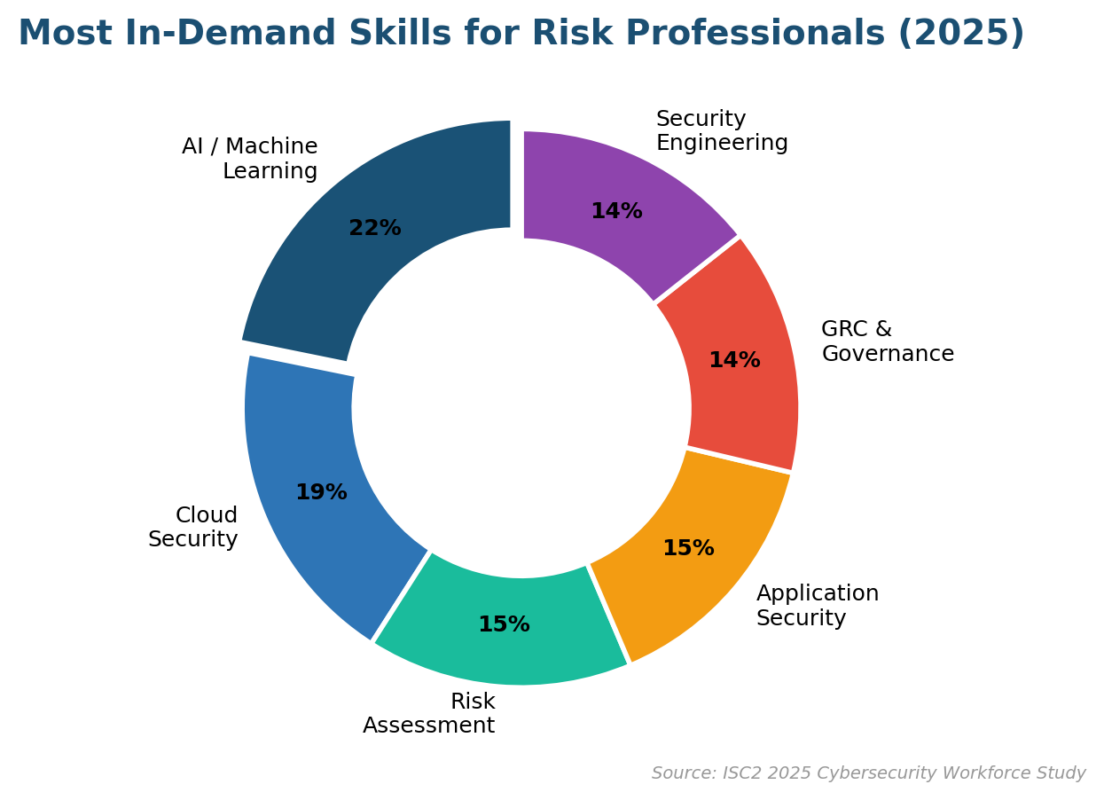
Figure 5: AI and cloud security skills now outrank traditional risk assessment as hiring priorities. Source: ISC2 2025 Workforce Study.
For students evaluating programs, this data should influence course selection. Programs that integrate data analytics, Python or R for quantitative risk analysis, and AI risk governance modules are better aligned with where employers are spending.
Soft skills matter equally: problem-solving, collaboration, and clear communication ranked as the top three non-technical competencies both hiring managers and practitioners agree on.
What Risk Management Graduates Actually Earn
Salary data anchors the return-on-investment calculation for any degree or certification investment. The ranges vary significantly by role, industry, and geography, but the trajectory is consistently upward for professionals who combine formal education with recognized credentials.
Figure 6: Risk Management Salary Ranges by Role
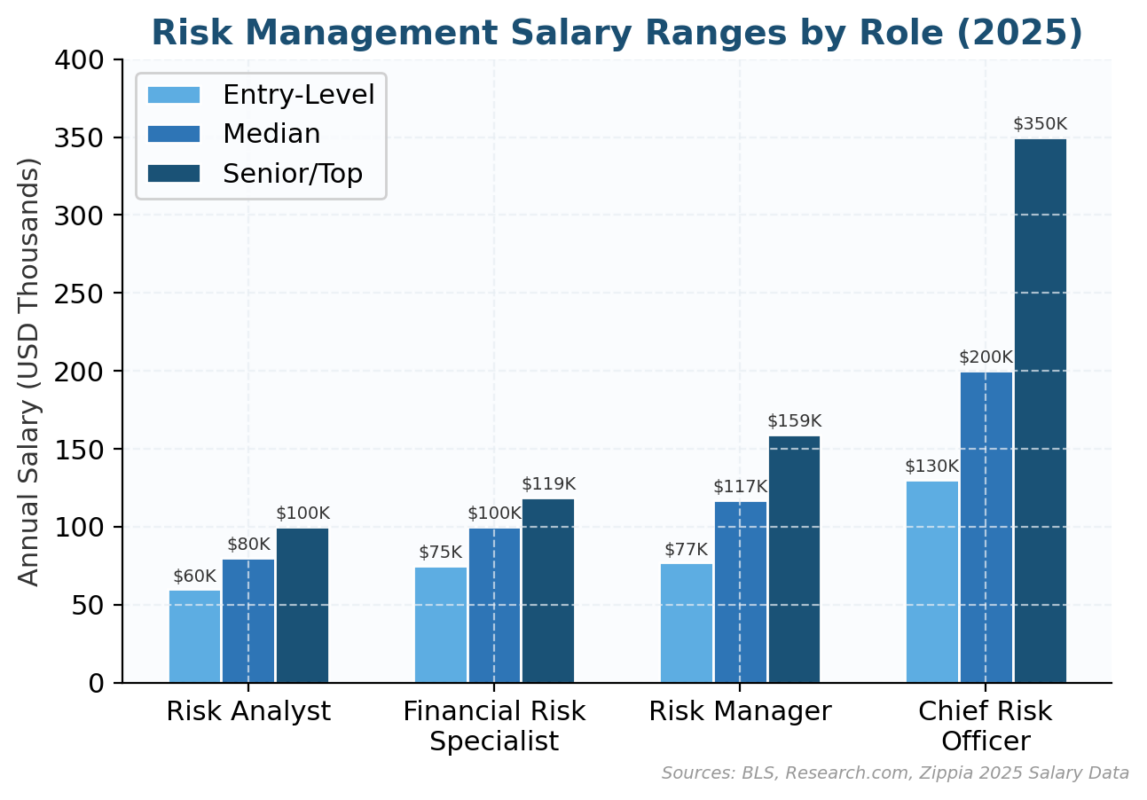
Figure 6: Chief Risk Officers command the highest compensation, but even entry-level risk analysts start above the U.S. median household income.
Several factors drive salary differentiation. Professionals holding the FRM earn approximately 20-25% more than peers without it in banking and financial services roles.
The CRISC certification carries a similar premium in technology and cybersecurity risk positions. Geography matters too: New York, San Francisco, and London command 15-30% premiums over national medians, reflecting both cost of living and concentration of financial institutions.
From Research to Enrollment: A Three-Phase Action Plan
| Phase | Actions | Deliverables | Success Metrics |
|---|---|---|---|
| Weeks 1-4: Discovery | Research 5-8 programs; compare curricula, costs, and career outcomes; attend virtual info sessions; contact alumni via LinkedIn | Shortlist of 3 programs; cost-benefit spreadsheet; employer tuition reimbursement inquiry | Shortlist completed; funding options identified; at least 2 alumni conversations held |
| Weeks 5-8: Evaluation | Apply to shortlisted programs; register for a certification exam (FRM Part I or RIMS-CRMP); begin self-study with free MOOC courses | Applications submitted; certification study plan created; MOOC enrollment confirmed | All applications submitted before deadlines; 20+ hours of preliminary study logged |
| Weeks 9-12: Commitment | Accept offer; finalize funding; join professional associations (RIMS, GARP, ISACA); build a risk management reading list | Enrollment confirmed; professional network activated; 90-day study calendar created | Enrolled with financial plan in place; connected with 10+ industry professionals |
Where Program Selection Goes Wrong (And How to Avoid It)
| Pitfall | Root Cause | Remedy |
|---|---|---|
| Choosing based on rankings alone | Rankings measure institutional reputation, not curriculum fit for your career goals | Map each program’s course list against the specific skills your target employers require |
| Ignoring accreditation status | Non-accredited programs may not be recognized by employers or professional bodies | Verify AACSB or equivalent accreditation; confirm certification exam eligibility |
| Overlooking internship pipelines | Some programs have strong academics but weak industry connections | Ask admissions for employer partnerships, internship placements, and job placement rates |
| Pursuing a general MBA when ERM skills are needed | Generic MBAs rarely cover risk assessment, insurance, or regulatory compliance in depth | Choose a specialized risk management degree or an MBA with a dedicated risk concentration |
| Skipping certifications | Employers increasingly expect both; a degree without a certification leaves a credential gap | Plan to pursue at least one certification during or immediately after your degree program |
| Underestimating tech curriculum | Programs heavy on theory but light on analytics and GRC platforms leave graduates unprepared | Prioritize programs that include data analytics, Python/R, or GRC tool training |
Three Shifts That Will Reshape Risk Education by 2028
The risk management profession is moving faster than most academic programs can adapt. Three structural shifts will define which programs thrive and which become obsolete in the next three years.
AI integration becomes non-negotiable. By 2027, every serious risk management program will need to teach AI risk governance, algorithmic bias assessment, and the use of AI tools for risk identification and monitoring. The EU AI Act and emerging U.S. state-level AI regulations are creating a new compliance landscape. Programs that treat AI as an elective rather than a core competency will fall behind.
ESG and climate risk enter the mainstream curriculum. Sustainability reporting requirements under the EU Corporate Sustainability Reporting Directive and the SEC’s evolving climate disclosure rules are pushing ESG risk indicators from niche topics into core risk management training.
Programs at Columbia and Imperial College have already integrated ESG modules; expect mid-tier programs to follow by 2027.
Micro-credentials challenge traditional degrees. Platforms like Coursera, edX, and LinkedIn Learning now offer stackable risk management certificates from recognized universities.
For professionals who already hold a bachelor’s degree, these micro-credentials offer a faster, cheaper path to specific competencies like operational resilience or third-party risk management. Traditional programs will need to differentiate on depth, networking, and certification preparation to justify their cost premium.
Need help building a risk management framework for your organization, or guidance on selecting the right program for your career goals? Contact the team at riskpublishing.com for consulting, training, and implementation support. Explore our full library of risk management resources to accelerate your professional development.
References
- U.S. News & World Report: 2026 Best Undergraduate Insurance Programs Rankings
- Best’s Review: Top 20 Risk Management and Insurance Schools
- Business Insurance: 2025 Risk Management & Insurance Schools
- Georgia State University: Maurice R. Greenberg School of Risk Science
- MarketsandMarkets: Enterprise Risk Management Market Forecast 2025-2030
- U.S. Bureau of Labor Statistics: Occupational Outlook Handbook
- Research.com: How to Become a Risk Manager (2026 Guide)
- GARP: Financial Risk Manager (FRM) Certification
- ISC2: 2025 Cybersecurity Workforce Study
- ISO: ISO 31000 Risk Management Guidelines
- COSO: Enterprise Risk Management Framework
- KPMG: AI is Revolutionizing Risk Management (2025)
- Aon: AI Risk 2026 – What Business Leaders Need to Know
- Columbia University: MS in Enterprise Risk Management
- St. John’s University: Greenberg School of Risk Management

Chris Ekai is a Risk Management expert with over 10 years of experience in the field. He has a Master’s(MSc) degree in Risk Management from University of Portsmouth and is a CPA and Finance professional. He currently works as a Content Manager at Risk Publishing, writing about Enterprise Risk Management, Business Continuity Management and Project Management.