The 2026 RMIS Report from Redhand Advisors collected survey input from more than 1,000 risk and claims professionals, and its verdict stayed consistent: Origami Risk took market leader for the eighth consecutive year, with Riskonnect in the leader group for the ninth.
That stability at the top hides real movement underneath it. Riskonnect has absorbed Ventiv Technology, buyers now treat integration and analytics as table stakes rather than differentiators, and the gap between RMIS-first and GRC-first platforms has become the deciding question in most selections we see.
| Best RMIS Software: Key Takeaways |
| Redhand Advisors’ 2026 RMIS Report, built on survey input from more than 1,000 risk and claims professionals, named Origami Risk market leader for the eighth consecutive year. |
| Riskonnect made the leader group for the ninth straight year and, after absorbing Ventiv Technology, pairs RMIS depth with an integrated GRC data model. |
| ClearRisk ranked first for customer support and tied for first in incident management, making it the mid-market and public-entity pick. |
| RMIS software manages insurable risk: claims, incidents, policies, exposures, and certificates, all feeding total cost of risk (TCOR). GRC platforms start from controls instead. |
| Selection lives or dies on integrations: TPA claims feeds, carrier data, HRIS, and ERP connections decide more outcomes than feature checklists do. |
| Run identical scripted demos seeded with your own claims data, and price the admin burden and exit terms alongside the subscription. |
This comparison covers the best RMIS software for 2026 from a practitioner’s seat: what each platform genuinely does well, where the trade-offs sit, and how to run a selection that survives procurement. It extends the same series as our ERM platform comparison and BCM software roundup.
What RMIS Software Actually Manages
A risk management information system is the operating platform for insurable risk. It ingests claims from TPAs and carriers, captures incidents at the source, holds policies and exposure schedules, tracks certificates of insurance, and rolls everything into total cost of risk.
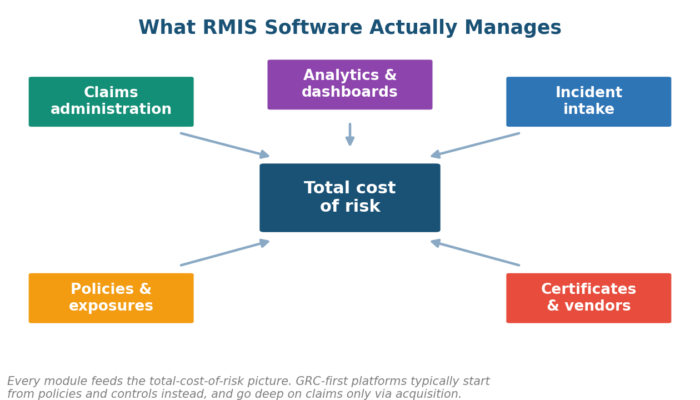
Figure 1. Five modules, one output: every RMIS capability exists to sharpen the total-cost-of-risk picture.
The boundary with governance platforms matters because the vendors increasingly cross it. A GRC framework starts from policies, controls, and attestations; an RMIS starts from claims dollars. Platforms born on one side rarely match the other side’s depth, whatever the brochure says.
The data feeding these modules keeps widening too. Property schedules now carry climate exposure attributes tracked through climate risk indicators, and underwriters increasingly request ESG context that once lived only in dedicated ESG platforms, so the RMIS exposure module is quietly becoming the meeting point for both.
| Dimension | RMIS-first platforms | GRC-first platforms |
| Native center of gravity | Claims, incidents, exposures, TCOR | Policies, controls, compliance attestation |
| Typical buyer | Risk manager, claims team, broker liaison | CISO, compliance, internal audit |
| Claims administration | Deep: reserves, payments, litigation | Light, often via partner or acquisition |
| Where they strain | Enterprise-wide control libraries | TPA feeds and carrier data plumbing |
Who Buys RMIS Software, and What Triggers the Purchase
RMIS purchases rarely start from strategy decks. They start when a specific pain crosses a threshold: an analyst spending two days a month rekeying TPA loss runs, a renewal data call that took six weeks, or a certificate lapse that surfaced during litigation discovery.
| Buyer profile | Typical trigger | First modules deployed |
| Self-insured corporate | TPA loss-run rekeying and reserve visibility | Claims administration, TCOR analytics |
| Public entity or risk pool | Member reporting burden and audit findings | Incident intake, claims, member portals |
| Captive owner | Actuarial data quality and regulator reporting | Exposures, policies, analytics |
| Broker or TPA | Client-facing reporting expectations | Claims dashboards, benchmarking |
The wider risk stack keeps specializing in parallel, which is why this series exists: internal audit platforms, ESG reporting tools, and AML screening systems each carved out their own category, and RMIS is the oldest of these specializations rather than the newest.
Best RMIS Software: the 2026 Comparison Table
Rankings below lean on the independent evidence: the Redhand survey results and each vendor’s published positions, filtered through what we see in selections. Every platform here can run a competent claims and incident program; the differences are depth, scale fit, and what breaks first.
| Platform | Best for | Standout strengths | Think twice if |
| Origami Risk | RMIS-first depth at any scale | Top scores for satisfaction, implementation, claims administration, reporting, and configuration in the 2026 report | You mainly need enterprise GRC breadth, not claims depth |
| Riskonnect | RMIS plus integrated GRC | Leader nine straight years; highest for understanding customer needs and implementation support; Ventiv claims heritage | You want a lightweight tool and a small admin footprint |
| ClearRisk | Mid-market and public entities | First in customer support, tied first in incident management for 2026 | You run complex multinational claims portfolios |
| Archer | Control-led enterprises adding insurable risk | Mature GRC platform with insurance management modules | Claims administration depth is the buying criterion |
| LogicManager | ERM-led programs adding incident intake | Approachable ERM workflows and taxonomy discipline | You need TPA feeds and TCOR analytics out of the box |
RMIS Platform Profiles
Origami Risk: the RMIS Market Leader
Origami Risk earned its eighth consecutive market-leader nod by ranking first or tied for first across system satisfaction, implementation, claims administration, incident management, reporting, and configuration. That breadth of first places is the practical meaning of RMIS-first: the claims engine is the product, never a bolt-on.
The platform suits organizations that live in claims data: self-insureds, captives, TPAs, and risk pools. The main caution is scope discipline, because a highly configurable platform rewards buyers who arrive knowing their workflows and punishes those who configure by improvisation.
Riskonnect: RMIS Plus Integrated GRC
Riskonnect has now spent nine consecutive years in the leader group and scored highest in 2026 for understanding customer needs and implementation support. Absorbing Ventiv Technology folded one of the deepest claims and analytics books in the industry into an already broad platform.
The pitch is one data model across insurable risk and enterprise GRC, so TCOR and ERM reporting stop needing middleware. The trade-off is footprint: a platform this broad wants a named administrator and a governance routine, which smaller teams underestimate. The vendor hosts the full report for the methodology-curious.
ClearRisk: RMIS for Mid-Market and Public Entities
ClearRisk took first place for customer support and tied for first in incident management in the 2026 report, with both rankings scored from direct customer feedback rather than vendor submissions. For municipalities, universities, and mid-market firms, responsive support routinely outweighs a longer feature list at renewal time.
Its sweet spot is claims and incident programs that need to run well without a dedicated systems team behind them. Complex multinational portfolios with heavy TPA plumbing will eventually outgrow it, which is a statement about scale fit rather than a criticism of the product.
Archer and LogicManager: When GRC-First Beats RMIS-First
Some buyers genuinely need the other starting point, and pretending otherwise sells bad fits. Archer brings a mature control-and-compliance platform with insurance management modules, and LogicManager offers approachable ERM workflows with incident intake. Both make sense when governance breadth leads the requirement and claims volume stays modest.
The test is honest volume math. Below a few hundred claims a year, GRC-first breadth often wins; above it, the missing TPA feeds and reserve-level analytics start costing more than a second platform would, a pattern our TPRM software comparison shows from the vendor-risk angle too. The same volume logic drives a buyer guide to risk assessment software, which sets thresholds for when tooling starts paying for itself.
The field is wider than five names, of course. Specialist claims administration systems, healthcare-specific incident platforms, and pool-management tools all orbit the category, and the annual Redhand report profiles them in a depth no comparison post should pretend to replicate. Read it before finalizing any shortlist.
How to Choose RMIS Software: Criteria That Predict Success
Feature checklists predict very little at this end of the market, because every serious vendor checks every box on them. The six criteria below are the ones that separate platforms in live selections, and each comes with a demo test that produces evidence instead of impressions.
| Criterion | Why it decides outcomes | How to test it in the demo |
| TPA and carrier feeds | Bad plumbing means manual rekeying forever | Name your TPAs; ask for live examples of those exact feeds |
| Incident intake UX | Frontline staff abandon clumsy forms | Have a non-risk colleague file a test incident unaided |
| Configuration vs code | Admin burden compounds every year | Watch an admin build a new field, workflow, and report live |
| Reporting and TCOR | The output your CFO actually sees | Load a sample loss run; rebuild your current board pack |
| Implementation record | Where RMIS projects actually fail | Ask for three references at your size and claims volume |
| Exit terms | Data hostage clauses surface at renewal | Get the data-export format and fees in writing pre-contract |
Anchor the scoring in the same discipline you would apply to any risk assessment: defined criteria, agreed weights, and evidence recorded at the point of observation. A scoring matrix built before the first demo keeps vendor charisma from doing the ranking for you.
Blend the evidence types deliberately as well, the way qualitative and quantitative assessment methods combine elsewhere. Reference calls and demo impressions are qualitative signals; feed-count tests, report-build timings, and admin-hours data from references are the quantitative ballast that keeps the decision defensible.
RMIS Pricing, Implementation, and the TCOR Business Case
RMIS pricing is quote-driven and varies with modules, users, and claims volume, so treat any published number with suspicion. The structural pattern is consistent, though: an annual subscription, an implementation fee that commonly rivals year-one subscription, and an internal admin cost nobody budgets.
Sequencing controls the risk in the spend. Deploy the module that kills your worst manual process first, prove the data flows for a full quarter-end cycle, and only then expand. Big-bang deployments of four modules at once are where the horror-story references come from.
| Cost line | What to pin down before signing |
| Subscription | Module-by-module pricing, user tiers, and the uplift schedule at renewal |
| Implementation | Fixed or time-and-materials, data migration scope, and who cleans legacy claims data |
| Integrations | Per-feed charges for TPA, carrier, HRIS, and ERP connections |
| Administration | Internal hours per week the reference customers actually spend |
| Exit | Export format, assistance fees, and data retention after termination |
The business case that survives finance review is TCOR-based rather than feature-based: faster claims closure, reduced leakage, lower broking friction, and analyst hours returned to analysis. IRMI’s reference material and RIMS practice resources both give benchmark language your CFO will recognize.
Common Questions Risk Managers Ask About RMIS Software
What is RMIS software?
A risk management information system is a platform for managing insurable risk: claims administration, incident capture, policy and exposure data, certificates of insurance, and the analytics that combine them into total cost of risk. It is the system of record a risk manager, broker, and TPA all work against.
What is the best RMIS software in 2026?
On independent evidence, Origami Risk: eight consecutive years as Redhand’s market leader, with first-place scores across satisfaction, implementation, and claims administration. Best for you depends on shape, though. Riskonnect wins integrated RMIS-plus-GRC needs, and ClearRisk wins mid-market programs that prize support.
How is RMIS different from GRC or ERM software?
RMIS manages insurable risk and claims dollars; GRC manages policies, controls, and compliance; ERM platforms manage the enterprise risk register and reporting. The categories now overlap heavily, and our ERM software comparison covers the register-first platforms this post deliberately leaves out.
How much does RMIS software cost?
Pricing is quote-based and scales with modules, users, and claims volume, so credible public figures are scarce. Budget for three lines rather than one: the subscription, an implementation commonly comparable to year-one fees, and ongoing internal administration. Reference customers at your size are the honest source.
How long does an RMIS implementation take?
Straightforward single-module deployments land in a few months; multi-module programs with TPA feeds, data migration, and custom workflows routinely run six months and beyond. The 2026 report’s implementation scores exist precisely because this phase, not the software, is where RMIS projects fail.
Do small organizations need RMIS software?
Below a modest claims volume, a disciplined spreadsheet regime built on our heat map template and assessment templates can carry a program surprisingly far. The switch point arrives when TPA data entry, certificate tracking, or renewal data calls start consuming analyst days every month.
Can RMIS software replace our broker’s reporting?
Partly, and that is often the point: owning your claims and exposure data ends the annual scramble for renewal submissions and lets you check broker analytics rather than depend on them. Brokers still add market access and placement judgment; the RMIS removes their monopoly on your own numbers.
Who are the main RMIS software vendors?
The 2026 leader group centers on Origami Risk and Riskonnect, with Ventiv’s book now inside Riskonnect. ClearRisk anchors the mid-market, while Archer and LogicManager approach from the GRC side. Redhand Advisors profiles the wider field annually and is the one report worth reading before any shortlist.
What Happens Next in the RMIS Software Market
Consolidation has more chapters left in it. The Ventiv absorption showed the pattern clearly: platforms buy claims books and analytics rather than building them, so expect the mid-tier to keep shrinking and contract assignment clauses to matter more at signing than they ever have.
AI is moving from demo to duty in claims intake, document extraction, and reserve analytics, and Redhand’s survey signal is that buyers now grade integration, user experience, and analytics as entry criteria rather than differentiators. Governance of those models lands on risk teams too, a theme our AI governance framework readers already track.
Regulatory data demands keep growing on the insurance side, with NAIC activity pushing structured reporting deeper into carriers and large self-insureds. The RMIS that wins the next decade is the one whose data model regulators, brokers, and CFOs can all read without translation, which is ISO 31000’s integration principle wearing a software badge.
Infographic: Choosing RMIS Software in Five Steps
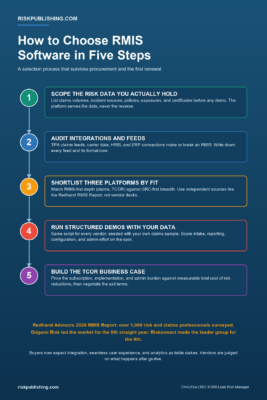
Figure 2. The selection process that survives procurement: data first, demos scripted, TCOR case last.
Run Your RMIS Software Selection on Evidence
Shortlists built from vendor demos alone produce renewals full of regret. For an independent hand structuring the criteria, scripted demos, and TCOR case, our services include selection support, or contact us with your claims volumes and current stack. The RCSA template and risk management policy guide pair well with the governance side of implementation.

Chris Ekai is a Risk Management expert with over 10 years of experience in the field. He has a Master’s(MSc) degree in Risk Management from University of Portsmouth and is a CPA and Finance professional. He currently works as a Content Manager at Risk Publishing, writing about Enterprise Risk Management, Business Continuity Management and Project Management.