When Indiana, Kentucky, and Rhode Island’s privacy laws took effect on January 1, 2026, the US reached 19 state privacy laws in force, and the IAPP tracker counted 20 active by May. More than half of Americans now live under one of these GDPR-style statutes.
| OneTrust vs BigID: Key Takeaways |
| Nineteen US state privacy laws were in force on January 1, 2026, when Indiana, Kentucky, and Rhode Island came online, and IAPP counted 20 active by May. |
| OneTrust is workflow-first: consent, DSARs, assessments, and regulatory research, with GRC and third-party risk breadth around them. |
| BigID is data-first: machine-learning discovery and classification across structured and unstructured stores, extending into DSPM and AI data controls. |
| Both vendors have expanded toward each other’s territory, but native strength stays where each started, and demos should test the borrowed capabilities hardest. |
| Choose by the pain that is costing you most this year: request and audit workload points to OneTrust; the where-is-our-data question points to BigID. |
| Large programs increasingly run both, with BigID feeding discovery into OneTrust workflows, so integration deserves demo time of its own. |
That patchwork is why the OneTrust vs BigID question keeps landing on risk managers’ desks. Both platforms promise compliance with the same laws, yet they attack the problem from opposite ends, and picking the wrong end wastes a six-figure subscription.
This comparison takes the practitioner’s view: what each platform actually does natively, where the marketing outruns the product, and how to decide with your own workload data. It extends the same series as our privacy management software roundup and TPRM platform comparison.
OneTrust vs BigID at a Glance
The short version fits in one sentence each. OneTrust built compliance workflows first and added data discovery later; BigID built data discovery first and added compliance workflows later. Everything else in this comparison is that origin story playing out across modules.
| Dimension | OneTrust | BigID |
| Native starting point | Privacy operations and workflows | Data discovery and classification |
| Consent and DSARs | Deep, market-defining | Newer, catching up |
| Data discovery / DSPM | Present, not the core engine | Core engine, ML-driven, unstructured data |
| AI governance | Assessment and inventory workflows | Controls on the data feeding AI systems |
| Adjacent breadth | GRC, third-party risk, ethics programs | Data security and governance stack |
| Typical buyer | Privacy office, compliance, legal | CISO, data governance, security |
Read the table as tendencies rather than absolutes, because both vendors ship the full checklist and both demo beautifully. The rows that decide real selections are the second and third: request workloads point one way, data-visibility gaps point the other, and pretending otherwise wastes evaluation weeks.
What OneTrust and BigID Each Bundle
Module lists shift with every release cycle, so the durable comparison works by problem area instead. The table below shows where each platform’s answer comes from its own original engineering versus a newer extension, which is exactly the distinction polished demos are designed to hide from evaluation teams.
| Problem area | OneTrust’s answer | BigID’s answer |
| Consent and preferences | Native, category-defining tooling | Added capability, maturing fast |
| DSAR fulfillment | Native workflow engine with portals | Discovery-assisted fulfillment |
| Data inventory and mapping | Assessment-driven, questionnaire-based | Scan-driven from live systems |
| Security posture (DSPM) | Adjacent, via partners and modules | Native extension of the discovery core |
| AI governance | Inventories, assessments, policy workflow | Controls on training and inference data |
The pattern repeats across every row of that table: questionnaire-driven where OneTrust is native, scan-driven where BigID is native. Neither approach is wrong, but the two produce different kinds of evidence, and your regulators, auditors, and ERM reporting will end up consuming whichever kind you buy.
Where OneTrust Starts: Workflows First
OneTrust became the default name in privacy operations by automating the work regulators actually inspect: consent and preference management, DSAR intake and fulfillment, privacy impact assessments, and vendor evaluations, with a regulatory research library built into the product so teams stop maintaining spreadsheets of statute changes.
The breadth around that core is the quiet differentiator in enterprise deals. OneTrust extends into GRC territory and third-party risk, so a compliance function can consolidate several point tools onto one platform, a consolidation argument procurement teams notice when three renewals land in the same quarter.
The honest limitation mirrors the strength: its data discovery exists but is not the engine the platform was born with, and questionnaire-based inventories depend on people answering accurately. Programs whose real problem is finding personal data across a sprawling estate tend to outgrow that layer first.
Where BigID Starts: Data First
BigID began with the question OneTrust deferred: where does personal data actually live? Its machine-learning discovery and classification work across structured and unstructured stores alike, and that scanning foundation now extends into data security posture management and controls on the data feeding AI systems.
The unstructured-data coverage matters more each year, because email, file shares, and collaboration tools hold the data breaches actually expose. It is also where AI governance lands in practice: you cannot control what a model trains on without first knowing where sensitive data sits.
BigID has been closing the workflow gap, adding consent management and privacy operations features, and its own comparison page argues that case openly, which is worth reading as a statement of ambition. Test those newer modules against your real DSAR volumes before believing either vendor’s slides.
The Regulatory Wave Behind the OneTrust vs BigID Decision
Neither platform sells without the laws behind it, and the laws keep multiplying. The January 2026 additions each carry their own thresholds and cure provisions, joining a stack that already reaches from California’s CCPA and its enforcement agency to sector rules like HIPAA.
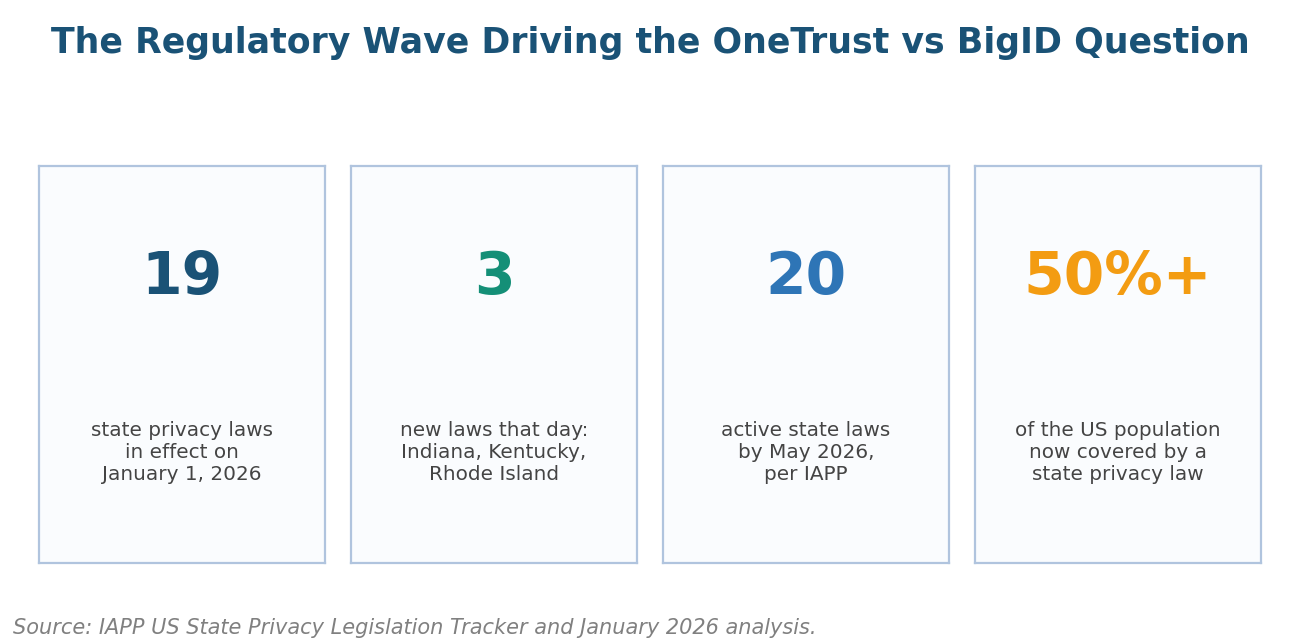
Figure 1. The compliance surface keeps widening: 19 state laws in force on January 1, 2026, and 20 by May.
International obligations stack on top for anyone selling abroad: GDPR enforcement via the EDPB, cross-border transfers under the Data Privacy Framework, and certifiable structure from ISO 27701. Tracking exposure across that stack is exactly the job privacy KRIs exist for.
The practical consequence for tooling is scope creep by statute. Each new state law adds thresholds to track, rights-request variations to honor, and cure periods to calendar, so the manual spreadsheet that survived five laws collapses quietly somewhere around law twelve. Both platforms exist because that collapse now arrives on a schedule. Teams with fewer than about 50 processing activities can run a spreadsheet GDPR risk assessment template before buying either platform.
When to Choose OneTrust, BigID, or Both
The decision usually resolves faster than the vendors make it feel, because your loudest pain already points one direction before any demo starts. Score yourself against the triggers below with real workload numbers, request counts and data-store tallies, rather than impressions from the sales cycle.
| Your situation | Stronger fit | Why |
| DSAR volume climbing, consent banners multiplying | OneTrust | Request and consent workflows are its native core |
| Nobody can say where personal data lives | BigID | ML discovery across unstructured stores is its native core |
| Audit findings cite missing assessments and records | OneTrust | Assessment templates and audit trails ship ready |
| Security team owns the budget, DSPM on the roadmap | BigID | Posture management grows from the same discovery engine |
| AI models training on ungoverned data | BigID first | Data-level controls precede workflow-level policies |
| Large regulated enterprise, both pains at once | Both, integrated | Discovery feeds workflows; many programs run the pair |
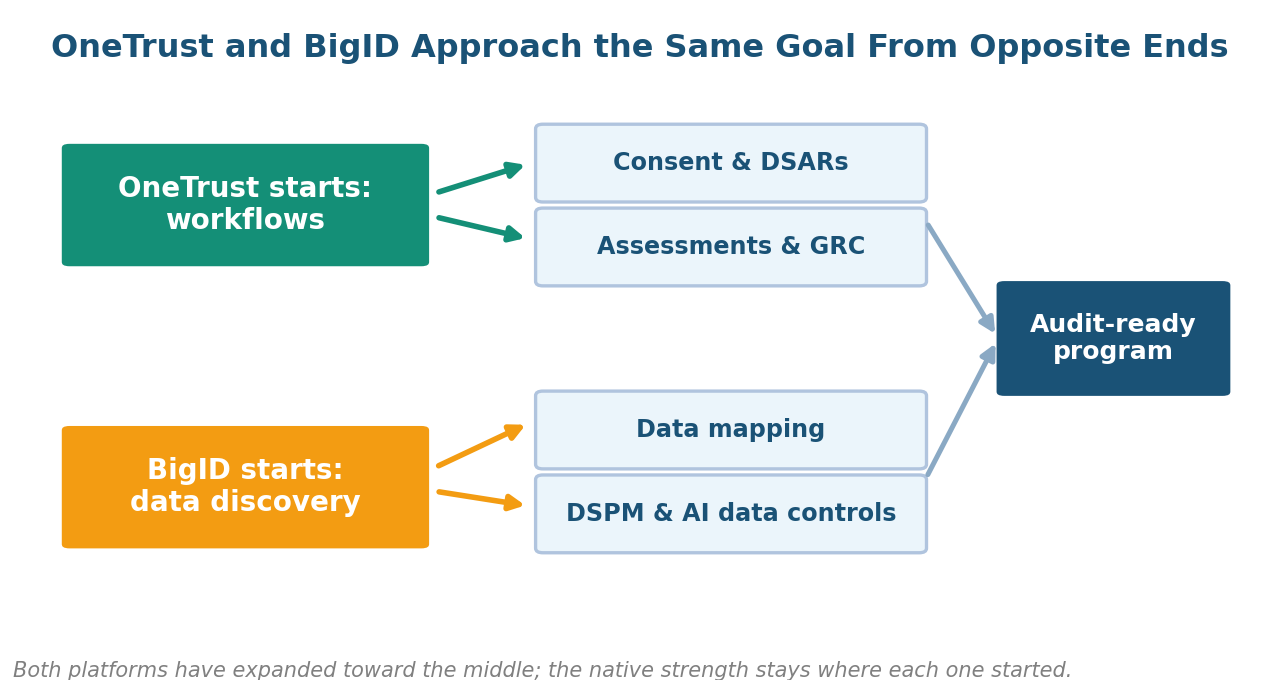
Figure 2. Opposite starting points, same destination: the borrowed capabilities are the ones to demo hardest.
The both-platforms answer is a legitimate architecture at enterprise scale rather than a cop-out. BigID’s discovery output feeding OneTrust’s assessment and request workflows is a pairing many regulated firms already run, and the integration deserves its own demo session with your actual connectors listed in advance.
How to Run the OneTrust vs BigID Evaluation
Both vendors run polished demo programs, which is precisely why your evaluation needs a script they did not write. Stage the same five tests for each platform, score them live, and weight the results by your actual workload rather than by feature count.
| Test | What to stage | What a strong result looks like |
| DSAR end to end | One real-shaped request against sample data | Intake to fulfillment without engineering help |
| Discovery accuracy | A file share seeded with known sensitive records | High recall on the seeds, low false positives |
| Connector reality | Your three ugliest systems, named in advance | Live connection during the demo, not a roadmap slide |
| Admin burden | An admin builds a workflow or scan unassisted | Minutes of configuration, no professional services |
| Reporting output | Rebuild one page of your current board pack | Audit-consumable evidence, exportable on demand |
Insist on references at your size and in your sector, and ask them one question above all: how many internal hours per week does the platform consume? That number, multiplied across the contract term, routinely exceeds the license fee and never appears in the proposal.
Where the budget allows, negotiate a paid pilot on a bounded scope before the full contract: one business unit, one data domain, ninety days. Pilots convert vendor claims into your own measured numbers, and a vendor reluctant to be measured on a small scope is telling you something useful early.
OneTrust vs BigID: Pricing and Implementation Realities
Both platforms price by quote, scaling with modules, data sources, and user counts, so published numbers age badly and negotiations start from your scope document. The structural pattern is familiar from every enterprise platform: subscription, implementation, and the internal effort nobody budgets.
| Cost line | What to pin down before signing |
| Module scope | Which modules are in the quote versus demoed; both vendors demo the full platform |
| Data connectors | Per-source charges for the systems you actually hold, especially legacy stores |
| Implementation | Who configures workflows and scans; time-to-value on your data volumes |
| Internal ownership | Hours per week a named admin will spend; ask references, never the vendor |
| Exit terms | Export formats for consent records, assessments, and data maps before renewal |
Run the selection with the same discipline as any assessment: weighted criteria agreed before the first demo, evidence recorded live, and a scoring matrix that keeps vendor polish from deciding. The qualitative and quantitative blend applies here too: reference-call impressions plus measured demo timings.
OneTrust vs BigID: Frequently Asked Questions
What is the main difference between OneTrust and BigID?
The starting point is the whole story. OneTrust began with privacy compliance workflows such as consent, DSARs, assessments, and regulatory intelligence, while BigID began with data discovery: finding and classifying personal data across structured and unstructured systems. Both have expanded toward each other, but native depth remains where each platform started.
Is BigID better than OneTrust?
Neither wins in the abstract. BigID is stronger where the problem is data visibility, unstructured stores, DSPM, and AI data controls; OneTrust is stronger where the problem is privacy operations, consent, requests, and audit-ready records. The better platform is the one matching your loudest current pain.
Can OneTrust and BigID work together?
Yes, and large programs often run exactly that pairing: BigID handles discovery and classification, then feeds its data maps into OneTrust’s assessment and request workflows. If you are evaluating the combination, make the integration a scored demo item with your specific systems on the table.
Which is better for DSARs and consent management: OneTrust or BigID?
OneTrust, as the native strength: its consent and request tooling defined the category and carries years of regulator-facing refinement. BigID has added consent capabilities and is closing the gap, so test its modules against your actual monthly request volume before ruling either way.
Which is better for data discovery and DSPM: OneTrust or BigID?
BigID, for the mirror-image reason: machine-learning classification across unstructured data is the engine the company was built on, and its posture management grows from that same foundation. OneTrust discovers data adequately for assessment purposes but is not a dedicated DSPM platform.
How do OneTrust and BigID handle AI governance?
From their respective ends. OneTrust runs AI inventories, assessments, and policy workflows aligned to frameworks like the NIST approach; BigID governs the data layer itself, controlling what sensitive information reaches models. Mature programs need both layers, whichever platform supplies them.
Do smaller companies need OneTrust or BigID at all?
Often not yet. Below meaningful DSAR volume and data sprawl, a disciplined manual regime built on our assessment templates and tracked with privacy KRIs carries a program surprisingly far. The switch point arrives when requests, consent records, or unanswered data-location questions start consuming real staff days each month.
How much do OneTrust and BigID cost?
Both are quote-priced enterprise platforms, typically five to six figures annually depending on modules, data sources, and organization size. Treat any published figure as stale, price the implementation and internal admin alongside the subscription, and get export terms in writing before the first renewal conversation.
Where OneTrust and BigID Go From Here
Convergence continues from both directions, and the practical consequence is that this comparison ages at the module level while staying true at the architecture level. Origin decides depth: workflow companies bolt on discovery, data companies bolt on workflows, and demos expose which bolts hold.
Enforcement is the other trajectory to watch. With the FTC active on privacy and security and state attorneys general staffing up behind the January 2026 laws, the cost of the wrong tooling decision shifts from inefficiency to exposure, the same pattern our compliance risk work sees in banking.
Expect AI to keep pulling both vendors toward the data layer, because that is where model risk actually lives. The buying pattern already visible in ESG platforms and audit tooling repeats here: categories blur, but the buyer who knows which pain they are paying to remove chooses well regardless.
One prediction we will stand behind: the manual-spreadsheet era of privacy compliance ends for mid-sized US firms within this decade, the way manual risk registers ended for banks. When your program reaches that threshold, this comparison is the shortlist, and the workload numbers you started collecting today are the tiebreaker.
Infographic: OneTrust vs BigID Side by Side
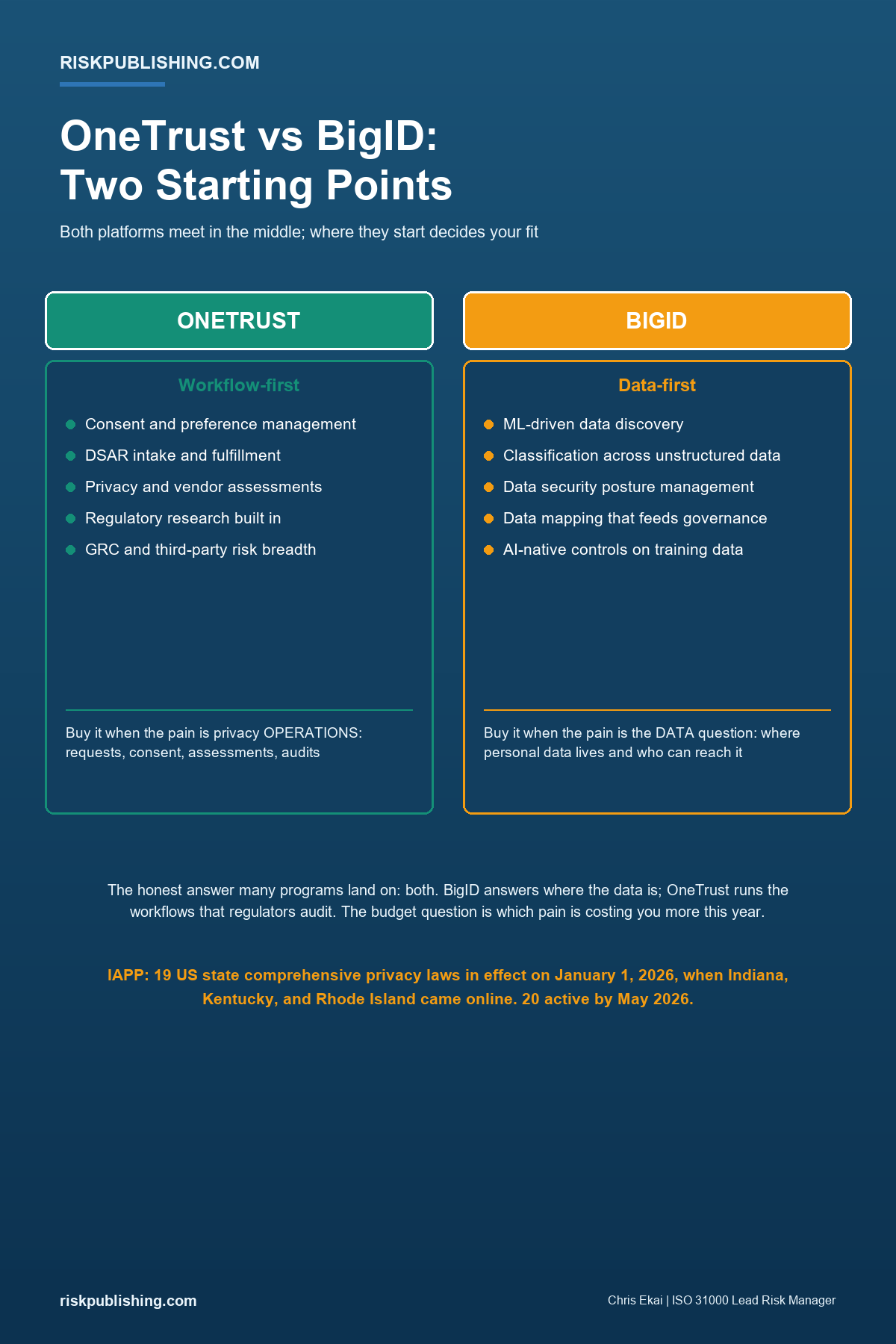
Figure 3. Two starting points, one goal: pick by the pain costing you most this year.
Decide OneTrust vs BigID With Your Own Numbers
A platform choice this size deserves workload evidence: your DSAR counts, data-store inventory, and audit findings. For an independent hand building the scored comparison, our services include tooling selection, or reach out with your current stack. Our assessment templates and ESG scoring workbook show the evidence-first style, and the framework comparison pairs well when certification shares the budget cycle.

Chris Ekai is a Risk Management expert with over 10 years of experience in the field. He has a Master’s(MSc) degree in Risk Management from University of Portsmouth and is a CPA and Finance professional. He currently works as a Content Manager at Risk Publishing, writing about Enterprise Risk Management, Business Continuity Management and Project Management.