GARP reported a 47 percent pass rate for the November 2025 sitting of FRM Part 1, which means the most recognized financial risk management certification turned away more than half the room. Candidates had paid up to $1,000 per exam window for the attempt.
Numbers like that are why a risk management certification decision deserves more rigor than most people give it. The wrong choice costs a year of evenings and four figures of fees, and signals for a job market you are not actually in.
| Risk Management Certification Rankings: Key Takeaways |
| There is no single best risk management certification, only a best one per destination role: FRM for financial risk, CRISC for technology risk, CIA for the audit-to-risk route, RIMS-CRMP for enterprise generalists. |
| Difficulty is real and measurable. GARP reported a 47 percent pass rate for FRM Part 1 in November 2025, and the two-part program typically consumes 400 to 500 study hours. |
| Costs range widely: CRISC exam registration is $575 for ISACA members and $760 for non-members, the three-part CIA runs roughly $990 in member fees, and FRM can approach $1,600 with early registration. |
| The demand curve favors technology credentials: US information security analyst roles are projected to grow 29 percent from 2024 to 2034, against 3 percent for compliance officers. |
| A certification without applied evidence rarely wins a first role. Employers read credentials as proof of study, so pair any of the eight with one finished register, control test or risk assessment. |
| Certificates of completion from online course platforms are not certifications. Only credentials with experience requirements, proctored exams and continuing education carry hiring weight. |
We hold and hire against these credentials, and this ranking reflects that vantage point rather than affiliate economics. The ordering below scores each risk management certification on one question only: how far it moves a real application in its own home domain. For adjacent change-delivery careers, the change manager roles and responsibilities guide maps that field’s credentials the same way.
How We Ranked the Best Risk Management Certifications
Rankings without criteria are marketing, so here are ours. Each risk management certification is scored on employer recognition in its domain, the demand trend behind that domain, entry cost in fees and study hours, and whether the credential requires verified experience.
Demand data throughout comes from federal projections rather than from vendor surveys. For delivery-side readers, the role of the project manager in compliance risk management shows where a PMI-RMP actually gets exercised. Information security analysts are projected to grow 29 percent between 2024 and 2034 while compliance officers grow 3 percent, and that spread should shape any risk management certification shortlist.
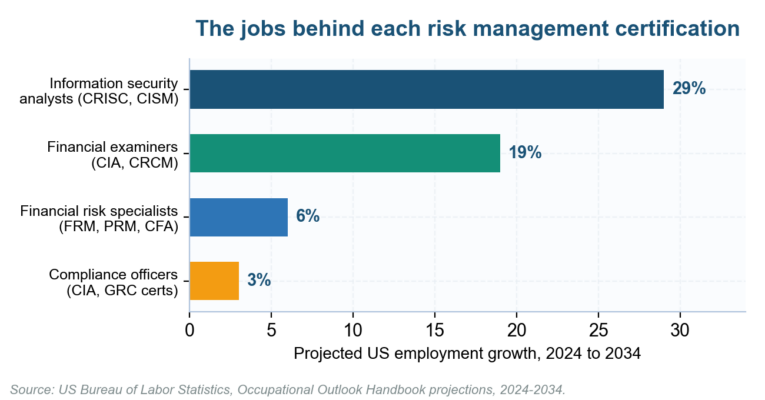
Figure 1. Certifications inherit the growth rate of the occupations they serve.
One exclusion matters before the list starts, and it removes half the internet’s suggestions. Course-completion certificates from online learning platforms are not certifications, because nothing with no exam, no experience requirement and no revocation mechanism can function as a hiring signal.
A training needs assessment decides whether a certification or structured on-the-job training closes the gap, and for procedural skills it is usually the latter.
The Best Risk Management Certifications at a Glance
Bridging from method to results, the table below is the whole article in one view. The risk management certification ranking is ordered by hiring value in each credential’s home domain, with costs taken from the awarding bodies’ published fee schedules in July 2026.
| Rank | Certification | Awarding body | Approx. fees (member) | Best for |
| 1 | FRM | GARP | $1,000 to $1,600 | Financial, market, credit and model risk |
| 2 | CRISC | ISACA | $625 with application | Technology and cyber risk |
| 3 | CIA | The IIA | About $990, three parts | Audit moving into second-line risk |
| 4 | RIMS-CRMP | RIMS | About $545 | Enterprise risk generalists |
| 5 | CFA | CFA Institute | $3,000+ across levels | Investment and buy-side risk |
| 6 | PRM | PRMIA | About $1,430 | Quantitative risk, FRM alternative |
| 7 | PMI-RMP | PMI | About $520 | Project and program risk |
| 8 | ARM | The Institutes | Course-based pricing | Insurance and commercial risk |
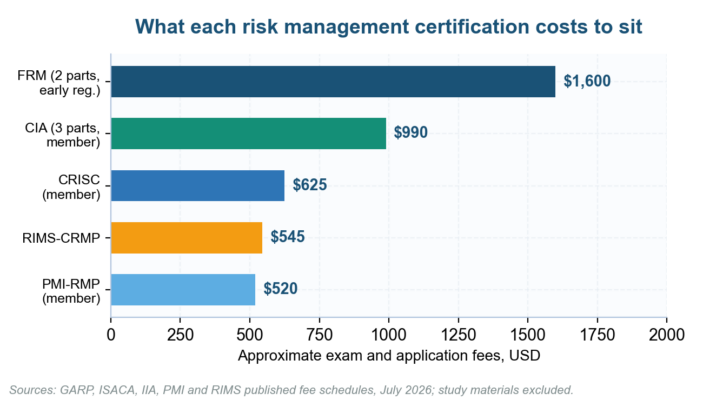
Figure 2. Direct fees only; study materials typically add $300 to $1,500 more.
The Top Risk Management Certifications Examined
FRM: The Financial Risk Management Certification Benchmark
The Financial Risk Manager program stays first because banking, asset management and model risk hiring treat it as the default filter. Two exams cover quantitative analysis, market, credit and operational risk, and candidates need two years of verified experience to certify.
Budget honestly for this one, because the sticker price understates it. GARP’s fee schedule starts with a $400 one-time enrollment charge plus $600 to $1,000 per exam depending on registration window, and most candidates spend 400 to 500 study hours across the two parts.
The real comparison most quantitative candidates end up facing is the FRM against PRMIA’s Professional Risk Manager, which covers similar ground with a smaller US recognition footprint. Our FRM versus PRM comparison settles that risk management certification choice case by case.
CRISC: The Technology Risk Management Certification Leader
Second place in this risk management certification ranking goes to ISACA’s CRISC on trajectory rather than tradition, because it serves the fastest-growing risk domain in the US market. Exam registration runs $575 for members and $760 for non-members, plus a $50 certification application after passing.
CRISC demands three years of experience across risk identification, assessment and control monitoring, which keeps it a practitioner mark rather than a student one. Candidates weighing the security-management alternative should read our CRISC versus CISM breakdown and the wider CISSP, CISM and CRISC comparison.
CIA: The Audit Route Into a Risk Management Certification
The Certified Internal Auditor ranks third because audit remains the single most common on-ramp into risk work anywhere in the US market. Three exam parts total roughly $990 in member fees, and the credential converts audit experience into credibility for second-line risk roles.
Its power is positional rather than technical. A CIA who has tested controls and written findings walks into risk and control self-assessment work already fluent in the three lines model, which is the accountability language most risk committees speak.
RIMS-CRMP and the Generalist Risk Management Certifications
Fourth place in the risk management certification table, the RIMS-CRMP, is the strongest pure enterprise risk management certification and the only one on this list with ANSI accreditation. It requires documented ERM experience, so it validates a practitioner rather than manufacturing one.
Below the top four sit the specialist credentials, each excellent inside a narrow lane. The CFA program outranks everything for investment risk but demands nine hundred or more study hours, PMI’s risk credential serves project risk specifically, and the ARM designation remains the insurance-side standard.
Project-side readers deserve exactly the same honest caveat we gave in our PMP versus PMI-RMP analysis: a project risk management certification helps inside delivery organizations and transfers weakly into enterprise or financial risk hiring, whatever the course brochures imply.
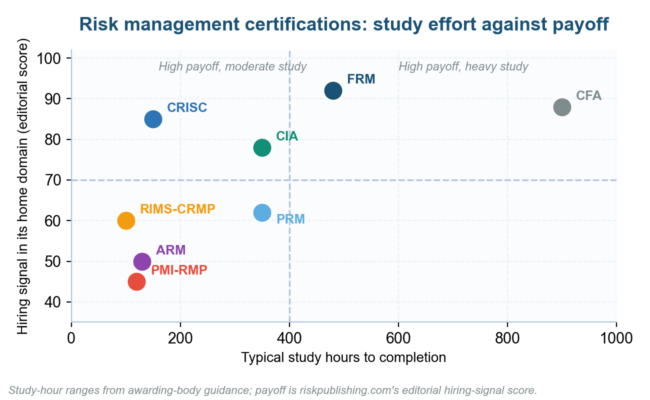
Figure 3. CRISC delivers the most hiring signal per study hour; CFA demands the most of both.
Matching a Risk Management Certification to Your Target Role
The single most common mistake is choosing by prestige instead of destination. A risk management certification is a signal aimed at a specific hiring manager, and the right one depends entirely on which desk you want to sit at in two years.
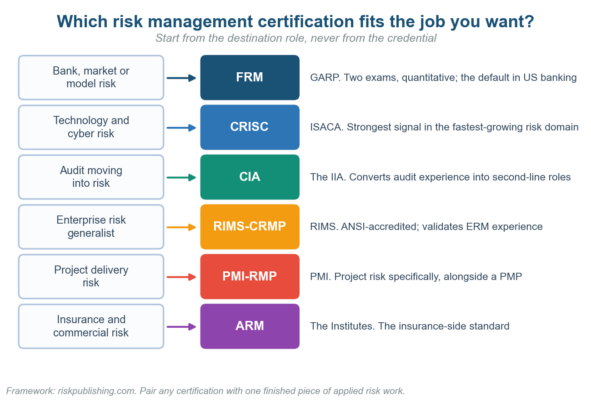
Figure 4. Choose the destination first; the certification follows.
Career changers should route through what they already know. Our guide to getting a risk management job maps the lateral entries in detail, and the short version is that auditors take the CIA, IT people take CRISC, and finance people start FRM Part 1.
Whichever you choose, the certification is the second half of the application. The first half is one finished artifact, a risk register you built, a risk assessment you ran or a set of key risk indicators you defined, because credentials open the interview and artifacts win it.
What a Risk Management Certification Cannot Do
A fair ranking owes you the limits as well as the winners. No risk management certification substitutes for experience in the eyes of a hiring panel, because a credential proves disciplined study, and disciplined study is not judgment under pressure.
| Expectation | Why it disappoints | What works instead |
| A certification alone lands a first risk job | Employers read credentials without experience as study, not capability | Pair the credential with one applied artifact from real or volunteer work |
| More letters mean more salary | Stacked credentials past the second show diminishing and then negative returns | One domain credential plus visible work product, then stop collecting |
| The hardest exam is the most valuable | Difficulty only pays where the domain is hiring | Weigh the demand curve, not the pass rate |
| Any certification transfers across domains | Signals are domain-specific; FRM means little to a CISO | Choose by destination desk, not by general reputation |
| Certificates of completion count | No exam, no experience bar, no revocation means no signal | Spend the same money on a proctored, experience-gated credential |
Framework literacy fills most of the gap that certifications leave behind. Working command of ISO 31000, the COSO ERM components and the risk management process costs nothing and shows up in interviews faster than a certificate frame ever will.
Risk Management Certification FAQs: Expert Answers to Critical Questions
What is the best risk management certification overall?
For most US candidates the FRM carries the widest recognition, but it is only the best answer if financial risk is the destination. CRISC beats it for technology risk, the CIA beats it for audit-to-risk moves, and RIMS-CRMP beats it for enterprise generalists.
Which risk management certification is best for beginners?
None of the top four are entry credentials, since each requires two to three years of verified experience to fully certify. Beginners should sit FRM Part 1 or ISACA’s foundational exams while building experience, then certify once the experience requirement is met.
How much does a risk management certification cost?
Direct fees run from roughly $520 for PMI-RMP and $625 for CRISC with membership, through about $990 for the three-part CIA, up to $1,600 or more for the FRM. Study materials add another $300 to $1,500 on top of any risk management certification here.
How hard is the FRM risk management certification?
Genuinely hard: Part 1 passed 47 percent of candidates in November 2025, and historical pass rates have ranged between roughly 40 and 55 percent. Most successful candidates report 200 to 250 study hours per part, spread across four to six months each.
Is the RIMS-CRMP a good risk management certification?
Yes, for practitioners who already run enterprise risk programs and want an accredited mark that validates that experience. It is the only ANSI-accredited risk management certification on this list, though its recognition runs thinner in banking than the FRM’s does.
Do employers actually check risk management certification status?
Regulated employers increasingly do, and every awarding body on this list maintains a public verification registry for exactly that purpose. Claiming a lapsed risk management certification is treated as an integrity finding, which is a worse outcome than holding no certification at all.
Which risk management certification pays the most?
Certifications track their occupations rather than creating salaries on their own. US financial risk specialists earned a median $106,000 in May 2024, and the credential that pays most is whichever one moves you into the higher-paying domain you can credibly serve.
Where Risk Management Certifications Are Heading Next
Expect AI content to spread through every syllabus on this list. The NIST AI Risk Management Framework is already seeding exam domains, and a risk management certification that ignores model and AI governance risk will look dated within two exam cycles.
The demand split behind this risk management certification ranking will keep widening rather than closing over the decade. Federal projections through 2034 show technology-facing risk roles growing at multiples of compliance roles, which argues for CRISC-style credentials gaining ground on generalist ones.
Our closing advice is deliberately narrow. Pick the desk you want, take the one risk management certification that desk respects, build one artifact while you study, and put the remaining budget into an AI governance skillset the market has not yet priced in.
Choose Your Risk Management Certification With Risk Publishing
Teams and individuals ask us the same question in different words: which credential moves this specific career or this specific risk function forward. Browse our advisory services or reach out with the role you are targeting and the experience you hold.
Readers building the study plan alone should anchor it to real frameworks from day one. An enterprise risk management framework, the GRC fundamentals and our note on GRC certification economics cover the ground every exam in this ranking assumes.
Then aim the risk management certification you finally chose at a domain with real growth ahead of it. Operational risk management, its banking application and integrated risk management programs are where certified practitioners are being promoted fastest right now.

Chris Ekai is a Risk Management expert with over 10 years of experience in the field. He has a Master’s(MSc) degree in Risk Management from University of Portsmouth and is a CPA and Finance professional. He currently works as a Content Manager at Risk Publishing, writing about Enterprise Risk Management, Business Continuity Management and Project Management.