The Uptime Institute’s Annual Outage Analysis 2026 reports that 57 percent of major outages now cost more than $100,000, and its 2025 edition found roughly one in five recent significant outages ran past $1 million. Those are the invoices a business continuity strategy exists to shrink.
A business continuity strategy template captures the decision layer most continuity programs skip. The
business impact analysis says how fast each activity must return, and the plans say who does what on the day, but somewhere in between somebody has to choose which recovery capability to actually buy.
| Business Continuity Strategy Template: Key Takeaways |
| The Uptime Institute’s Annual Outage Analysis 2026 found 57% of major outages cost more than $100,000, which is the bill a recovery strategy exists to shrink. |
| Strategy is the middle layer of continuity: the BIA sets how fast each activity must return, the strategy chooses what capability to buy, and plans script the execution. |
| ISO 22301 clause 8.3 requires documented strategies and solutions, and ISO/TS 22331:2018 is the dedicated guidance standard for selecting them. |
| Every strategy must cover five resource categories: people, premises, technology, information, and suppliers. Restoring the servers without the staff restores nothing. |
| The free Word template records BIA inputs, options considered, evaluation criteria, chosen strategies with cost, and every accepted RTO gap in writing. |
| Match spend to RTO, never to fear: hot standby for four-hour activities, cheaper options for everything the BIA says can wait. |
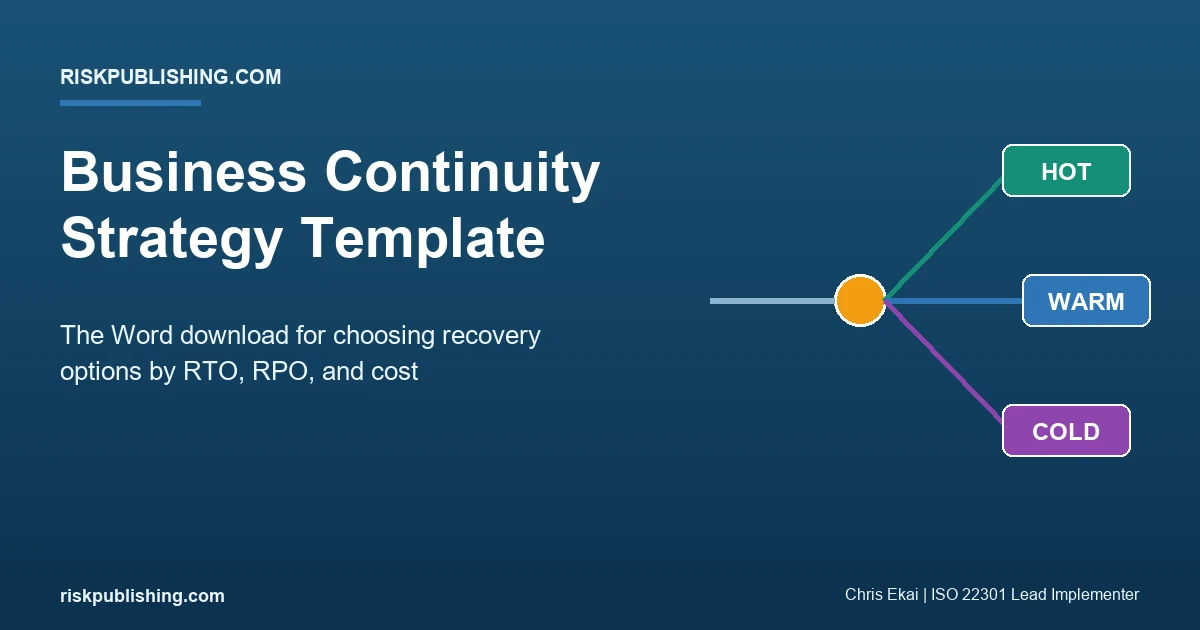
The business continuity strategy template below makes that choice auditable. It is a free Word download aligned to
ISO 22301 clause 8.3 and
ISO/TS 22331:2018, the dedicated guidance standard for strategy determination and selection that most practitioners have never opened.
Download the Business Continuity Strategy Template (Word)
The file is
business-continuity-strategy-template-word-download, free to adapt and use commercially, with red bracketed fields marking every decision you owe the document. It completes the working set alongside the
continuity plan template and the
BIA template, which feed it from below and above.
Need the whole set?
The free file above stays free. The Risk Manager’s Toolkit bundles it with 39 other templates practitioners use: risk register, RCSA, business impact analysis with RTO and RPO, heat map, KRI scorecard, business continuity and disaster recovery plans, ISO 27001 and GDPR assessments. One download, Excel and Word, ready to edit.
Instant download after payment. 30-day refund, no questions. Secure checkout by Lemon Squeezy.
| Template section |
What it records |
| Cover and approval block |
Owner, approver, version, and the BIA version this strategy serves |
| 1. Purpose and scope |
Which critical activities and resource categories are covered, with stated exclusions |
| 2. BIA inputs |
Critical activities with RTO, RPO, MTPD, and peak periods carried over from the BIA |
| 3. Options considered |
Strategy options per resource category: people, premises, technology, information, suppliers |
| 4. Evaluation criteria |
RTO fit, cost of ownership, feasibility, new single points of failure, insurance fit |
| 5. Selected strategies |
The chosen option per activity, the RTO it achieves, the gap, and the annual cost |
| 6. Gap actions |
Funded actions that close capability gaps, each with an owner and a date |
| 7. Approval and review |
Sign-off plus the revision history that proves the strategy stays current |
Fill Section 2 before anything else, straight from the approved BIA rather than from memory. Strategy selection without an RTO on the table is guesswork with a budget attached, and the business continuity strategy template deliberately refuses to make sense until those numbers are in place.
Where Strategy Sits in Business Continuity (and Why It Gets Skipped)
Most continuity programs jump from impact analysis straight to plan writing, and the missing middle layer shows up months later as plans that assume capabilities nobody ever bought or tested. The
planning process only works when each layer hands verified decisions to the next.
The sequence is short enough to memorize and worth repeating to sponsors. The
BIA produces recovery requirements, this strategy document converts those requirements into funded capabilities, and the
plan components then script how people operate the capabilities during a real event.
Skipping the layer has a signature failure: the plan that says ‘staff relocate to the alternate site’ when no alternate site contract exists. Exercises expose the fiction eventually, but the
exercise scenarios work far better at validating capabilities you genuinely hold.
What the Standards Require From a Business Continuity Strategy
Clause 8.3 of ISO 22301 requires organizations to identify and select strategies and solutions based on the outputs of the BIA and risk assessment, and to determine the resources each needs. It is a certification requirement, never an optional maturity extra.
| Standard |
Role |
What it says about strategy |
| ISO 22301:2019, cl. 8.3 |
Certifiable requirement |
Identify, select, and resource strategies and solutions from BIA outputs |
| ISO/TS 22331:2018 |
Dedicated guidance |
How to determine and select options across resource categories |
| ISO 22313:2020 |
General guidance |
Expands every 22301 clause, including strategy, into practice |
| NIST SP 800-34 |
Federal contingency |
Recovery strategy selection by system criticality and cost |
| FFIEC BCM booklet |
US banking examiners |
Board-visible resilience strategies proportionate to impact |
The guidance layer is genuinely useful here rather than ceremonial.
ISO 22313 expands the clause into day-to-day practice, a revision of
22331 is underway retitled toward strategies and solutions, and our
ISO 22301 guide maps exactly where strategy evidence sits in a certification audit.
Regulated sectors add their own texture on top of the ISO baseline.
FFIEC examiners expect banks to show resilience strategies proportionate to impact, a theme our
banking continuity guide covers in depth, while
NIST SP 800-34 walks federal systems through strategy selection by criticality tier.
The audience for this evidence keeps growing. The
ISO Survey counted 4,595 valid ISO 22301 certificates across 11,387 sites in its 2024 edition, and every one of those audits asked the same clause 8.3 question: show us why you chose these capabilities and not others.
Building the Business Continuity Strategy Step by Step
Match Business Continuity Strategy Options to RTO and Cost
Recovery options sit on a cost curve, and the whole discipline is choosing your point on it per activity. Hot standby returns service in minutes at the highest cost, warm and cold options trade speed for savings, and rebuilding after the event is cheapest until the outage bill arrives.
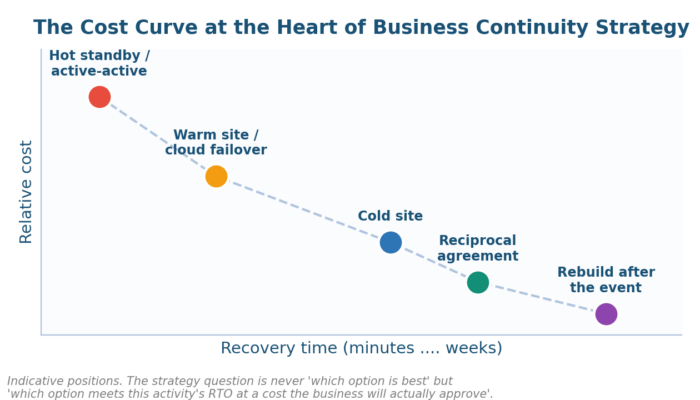 Figure 1. The question is never which option is best, but which option meets this activity’s RTO at an approvable cost.
Anchor every choice to the
RTO and RPO definitions from the BIA rather than to anxiety about worst cases. A four-hour activity justifies failover spend; a two-week activity funded at hot-standby levels is money quietly taken from a capability gap that actually matters.
Cover All Five Resource Categories in the Business Continuity Strategy
ISO/TS 22331 pushes strategy past the technology fixation: an activity needs its people, premises, technology, information, and suppliers back, and the template’s Section 3 forces one considered option per category. Restoring the servers while the only trained operators are unreachable restores nothing.
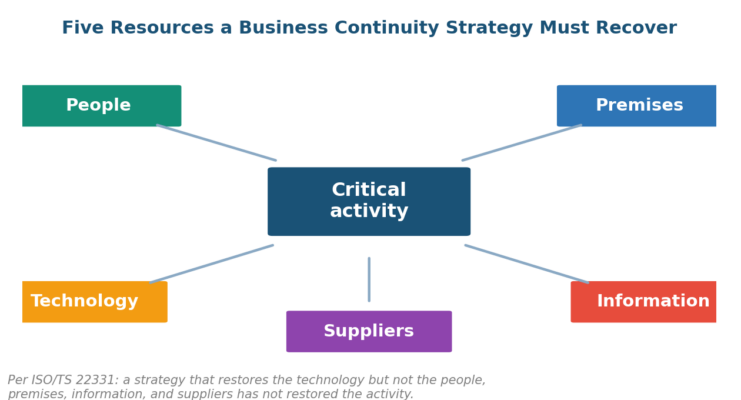 Figure 2. One activity, five dependencies: a strategy is complete only when every spoke has an answer.
| Resource |
Common strategy options |
The question that exposes weakness |
| People |
Cross-training, remote work, succession pairs, contractor bench |
Can the activity run if the two experts are both unreachable? |
| Premises |
Work from home, second site, work area recovery vendor |
Where do regulated or equipment-bound roles actually sit? |
| Technology |
Hot or warm standby, cloud failover, manual workaround |
Has the failover ever been exercised end to end? |
| Information |
Replication, off-site backup, vital records, paper fallback |
When was a restore last tested against the RPO? |
| Suppliers |
Dual sourcing, stockholding, contractual BC evidence |
What happens in week one if the sole vendor fails? |
Suppliers deserve particular suspicion in Section 3, because their continuity is a promise you cannot exercise yourself. Dual sourcing, stockholding, and contractual evidence requirements are the workable options, and the
elements of a mature program treat supplier strategy as a first-class citizen for that reason.
Write Down Every Gap the Business Continuity Strategy Accepts
Section 5 of the business continuity strategy template has a column most strategy documents lack: the gap between the RTO required and the RTO the chosen option achieves. Every gap is either accepted in writing by the executive sponsor or closed by a funded action with an owner and a date.
That gap column is where strategies earn their audit credibility. An examiner who finds a documented, sponsor-signed two-hour gap sees governance working exactly as designed; one who discovers the same gap live during an incident sees negligence, and the entire difference is one written sentence.
Choosing Business Continuity Strategy Options: a Worked Comparison
The table below shows the shape of a real selection for a mid-sized firm’s order-processing activity with a four-hour RTO. Costs are illustrative, but the reasoning pattern transfers: shortlist by RTO fit first, then let cost and feasibility break the tie.
| Option |
Meets 4-hr RTO? |
Relative cost |
Decision logic |
| Active-active cloud |
Yes, minutes |
Highest |
Overbuy unless RPO is near zero too |
| Warm cloud failover |
Yes, 2-3 hrs |
Moderate |
Selected: meets RTO with headroom at a third of active-active cost |
| Cold site restore |
No, 24-48 hrs |
Low |
Fails the requirement; rejected regardless of price |
| Reciprocal agreement |
No, days |
Minimal |
Kept only as a premises fallback for non-critical teams |
| Manual workaround |
Partial |
Near zero |
Bridges the first two hours while failover completes |
Notice the pairing in the last row: strategies combine. A manual workaround covering the first hours plus a warm failover behind it often beats a single expensive option, and layered selections like that are exactly what the
continuity software platforms struggle to model without a documented strategy underneath.
Using the business continuity strategy template, run the same comparison for each critical activity rather than once for the company. Order processing and payroll rarely share an RTO, so they rarely deserve the same capability, and per-activity selection is what keeps the total strategy budget honest and defensible.
Six Ways a Business Continuity Strategy Goes Wrong
Strategy failures rarely announce themselves before an incident does the announcing for them. These six patterns account for most of the wreckage we see in post-incident reviews, and each one maps to a specific section of the template built to block it.
| Failure pattern |
How it happens |
Template countermeasure |
| Strategy skipped entirely |
BIA feeds straight into plan writing |
Section 2 demands BIA inputs before options |
| Technology-only thinking |
IT DR mistaken for continuity strategy |
Section 3 forces all five resource categories |
| Options never costed |
Chosen capability collapses at budget review |
Section 5 carries an annual cost column |
| Silent RTO gaps |
Plan assumes speed the capability lacks |
Gap column with sponsor sign-off |
| Stale against the BIA |
Activities changed, strategy did not |
Cover block ties strategy to a BIA version |
| Supplier wishful thinking |
Vendor continuity taken on faith |
Supplier row requires evidence or dual sourcing |
FAQs on the Business Continuity Strategy Template
What is a business continuity strategy template?
It is a structured document for recording which recovery capabilities you chose for each critical activity and why. This business continuity strategy template is a free Word download aligned to ISO 22301 clause 8.3: BIA inputs, options per resource category, evaluation criteria, selected strategies with costs, and signed-off gaps.
How is a business continuity strategy different from a business continuity plan?
Strategy decides what capability exists, while the plan scripts how people use it during a disruption. Deciding to buy the warm failover is strategy; the call tree and failover sequence are planning, executed on the day. The
continuity versus disaster recovery split follows the same logic one level down.
What goes into a business continuity strategy document?
Seven things: scope, the BIA figures being served, options considered per resource category, the criteria used to judge them, the selected strategy per activity with its achieved RTO and cost, funded gap actions, and approval history. The template carries one section for each.
Who approves the business continuity strategy?
The executive sponsor of the continuity program, because strategy is a spending decision, and every accepted RTO gap needs their signature specifically. Board visibility comes through the program report rather than the document itself, as our
management program overview lays out.
How often should the business continuity strategy be reviewed?
Review the business continuity strategy template whenever the BIA changes, and at least annually alongside it. The business continuity strategy template’s cover block ties the strategy to a named BIA version precisely so staleness is visible: if the BIA reference is two cycles old, the strategy is due regardless of the calendar.
Does a small business need a business continuity strategy?
Yes, and it is usually three pages: most small-firm strategies resolve to remote work, cloud backup with tested restores, and a supplier fallback.
Ready.gov and the
SBA’s preparedness guidance both assume exactly this scaled-down shape, and the
reasons for a plan apply at every size.
Can one business continuity strategy cover multiple critical activities?
Yes, and grouping is usually the efficient move: activities sharing an RTO band and the same technology stack can share a strategy row. Keep the grouping visible in Section 5, though, because a merged row that hides one activity’s tighter RTO recreates the silent gap problem.
Is the business continuity strategy required for ISO 22301 certification?
Yes. Clause 8.3 makes identified, selected, and resourced strategies a hard requirement, and auditors ask to see the selection rationale rather than the capability alone. The completed template is the clause 8.3 artifact, and the
maturity model shows how assessors score the layer.
How Business Continuity Strategy Choices Are Shifting
Cloud has bent the cost curve without deleting it. Warm failover now costs what cold sites cost a decade ago, so RTOs that once justified hot standby are affordable mid-curve, but data egress fees and concentration risk in one hyperscaler are the new line items strategy documents keep missing.
Outage economics keep raising the stakes on the other side of the equation. With
Uptime Institute tracking power as the leading cause of serious outages and IT and network failures rising, the cheap-option gamble prices worse every year the analysis runs.
Expect the strategy layer itself to become an audited artifact.
DRI’s professional practices and
BCI research both treat strategy selection as a distinct competency now, and the
management system standards trend toward evidence at every layer, with
FEMA pushing the same discipline into public-sector programs.
Infographic: the Business Continuity Strategy Numbers
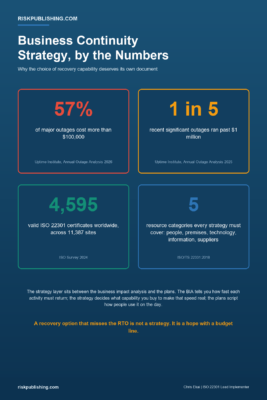 Figure 3. The numbers behind the strategy layer, from outage economics to the certificate base.
Turn Your Business Continuity Strategy Into a Funded Decision
Download the business continuity strategy template, pull the RTOs from your BIA, and run the options workshop. If the cost curve raises questions your budget cycle will not survive without backup,
our services include strategy selection and gap-acceptance facilitation, or
get in touch and we will review your draft against the
checklist we use in certification work.
Download here
business-continuity-strategy-template-word-download
Chris Ekai is a Risk Management expert with over 10 years of experience in the field. He has a Master’s(MSc) degree in Risk Management from University of Portsmouth and is a CPA and Finance professional. He currently works as a Content Manager at Risk Publishing, writing about Enterprise Risk Management, Business Continuity Management and Project Management.