Construction risk management is the practice of identifying, assessing, and controlling the safety, schedule, financial, contractual, and environmental risks that threaten a build. It runs from pre-construction planning through closeout, and its test of success is plain: nobody is hurt, and the project lands near its committed cost and date.
California voters approved $33 billion for a high-speed rail line in 2008. The Authority’s 2026 draft business plan now puts Phase 1 between San Francisco and Los Angeles at roughly $126.3 billion, with full service pushed out to 2040, two decades past the date voters were originally given.
| Construction Risk Management: Key Takeaways |
| Construction risk management spans five categories: safety, schedule, financial, contractual, and environmental. A register that covers only safety is half a program. |
| US construction lost 1,034 workers to fatal injuries in 2024 at 9.2 deaths per 100,000 workers, and falls alone accounted for 389 of them (BLS, released February 2026). |
| Fall protection has been OSHA’s most-cited standard for years running, which makes it the first control to verify on any site walk. |
| California’s high-speed rail shows the cost-risk pattern at scale: $33 billion approved by voters in 2008, $126.3 billion in the 2026 draft business plan. |
| Risk work starts before mobilization. Pre-construction assessment, not the kickoff meeting, is where the cheapest controls get designed in. |
| Transfer what you cannot control through contract and insurance, but never transfer the safety duty; that one stays with the builder. |
| A working register, five owned categories, and a monthly reporting cadence can be stood up in about 90 days on a live project. |
That gap is not a California curiosity; it is construction risk at full scale. The same failure modes turn up on a $4 million school renovation, and the discipline that catches them early is the one this guide lays out.
What Construction Risk Management Covers on a Live Jobsite
Site teams often hear the phrase and think safety alone. Safety is the non-negotiable core, and it is roughly one fifth of the job: a build also carries schedule, cost, contractual, and environmental exposure, each with its own owner and its own controls.
The discipline borrows its spine from ISO 31000, the international risk management standard the US adopted verbatim as ANSI/ASSP/ISO 31000-2018.
Delivery-side detail comes from PMI’s 2024 practice guide for portfolios, programs, and projects, which covers the project tier that most construction work actually sits in. If you are new to the discipline, start with the fundamentals of construction risk management before layering on the advanced controls.
What separates construction from most other sectors is velocity and exposure. Conditions change daily, the workforce rotates, subcontractors arrive carrying their own risk cultures, and a single unprotected leading edge can end a life before the next toolbox talk reaches the crew working it.
That risk arrives subcontract by subcontract, which is why drywall project manager jobs carry a register of their own.
| Layer | What it governs | Typical owner |
| Enterprise | Appetite, insurance program, portfolio concentration | CEO or CFO with the board |
| Project | Cost, schedule, scope, and contract exposure | Project director |
| Site | Daily hazards, permits to work, subcontractor conduct | Superintendent and safety lead |
Why the Numbers Refuse to Improve
The case for the discipline is not theoretical, and the federal data makes it uncomfortable. The Bureau of Labor Statistics counted 1,034 construction worker deaths in 2024, a rate of 9.2 deaths per 100,000 full-time equivalent workers, in figures released in February 2026.
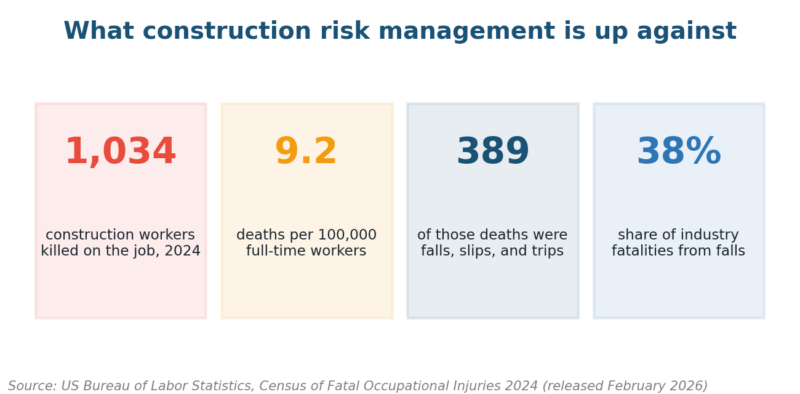
Figure 1. The 2024 federal fatality picture the discipline exists to change.
Deaths fell by 41 against 2023, which reads like progress until you weigh it against a decade of safety investment and training spend. BLS analysis places construction second among private industries for raw fatality counts, behind only the combined trade, transportation, and utilities sector.
Physical conditions compound the human risk. ASCE’s 2025 Infrastructure Report Card graded American infrastructure a C overall, with stormwater and transit at D, so crews increasingly work on and around assets already past their design life, carrying failure modes nobody bid for.
The Five Categories That Sink Projects
Those raw numbers only become manageable once exposure is sorted into categories that somebody actually owns. We use five on every engagement, because a register organized this way exposes the gaps that a single safety-only list hides from the commercial team.
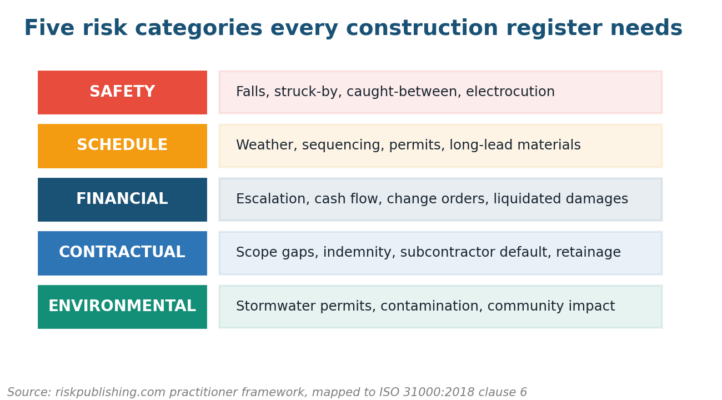
Figure 2. Five categories, five named owners: the minimum viable structure for a site register.
| Category | Representative risks | Primary control |
| Safety | Falls, struck-by, caught-between, electrocution | Engineered protection plus permit-to-work |
| Schedule | Weather, permit delay, long-lead materials, resequencing | Float analysis and procurement lead times |
| Financial | Escalation, cash flow, change orders, liquidated damages | Contingency sized by quantitative analysis |
| Contractual | Scope gaps, indemnity, subcontractor default, retainage | Legal review before award, not after |
| Environmental | Stormwater permits, contamination, community impact | Permit compliance and monitoring program |
Environmental exposure catches more American builders than it should. The EPA’s construction stormwater permit applies to any site disturbing one acre or more, and requires stabilization of disturbed ground whenever work pauses beyond fourteen days, a threshold that quietly catches winter shutdowns.
How to Run the Construction Risk Management Process
Categories describe the field; a repeatable process is what works it week to week. The sequence below mirrors the standard risk management process and the nine-step project version, tuned for a jobsite where conditions change between shifts and the register has to keep pace.
| Stage | What happens on a build | Evidence it happened |
| Set context | Define scope, criteria, and tolerances with the client | Signed risk criteria in the execution plan |
| Identify | Pre-construction workshop plus trade-by-trade review | Register entries with named owners |
| Analyze | Score likelihood and impact; model cost and schedule | Ranked register and contingency figure |
| Treat | Design out, engineer controls, transfer, or accept | Treatment plan with dates and budget |
| Monitor | Daily site checks, weekly indicators, monthly report | KRI dashboard and inspection records |
| Close out | Capture losses, claims, and lessons at handover | Closeout report feeding the next bid |
Identification belongs before mobilization, not after. A structured pre-construction risk assessment is where the cheapest controls get designed in, and where a risk assessment questionnaire earns its place by forcing trades to declare exposures they would otherwise absorb quietly and price into a claim later.
Four outputs make the process auditable rather than merely performative. A project director should be able to produce every one of them on request at any point in the build, from early mobilization through final handover, without a week of preparation first:
- Written risk criteria tied to a stated risk appetite, agreed with the client before award
- A live risk register with an owner and review date on every line, not a static bid-stage document
- A contingency figure defended by analysis, using GAO’s cost estimating guide as the benchmark
- A monthly report that reaches the client and the board, not just the site trailer
Engineering Out the Focus Four
Safety earns the first and largest share of that process, because the federal data points at a small set of repeat killers. Falls, slips, and trips took 389 construction lives in 2024, close to two fifths of the industry’s total.
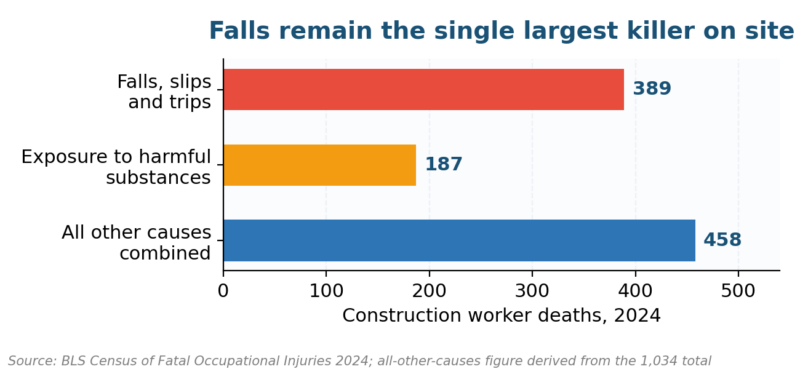
Figure 3. Falls dominate: 389 of 1,034 construction deaths in 2024.
Regulatory attention follows the bodies, and the citation record shows exactly where the failures cluster. Fall protection has topped OSHA’s most-cited standards list year after year, which tells you the gap is not awareness but verification on the days nobody senior is watching.
| Hazard | What actually fails | Control that holds |
| Falls from height | Guardrail removed for a task and never replaced | Written permit for any guardrail removal |
| Struck-by | Crews working under active lifting operations | Exclusion zones enforced by the lift plan |
| Caught-in or between | Unprotected trench entered for a quick check | Protective system before any entry, no exceptions |
| Electrocution | Assumed isolation on temporary power | Lock-out tag-out verified by a second person |
Excavation deserves its own discipline. OSHA’s trenching and excavation rules require a protective system for most trenches five feet or deeper, and the fatalities we read about almost always involve a short, unprotected entry that felt routine to everybody standing at the edge.
Site-level safety work should connect upward rather than sit in a silo, feeding the same register the commercial team reads. That link is what turns workplace safety risk management from a compliance file into an input for scheduling and procurement decisions.
Money and Schedule: The Megaproject Trap
Safety failures end lives; cost and schedule failures end companies. The California high-speed rail program remains the clearest American illustration of how far an estimate can drift once optimism replaces analysis, and how long that drift can run before anyone re-baselines in public.
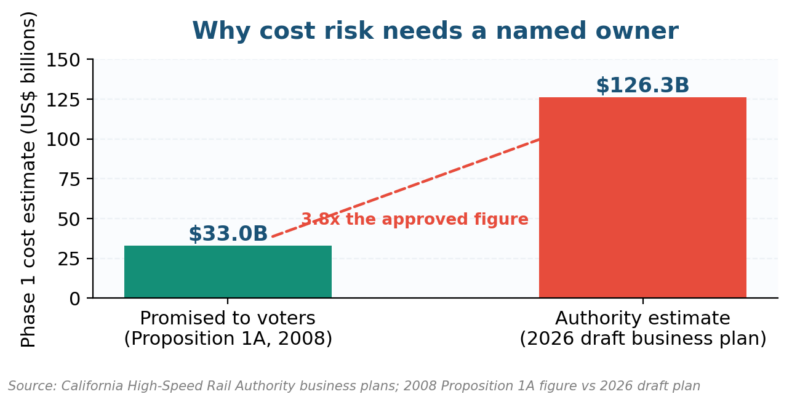
Figure 4. From $33 billion promised in 2008 to $126.3 billion in the 2026 draft plan.
The fix here is quantitative rather than rhetorical, and it is thoroughly documented. Range-based estimating and schedule risk analysis, benchmarked against GAO’s schedule assessment guide, replace the single-point number that boards and owners keep mistaking for a commitment rather than an estimate.
Technique selection has a catalog of its own in IEC 31010. On construction work we lean on Monte Carlo simulation for contingency and on construction schedule risk analysis for float, since both produce a defensible confidence level instead of a feeling.
Escalation risk deserves live monitoring rather than an annual review, and the Census Bureau’s construction spending series is the free national reference for tracking it. Four triggers should force an immediate re-forecast on any active build, whatever the contract type:
- Material index movement beyond the allowance baked into the bid
- A long-lead item slipping past its procurement date by more than two weeks
- Change orders exceeding an agreed share of contract value
- Float consumed faster than the elapsed program, measured monthly
Contracts and Insurance: Transferring What You Cannot Control
Analysis tells you the size of an exposure; contract strategy decides who ends up carrying it. Transfer is legitimate risk treatment under any framework, provided the party receiving the risk can actually influence the outcome and absorb the loss if it lands.
| Mechanism | What it transfers well | What it never transfers |
| Fixed-price contract | Productivity and means-and-methods risk | Owner-driven scope change |
| Builder’s risk insurance | Physical loss to works in progress | Defective design or workmanship |
| Performance bond | Contractor default and completion cost | Day-to-day quality supervision |
| Subcontract indemnity | Trade-specific liability | The builder’s own safety duty |
The final row is the one we argue about most often. Contractual transfer never moves the safety duty off the principal contractor, and an indemnity clause has yet to revive anybody, which is why the register keeps safety controls in-house.
Register, Indicators, and the Reporting Cadence
Treatment decisions only survive contact with a live site if something keeps tracking them. The register carries the decisions, indicators give early warning between reviews, and the report puts both in front of the people who can move money and change the sequence.
| Indicator | What it warns about | Review cadence |
| Near-miss reports per 100 workers | Safety culture and reporting honesty | Weekly |
| Open corrective actions past due | Control decay on site | Weekly |
| Float consumed against elapsed time | Schedule pressure building | Monthly |
| Change order value against contract | Scope and commercial drift | Monthly |
| Subcontractor financial distress flags | Default and continuity risk | Monthly |
A rising near-miss count is usually good news, not bad. It signals a crew that reports rather than hides, and our construction key risk indicator sets treat a sudden drop in reporting as the warning sign instead of a win.
Reporting should differ by audience. Site leadership needs weekly detail, the client needs a monthly commercial and safety view, and the board needs a portfolio picture through dashboards built for that level, not a copy of the site register.
Firm-level indicators sit above the project ones and answer a different question: whether the business as a whole is taking on more risk than it can carry. Our firm-level construction indicators and the real estate variants cover that layer for owners and boards.
Red Flags to Watch on Site (And Green Lights to Chase)
Across audits and incident reviews, failing programs announce themselves early through the same handful of signals. Each one has a cheap fix if somebody acts in the week it appears rather than the quarter after, once the cost has already compounded.
| Red flag | What it usually means | The fix |
| Register untouched for a month | Risk work stopped at bid stage | Standing agenda item with owners present |
| Safety file kept separate from commercial risk | Two programmes, neither complete | One register, five categories, one owner list |
| Contingency set by negotiation | No quantitative basis to defend | Range estimating at each stage gate |
| Near-miss reports falling to zero | Crews have stopped reporting | Protect reporters and publish what changed |
| Subcontractor risk reviewed only at award | Distress found at handover | Quarterly financial and performance checks |
| Lessons captured but never read | Closeout as paperwork | Feed closeout findings into the next bid |
Construction Risk Management: Your Questions Answered
What are the five types of risk in construction?
Safety, schedule, financial, contractual, and environmental. Safety covers the hazards that injure workers, schedule and financial cover delay and cost exposure, contractual covers scope and liability gaps, and environmental covers permits, contamination, and community impact on and around the site.
When should construction risk management start on a project?
Before mobilization. A pre-construction risk assessment is where design changes and method choices are still cheap, and where most avoidable exposure gets removed. Waiting for the kickoff meeting means inheriting those decisions instead of shaping them, then paying for them later.
Who is responsible for construction risk management on site?
The principal contractor owns the process, with a named owner for each risk category and for each individual risk on the register. Subcontract indemnity shifts commercial liability, but it never moves the builder’s safety duty, which is why site controls stay in-house and get verified in person.
What standards apply to construction risk management?
ISO 31000:2018 supplies the principles and the process, IEC 31010:2019 supplies the assessment techniques, and PMI’s 2024 practice guide covers the project and program layer. In the United States, OSHA’s construction standards carry the enforceable safety duties on every jobsite.
How do you calculate contingency for construction risk?
Model it rather than guess it. Run quantitative analysis across the ranked register to produce a confidence level for cost and schedule, then set contingency at an agreed confidence, using the federal cost estimating benchmark to defend the method when an owner challenges it.
What is the difference between a risk assessment and a risk register in construction?
The risk assessment is the activity of identifying and analyzing exposures; the register is the living record of what you found, who owns it, and what happens next. A construction risk assessment definition without a maintained register produces paperwork rather than control.
Where the Construction Playbook Goes Next
Three shifts are already changing how American builders handle exposure, and not one of them is speculative. Wearable and sensor data is moving safety monitoring from lagging incident reports toward live signals, which will eventually make weekly indicator reviews look slow to everybody who relies on them.
Climate exposure is the second shift. Heat, storm intensity, and water availability now drive sequencing and workforce planning in states where they were once background noise, and schedule models will have to price that volatility explicitly rather than bury it in float.
The third is capital discipline. With infrastructure spending flowing into an asset base ASCE grades at C, owners are demanding evidence that a contractor can quantify exposure before award, and a documented risk management plan is becoming a bid requirement rather than a differentiator.
If you run projects for a US contractor or developer, start with one register covering all five categories and a named owner per line, then add analysis where the money sits. Our services cover that build, and you can contact us to pressure-test the register you already have before your next stage gate.

Chris Ekai is a Risk Management expert with over 10 years of experience in the field. He has a Master’s(MSc) degree in Risk Management from University of Portsmouth and is a CPA and Finance professional. He currently works as a Content Manager at Risk Publishing, writing about Enterprise Risk Management, Business Continuity Management and Project Management.