On July 1, 2024, Boeing agreed to buy back Spirit AeroSystems for roughly $4.7 billion in equity, an $8.3 billion enterprise value with debt, six months after a door plug blew off a 737 MAX 9 on Alaska Airlines Flight 1282.
Spirit built that fuselage. The reacquisition was supplier performance risk management in reverse: a supplier whose quality had drifted became a risk so large that Boeing told the SEC the only fix was to pull the work back in-house.
Supplier performance risk management exists to catch that drift before it becomes a headline. It scores how a supplier performs and how risky it is in one system, then monitors both between contracts. Done well, it turns a slow decline into an early number on a dashboard rather than a write-off after the fact.
| Supplier Performance Risk Management: Key Takeaways |
| Supplier performance risk management fuses two views that most programs keep apart: how well a supplier delivers (OTIF, PPM, lead time) and how risky it is (financial, cyber, geopolitical), scored into one composite rating. |
| Boeing’s $4.7 billion reacquisition of supplier Spirit AeroSystems in 2024 is the cautionary case: a supplier’s quality performance became enterprise risk, and onboarding-time due diligence never caught the drift. |
| A day of supply chain disruption costs about $1.5 million on average, and 94% of firms in a 2025 CFO and COO survey said disruption cut revenue, which is why scoring shifted from annual to continuous. |
| A strategic-supplier scorecard weights delivery and quality heaviest, but the risk dimensions (financial health, compliance, cyber, sustainability, geopolitical) decide whether a top performer is actually safe to depend on. |
| ISO 28000:2022, ISO 31000, and the US Department of Defense Supplier Performance Risk System (SPRS) give the program its standards backbone and prove the model at federal scale. |
| Tiering is the engine: strategic suppliers get continuous monitoring and quarterly business reviews, tail spend gets light-touch screening, and thresholds trigger named action rather than another dashboard nobody owns. |
What Supplier Performance Risk Management Actually Means
Supplier performance risk management is the discipline of scoring a vendor on two axes at once: operational performance and exposure to harm. Performance asks whether the supplier delivers on time, in full, and to spec. Risk asks whether the supplier will still be solvent and secure next quarter. The evaluation routine that turns those two views into one score is set out in how to evaluate supplier performance.
Most organizations run those two views in separate rooms. Procurement tracks delivery and quality, while a third-party risk team runs onboarding due diligence once and files it. The drift between assessments is exactly where a Spirit-style failure hides.
Fusing them changes the question. Instead of asking whether a supplier passed a check last year, supplier performance risk management asks what its live composite score is today, and whether that score is moving toward a threshold that should stop a reorder.
Supplier Performance Risk Management vs Traditional Vendor Due Diligence
Traditional due diligence is a gate. You screen a vendor before the contract, capture a vendor risk questionnaire, and assume the answers hold. Supplier performance risk management treats that screen as the starting line, not the finish.
| Dimension | Traditional vendor due diligence | Supplier performance risk management |
| Timing | Point-in-time, at onboarding and renewal | Continuous, refreshed between reviews |
| Focus | Compliance and financial screening | Performance plus risk in one composite score |
| Owner | Procurement or a siloed TPRM team | Shared scorecard across procurement and risk |
| Trigger | Contract renewal or an incident | A score crossing a defined threshold |
| Output | A pass or fail decision | A tier, a trend, and a named action |
The shared score is the unlock. When procurement and risk read the same number, a GRC framework stops being a filing cabinet and starts driving sourcing decisions before the loss, not after it.
Why Supplier Performance Risk Management Moved From Annual to Continuous
The economics forced the change. A single day of supply chain disruption costs about $1.5 million on average, and far more in exposed sectors, so an annual review that misses eleven months of drift is a poor bet.
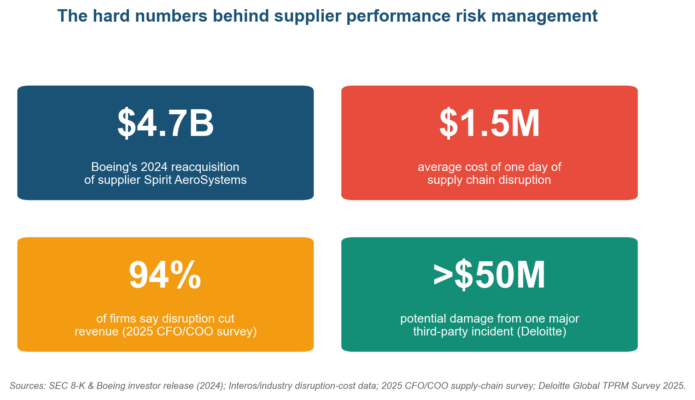
Figure 1. The magnitudes supplier performance risk management is built to contain.
The revenue data is just as blunt. In a 2025 survey of 200 CFOs and COOs, 94% said supply chain disruption had cut revenue, and 44.5% put the loss between 3% and 4% of annual revenue over three years.
Severity scales with the sector. Economist Intelligence Unit research puts disruption costs at 6% to 10% of annual revenue, and the per-day numbers climb from $1.1 million in retail to $3.5 million in high-tech.
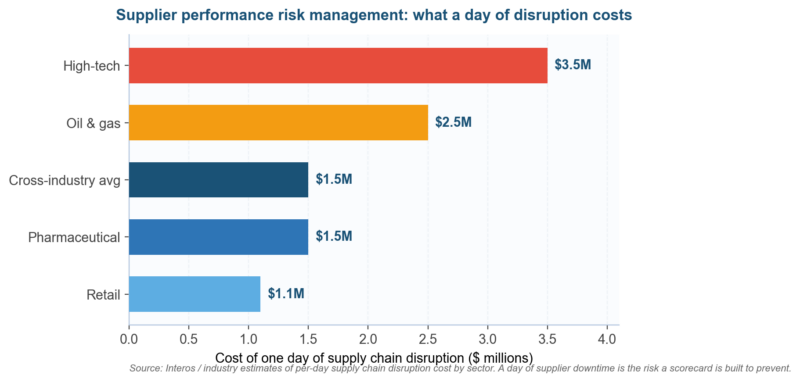
Figure 2. A day of supplier downtime by sector, the loss a continuous scorecard is meant to prevent.
Concentration makes it worse. The Richmond Fed found that firms relying on a few suppliers absorb shocks badly, so a supplier performance risk management program has to watch dependency, not just price.
Scale explains the urgency too. The Deloitte Global third-party risk survey drew on more than 1,300 leaders across 40 countries, and nearly half believed a single major third-party incident could exceed $50 million in damages.
Building a Supplier Performance Risk Management Scorecard
The scorecard is where supplier performance risk management becomes a number. GE Aerospace’s supplier deployment shows how lean operation management extends the value stream to suppliers before the scorecard is built. Before you build it, tier suppliers before measuring them so the weighting matches each supplier’s criticality. It aggregates hard delivery and quality metrics with risk signals into one weighted composite, so a buyer can rank, compare, and act on suppliers without arguing from opinion.
Weighting is the judgment call. The Institute for Supply Management notes that delivery and quality usually carry the heaviest combined weight, but the split shifts by segment and contract priority.
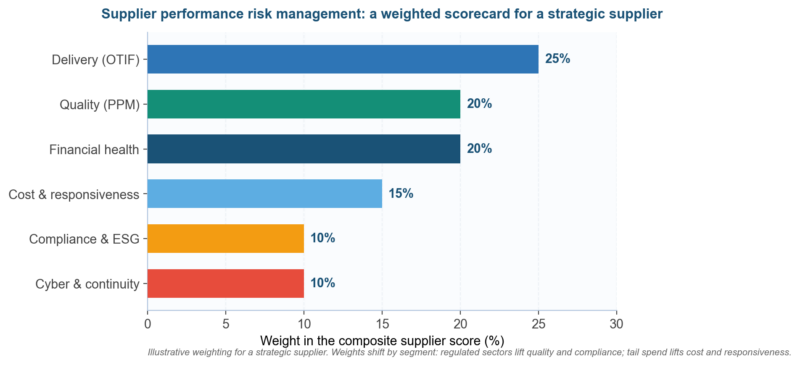
Figure 3. An illustrative weighted supplier performance scorecard for a strategic supplier.
Segment the weights deliberately. A regulated buyer weights quality and compliance higher, while tail spend leans on cost and responsiveness, the same logic behind sector-specific risk appetite statements that match tolerance to what each relationship can actually threaten.
The KPIs Every Supplier Performance Scorecard Should Carry
Two delivery and quality metrics anchor every supplier performance scorecard. On-Time In-Full (OTIF) measures whether the right quantity arrived on schedule, and Parts Per Million (PPM) measures defects per million units received.
| Metric | What it captures | Typical weight |
| OTIF delivery | Right quantity, right date, in full | High (delivery) |
| PPM defect rate | Quality escapes per million units | High (quality) |
| Lead-time adherence | Stability of promised lead times | Medium |
| Corrective-action cycle time | Speed of closing a nonconformance | Medium |
| Financial-health score | Solvency and liquidity signals | High (risk) |
| Compliance status | Certifications, audits, sanctions | High (risk) |
Pull these from systems, not spreadsheets. OTIF and PPM live in the ERP, financial signals come from rating feeds, and a live risk register ties each metric to an owner so a breach has somewhere to land.
Keep the performance and risk metrics distinct from the metrics that merely report activity. The line between a KPI and a KRI matters here: a KPI tells you how a supplier did, while a key risk indicator warns you what it is about to do.
The Risk Dimensions a Supplier Performance Risk Management Program Scores
Performance alone flatters dangerous suppliers. A vendor can ace delivery and quality while carrying a balance sheet about to fail, which is why a supplier performance risk management program scores several risk dimensions beside the operational ones.
Rating agencies have standardized the set. Moody’s supplier risk scorecards span operational, financial, compliance, cyber, sustainability, and geopolitical risk, each a separate lens on the same vendor.
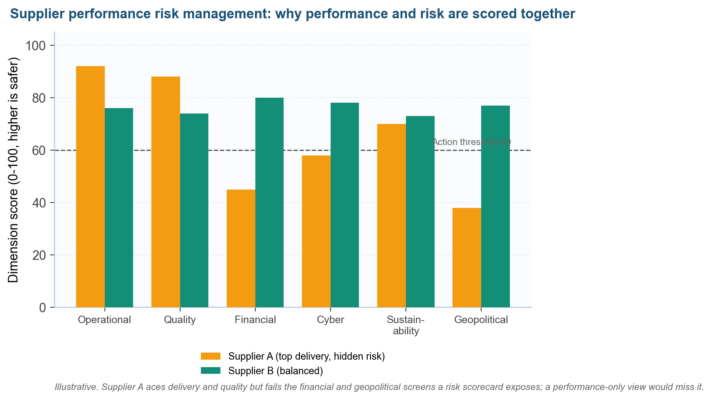
Figure 4. Why supplier performance risk management scores performance and risk together rather than alone.
| Risk dimension | What the signal tracks | Example trigger |
| Financial | Solvency, liquidity, payment trends | Credit downgrade or late-payment spike |
| Operational | Capacity, single-site dependency | Plant outage or capacity squeeze |
| Compliance | Sanctions, certifications, audits | Lapsed certificate or sanctions hit |
| Cyber | Breach history, security posture | Disclosed breach or failed assessment |
| Geopolitical | Country, trade, and tariff exposure | Export controls or regional conflict |
| Sustainability | ESG and labor-practice signals | Forced-labor finding in the supply chain |
Cyber and geopolitical have climbed fastest. CISA’s supply chain security guidance treats a supplier’s software and hardware as part of your attack surface, while geopolitical exposure can strand a sole-source vendor overnight.
Watch the financial dimension closely on strategic suppliers. A finance-team key risk indicator such as days payable or a covenant breach often signals trouble months before delivery slips, giving the program time to dual-source.
Standards That Anchor Supplier Performance Risk Management
Supplier performance risk management is stronger when it sits on published standards rather than house style. Four references do most of the work, and an auditor will expect to see at least one of them behind the program.
| Standard | Scope | Role in the program |
| ISO 31000 | Risk management principles | The risk process and language behind scoring |
| ISO 28000:2022 | Supply chain security management | Security requirements for supplier networks |
| ISO 22301 | Business continuity management | Continuity expectations for critical suppliers |
| NIST SP 800-161 | Cyber supply chain risk | Controls for supplier cyber exposure |
ISO 31000 supplies the grammar. Our guide to what ISO 31000 is frames risk as the effect of uncertainty on objectives, and a supplier performance risk management program is that idea applied to one dependency at a time.
Security and continuity sit alongside it. ISO 28000 for supply chain risk addresses the network’s security, while ISO 22301 sets the continuity bar a critical supplier has to clear before you depend on it.
The federal government already runs this at scale. The US Department of Defense operates a Supplier Performance Risk System, literally named for the fusion of performance and risk, scoring contractors so buyers can weigh past delivery and risk before award.
A Supplier Performance Risk Management Tiering and Monitoring Model
You cannot watch every supplier the same way, and you should not try. Supplier performance risk management tiers the base by spend and dependency, then spends monitoring effort where a failure would actually hurt.
| Tier | Examples | Monitoring cadence |
| Strategic | Sole-source, high-spend, hard to replace | Continuous scoring plus quarterly business reviews |
| Critical | Important but substitutable inputs | Monthly scorecard, semiannual review |
| Tail | Low-spend, commodity, many alternatives | Annual screen and exception-based checks |
Strategic suppliers earn the continuous treatment. They get live scoring, supply chain key risk indicators, and a quarterly business review where the composite score, not a sales pitch, sets the agenda.
Tail spend should not drown the program. A light annual screen and an exception trigger keep the effort proportionate, the same discipline that makes procurement key risk indicators useful instead of noisy.
Setting Thresholds and Triggers in Supplier Performance Risk Management
A score without a threshold is decoration. Supplier performance risk management sets the level at which a composite or dimension score forces a decision, and names who owns the response.
Define the action, not just the alarm. A breach should map to a specific move: a corrective-action plan, a dual-sourcing project, an escalation, or an exit, each logged against the risk management lifecycle so the trail survives an audit.
Tune thresholds to logistics reality too. A delivery-stability trigger built from logistics and transportation indicators should fire early enough to re-route freight, not after the line has already stopped.
Frequently Asked Questions About Supplier Performance Risk Management
What is supplier performance risk management?
Supplier performance risk management is the practice of scoring a vendor on both operational performance and risk exposure, then monitoring that combined score continuously. It merges delivery and quality metrics like OTIF and PPM with financial, compliance, cyber, and geopolitical risk signals into one composite rating that drives sourcing decisions.
How is supplier performance risk management different from third-party risk management?
Third-party risk management screens vendors at onboarding and renewal, while supplier performance risk management adds live performance data and runs continuously. The two overlap, and many teams pair a third-party risk software platform with a performance scorecard to cover both the gate and the ongoing relationship.
What KPIs belong in a supplier performance risk management scorecard?
OTIF delivery and PPM defect rate are the core performance KPIs, supported by lead-time adherence and corrective-action cycle time. On the risk side, a supplier performance risk management scorecard adds financial-health, compliance, and cyber scores, each weighted by how strategic the supplier is.
How often should supplier performance risk management scores be reviewed?
Strategic suppliers warrant continuous scoring with quarterly business reviews, critical suppliers a monthly scorecard, and tail spend an annual screen. The point of supplier performance risk management is to catch drift between formal reviews, so live signals should refresh scores rather than waiting for a calendar date.
Which standards support supplier performance risk management?
ISO 31000 supplies the risk process, ISO 28000:2022 covers supply chain security, ISO 22301 sets continuity expectations, and NIST SP 800-161 addresses cyber supply chain risk. The US Department of Defense SPRS shows supplier performance risk management working at federal procurement scale.
What tools support supplier performance risk management?
Programs run on a mix of ERP performance data, financial and cyber rating feeds, and dedicated platforms. Buyers often compare vendor risk management platforms and supplier scorecard tools, which Gartner tracks as a supplier risk market, to automate scoring and threshold alerts.
Who owns supplier performance risk management in an organization?
Ownership is shared between procurement, which holds the commercial relationship, and risk or compliance, which holds the exposure. Supplier performance risk management works best when both read one scorecard, and an operational risk function arbitrates when performance and risk signals disagree.
Where Supplier Performance Risk Management Programs Fail
Most failed programs repeat a short list of mistakes, and none of them are exotic. Each row pairs the trap with the remedy that the enforcement and incident record keeps proving out.
| Pitfall | Root cause | Remedy |
| Scoring performance only | Risk treated as an onboarding gate | Score risk dimensions on the same card |
| Annual reviews only | No continuous data feed | Refresh scores from live ERP and rating signals |
| Flags with no owner | Alerts route to a shared inbox | Map each threshold to a named action and owner |
| Equal effort per supplier | No tiering by spend or dependency | Tier strategic, critical, and tail differently |
| Hidden concentration risk | No single-source visibility | Track dependency and dual-source critical inputs |
| Scorecard nobody reads | Procurement and risk keep separate views | Run one shared composite across both teams |
The first row causes the most damage. The Boeing and Spirit case shows that a supplier can hit commercial targets while its quality and risk profile decays, and a performance-only scorecard will applaud right up to the failure.
The Supplier Performance Risk Management Horizon: 2026 and Beyond
Prediction is the near-term frontier. Programs are moving from reactive scoring to predictive signals that flag a likely supplier failure before delivery slips, using financial and external data to get ahead of the breach.
Artificial intelligence is the accelerant and the caveat. The Deloitte survey found most leaders still report low maturity in AI-enabled third-party risk, so the payoff is concrete but the tooling is early and needs governance.
Regulation keeps widening the lens. Cyber and ESG-linked vendor key risk indicators are becoming standing scorecard items, not optional extras, as buyers answer for what happens deep in their supply chains.
The lasting lesson is the one Boeing paid $4.7 billion to relearn. Treat supplier performance risk management as a living control system, scored and monitored between contracts, and the supplier that drifts shows up on the dashboard long before it shows up in the news.
Infographic: The Supplier Performance Risk Management Lifecycle
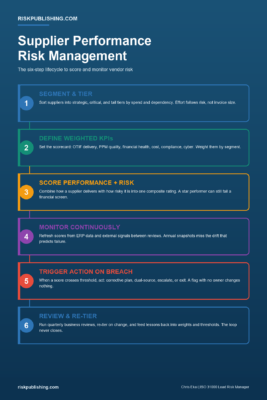
Figure 5. Supplier performance risk management as a six-step loop that scores, monitors, and acts on vendor risk.
Strengthen Your Supplier Performance Risk Management Program
Risk Publishing helps US procurement and risk teams turn supplier data into a defensible supplier performance risk management program, from the scorecard to the operational risk controls behind it. See our services, then contact us when your supplier scorecard needs to predict failure instead of reporting it.

Chris Ekai is a Risk Management expert with over 10 years of experience in the field. He has a Master’s(MSc) degree in Risk Management from University of Portsmouth and is a CPA and Finance professional. He currently works as a Content Manager at Risk Publishing, writing about Enterprise Risk Management, Business Continuity Management and Project Management.