
| Key Takeaways |
| Medical errors remain the third leading cause of death in the United States, with 200,000–400,000 preventable deaths annually, making healthcare risk management a patient survival imperative. |
| Healthcare data breaches cost an average of $7.42 million per incident in 2025 (IBM), more than any other industry for the 14th consecutive year. |
| The ASHRM enterprise risk management framework defines eight risk domains—clinical, operational, financial, strategic, legal/regulatory, technological, human capital, and hazard—giving risk managers a structured lens for the full threat landscape. |
| Effective risk management programs integrate incident reporting, root cause analysis (RCA), failure mode and effects analysis (FMEA), and real-time key risk indicators (KRIs) into a continuous improvement cycle aligned with ISO 31000 and COSO ERM. |
| A 90-day implementation roadmap at the end of this article provides a phased action plan with deliverables, owners, and success metrics to launch or strengthen a healthcare risk management program. |
| Cybersecurity, AI governance, and third-party vendor risk have become non-negotiable domains that every healthcare risk management plan must now address. |
Between 200,000 and 400,000 patients die from preventable medical errors in the United States each year, making medical mistakes the third leading cause of death after heart disease and cancer (StatPearls, 2025).
At the same time, healthcare organizations face average data breach costs of $7.42 million—the highest of any industry for the 14th consecutive year (IBM Cost of Data Breach Report, 2025). These numbers are not abstract. They represent patients harmed, families devastated, and organizations crippled by financial and reputational damage.
Risk management in healthcare is the structured set of clinical and administrative systems used to identify, monitor, assess, and mitigate threats to patients, staff, and organizational viability.
Unlike risk management in other sectors, healthcare risk decisions can literally mean the difference between life and death. A missed medication interaction, a delayed diagnosis, a ransomware attack that shuts down an emergency department—each scenario demands proactive, systematic controls.
This article explains the purpose of risk management in healthcare, walks through the ASHRM enterprise risk management framework, details the tools practitioners use daily, and closes with a 90-day roadmap to launch or strengthen your program.
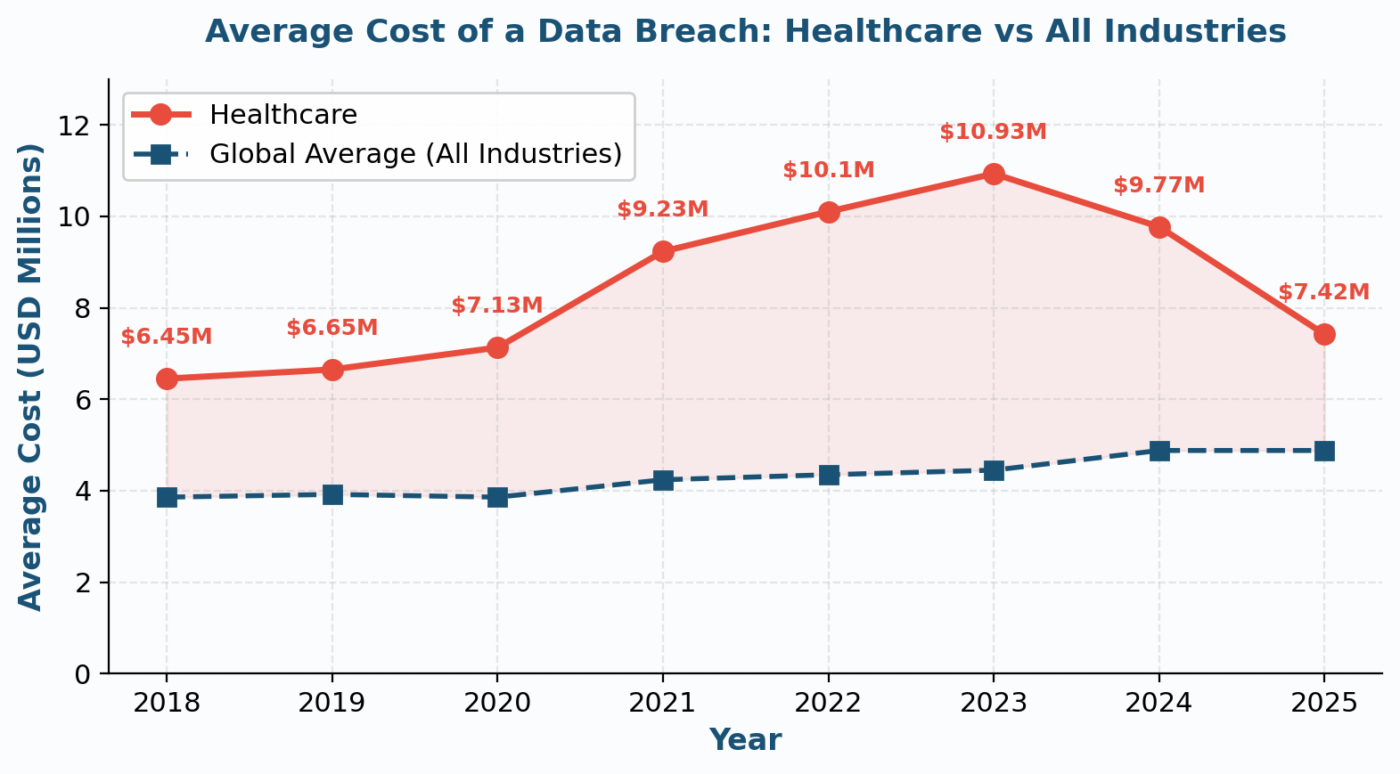
Figure 1: Average cost of a healthcare data breach, 2020–2025 (Source: IBM Security)
Why Healthcare Risk Management Exists
The modern healthcare risk management movement traces back to the Institute of Medicine’s landmark 1999 report To Err Is Human, which documented roughly 98,000 preventable deaths per year from medical errors (NCBI/StatPearls).
That report shifted the narrative from blaming individual clinicians to fixing the systems that make errors probable.
The Patient Safety and Quality Improvement Act of 2005 reinforced this by creating legal protections for voluntary safety reporting, and the World Health Organization’s Global Patient Safety Action Plan 2021–2030 set a global target of zero preventable harm in healthcare (WHO).
Today, risk management in healthcare goes far beyond clinical errors. The American Society for Health Care Risk Management (ASHRM) defines it broadly: enterprise risk management in healthcare promotes a comprehensive framework for making risk decisions that maximize value protection and creation by managing risk, uncertainty, and their connections to total value.
This aligns directly with ISO 31000 principles of value creation, integration, and continuous improvement.
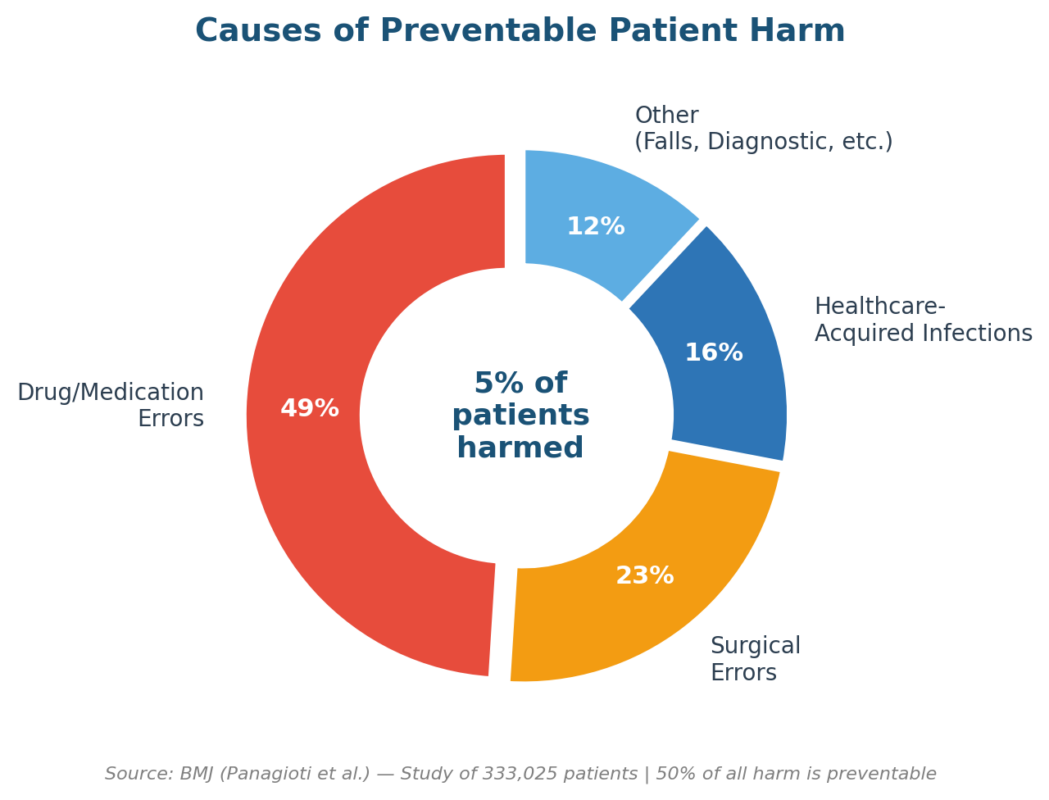
Figure 2: Causes of preventable patient harm (Source: BMJ, Panagioti et al.)
Healthcare Risk by the Numbers
| Metric | Current Data |
| Preventable deaths (US, annual) | 200,000–400,000 (StatPearls, 2025) |
| Patients experiencing preventable harm | 5% of all patients; 50% of harm is preventable (BMJ) |
| Medication-related harm | Affects 1 in 30 patients globally (WHO) |
| Sentinel events trend | 13% increase in 2024 (Joint Commission) |
| Average healthcare data breach cost | $7.42 million (IBM, 2025) |
| Healthcare organizations hit by cyberattacks | 92% (Ponemon Institute, 2024) |
| Ransomware recovery cost (global avg) | $2.57 million, double from 2021 (Statista) |
| Patient falls as % of sentinel events | 49% in 2024, up from 18% in 2019 (Joint Commission) |
| Hospitals at risk of closure | 700+ due to financial instability (KFF) |
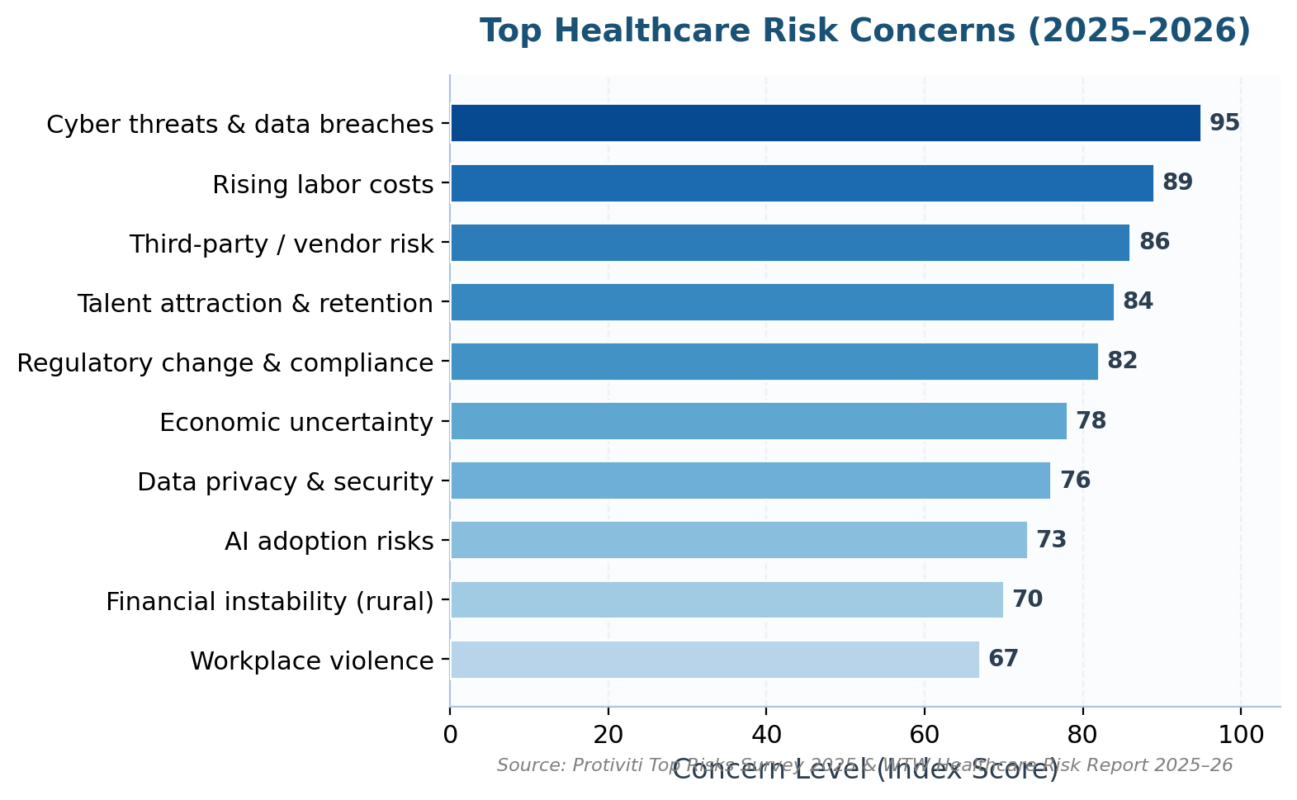
Figure 3: Top healthcare risk concerns, 2025–2026 (Sources: Protiviti, WTW)
The ASHRM Eight-Domain ERM Framework
The ASHRM enterprise risk management model provides a structured approach to healthcare risk by organizing threats and opportunities into eight domains.
This aligns with COSO ERM principles while addressing healthcare-specific realities like clinical liability, patient safety events, and regulatory complexity.
Risk managers should use these domains as a checklist when conducting risk assessments and building risk registers. Every domain should have assigned ownership, defined risk appetite thresholds, and monitored key risk indicators (KRIs).
| Domain | Scope | Example Risks | Example KRIs |
| Clinical / Patient Safety | Delivery of care to patients and residents | Medication errors, surgical site infections, diagnostic delays, falls | Hospital-acquired infection rate, falls per 1,000 patient-days, readmission rate |
| Operational | Internal processes, systems, human error | Equipment failure, supply chain disruption, staffing shortages | Equipment downtime hours, vacancy rate, nurse-to-patient ratio |
| Financial | Revenue, costs, reimbursement, fraud | Denied claims, malpractice settlements, uncompensated care, embezzlement | Days in A/R, denial rate, operating margin, malpractice reserve ratio |
| Strategic | Market position, partnerships, growth | Competitor expansion, failed M&A, reputational crisis, payer contract loss | Market share trend, patient volume growth, NPS score |
| Legal / Regulatory | Compliance, litigation, accreditation | HIPAA violations, CMS audit findings, license revocation, consent failures | Open regulatory findings, overdue corrective actions, complaint-to-litigation ratio |
| Technological | IT systems, cybersecurity, AI, data integrity | Ransomware, EHR downtime, AI algorithmic bias, shadow AI exposure | Mean time to detect breach, patch compliance %, unplanned EHR downtime hours |
| Human Capital | Workforce safety, retention, competency | Workplace violence, burnout, credentialing gaps, training non-compliance | Turnover rate, workplace injury rate, mandatory training completion % |
| Hazard | Physical environment, natural disasters, safety | Fire, flood, hazmat spill, active shooter, pandemic | Fire drill pass rate, emergency drill frequency, PPE compliance rate |
Core Purposes of Risk Management in Healthcare
Healthcare risk management serves four interconnected purposes. Understanding these helps risk managers communicate the program’s value to boards, executives, and frontline staff.
1. Patient Safety and Clinical Quality
Patient safety is the foundational purpose. Research published in The BMJ found that roughly 5% of patients experience harm during medical care, with half of that harm being preventable. Drug-related errors account for 49% of preventable incidents, surgical errors for 23%, and healthcare-associated infections for 16%.
Effective risk management programs deploy tools like root cause analysis and failure mode and effects analysis (FMEA) to systematically uncover why these events occur and build controls to prevent recurrence. Hospitals that actively implement WHO Global Patient Safety Action Plan principles have reported up to 30% fewer medical errors.
2. Financial Stability
Medical malpractice claims, regulatory fines, and data breach remediation can destabilize even large health systems. The 2024 Change Healthcare ransomware attack impacted over 190 million individuals and cost the organization billions in remediation and lost revenue.
On a broader scale, the IBM 2025 report showed healthcare breach costs averaging $7.42 million, with a 279-day average lifecycle from breach to containment. Proactive financial risk assessment combined with business continuity planning helps organizations absorb shocks without threatening operational survival.
3. Regulatory Compliance
Healthcare is one of the most heavily regulated sectors globally. HIPAA, the Affordable Care Act, CMS Conditions of Participation, Joint Commission accreditation standards, and state licensure requirements all demand documented risk management programs.
The HHS Office for Civil Rights has collected over $140 million in HIPAA enforcement penalties since the program began.
The proposed 2026 HIPAA Security Rule introduces mandatory multi-factor authentication, eliminates the “addressable” vs. “required” distinction, and requires quantitative risk ratings aligned with NIST.
Organizations without robust compliance risk assessment processes will face increasing enforcement exposure.
4. Organizational Reputation and Trust
An Accenture study found that US hospitals providing a “superior” patient experience had 50% higher financial performance than those offering an “average” experience. Risk management directly supports this by preventing the adverse events, data breaches, and compliance failures that erode patient trust.
A single publicized sentinel event or data breach can take years to recover from reputationally. Enterprise risk management technology gives leadership real-time visibility into risk exposure so they can act before events become crises.
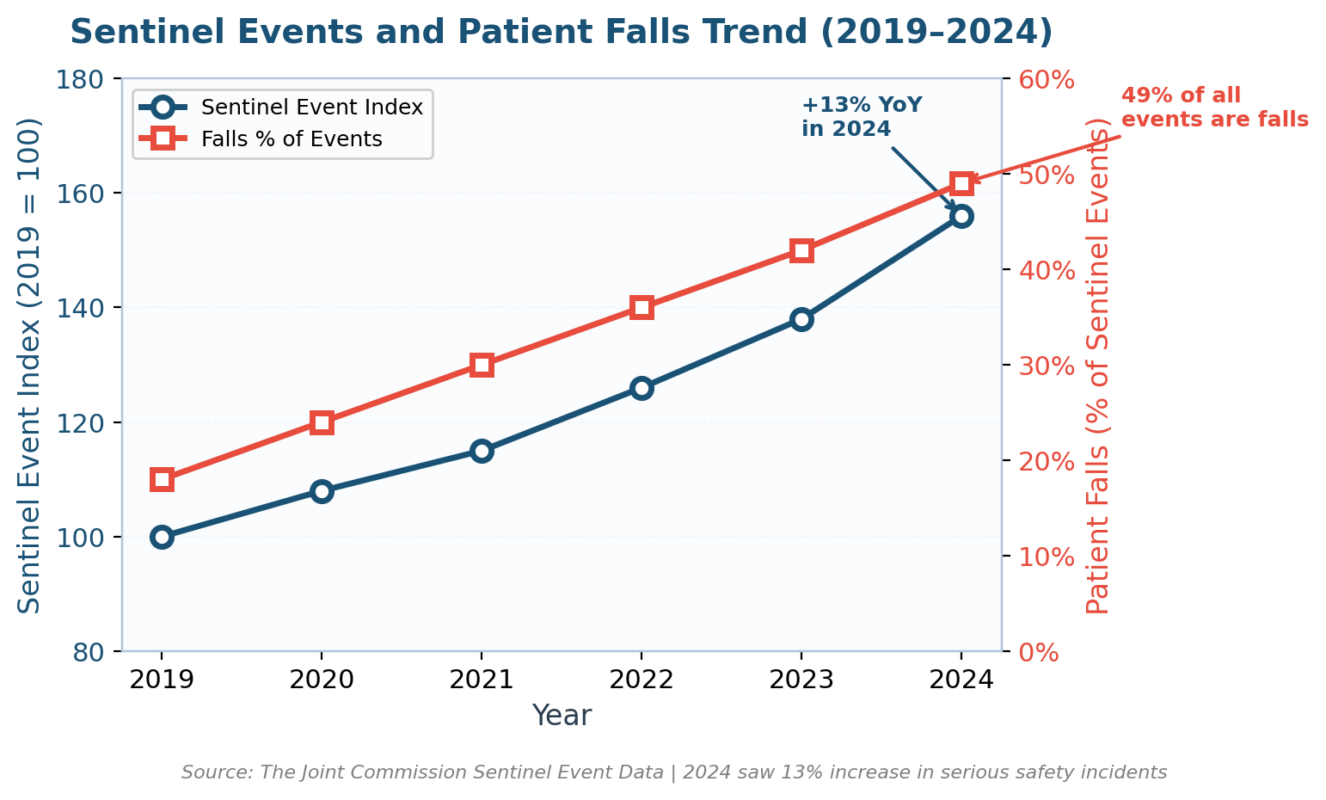
Figure 4: Sentinel event and patient falls trend, 2019–2024 (Source: Joint Commission)
Tools and Methods for Healthcare Risk Management
Effective healthcare risk management requires a toolkit that combines reactive analysis with proactive identification.
The table below maps the most widely used tools to the ASHRM risk domains where they add the most value. Each tool aligns with ISO 31000 risk assessment methodology and can be adapted to any healthcare setting.
| Tool | Purpose | Applicable Domains | Output |
| Root Cause Analysis (RCA) | Investigate why a sentinel event or near-miss occurred; identify systemic causes vs. individual error | Clinical, Operational, Human Capital | Causal factor tree, corrective action plan with owners and deadlines |
| Failure Mode and Effects Analysis (FMEA) | Proactively identify potential failure points in a process before harm occurs; prioritize by risk priority number (RPN) | Clinical, Operational, Technological | FMEA worksheet with severity, occurrence, and detection scores |
| Incident Reporting Systems | Capture near-misses, adverse events, and unsafe conditions in real time for analysis and trending | All eight domains | Incident logs, trend reports, aggregate dashboards |
| Key Risk Indicators (KRIs) | Monitor leading and lagging metrics with thresholds that trigger escalation before events become crises | All eight domains | KRI dashboard with RAG status, threshold breaches, escalation protocols |
| Security Risk Assessment (HIPAA) | Identify vulnerabilities in ePHI handling; required annually by HIPAA Security Rule | Technological, Legal/Regulatory | Risk register, remediation plan, compliance documentation |
| Bow-Tie Analysis | Visualize the relationship between threat causes, preventive controls, the risk event, mitigating controls, and consequences | Clinical, Operational, Hazard | Bow-tie diagram linking causes to consequences through controls |
| Scenario Analysis / Stress Testing | Model the financial and operational impact of low-probability, high-consequence events | Financial, Strategic | Scenario models with probability-weighted outcomes and sensitivity ranges |
Risk managers should select tools based on the situation: RCA works best after events occur, FMEA before new processes launch, and KRIs for ongoing monitoring.
The bow-tie analysis method is particularly valuable in healthcare because it makes the relationship between controls and outcomes visual for clinical staff who may not have formal risk training.
Cybersecurity and Technology Risk in Healthcare
Cybersecurity has become the fastest-growing risk domain in healthcare. The Ponemon Institute’s 2024 Cyber Insecurity in Healthcare report found that 92% of US healthcare organizations experienced cyberattacks, with 53% reporting increased medical procedure complications and 28% reporting increased mortality rates as a direct consequence.
The 2024 Change Healthcare breach—the largest in healthcare history—impacted over 190 million individuals after attackers exploited a login portal without multi-factor authentication.
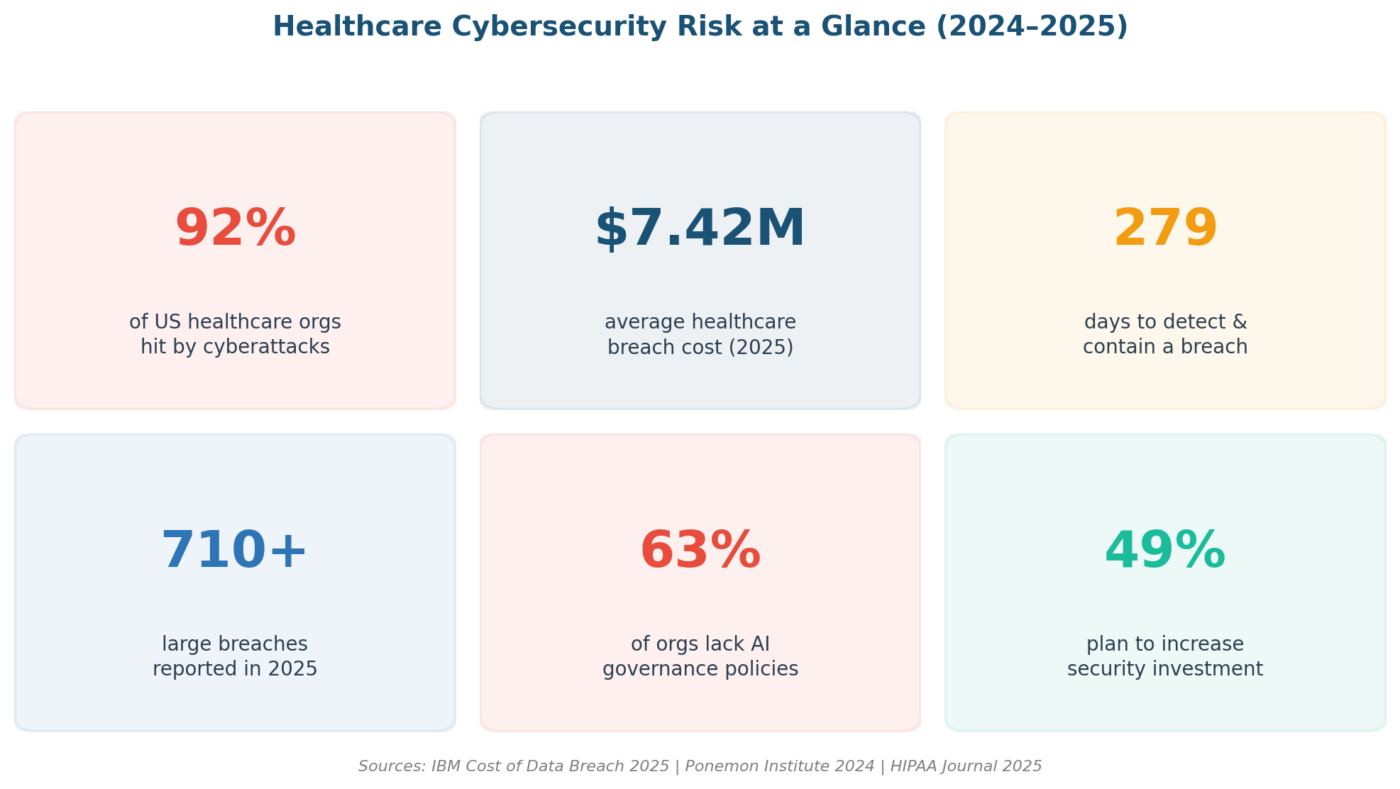
Figure 5: Healthcare cybersecurity risk at a glance (Sources: IBM, Ponemon, HIPAA Journal)
Healthcare risk managers must now treat cybersecurity risk with the same rigor as clinical risk.
The proposed 2026 HIPAA Security Rule eliminates the distinction between “addressable” and “required” safeguards, mandates MFA across all ePHI access points, and requires alignment with NIST Cybersecurity Framework risk scoring.
Shadow AI adds another layer: IBM’s 2025 report found that breaches involving shadow AI cost $670,000 more than standard incidents, and 63% of organizations lack formal AI governance policies.
| Cyber Threat | Healthcare Impact | Risk Mitigation |
| Ransomware | EHR lockout, diverted ambulances, delayed surgeries, $2.57M avg recovery cost | Offline backups, network segmentation, incident response plan, tabletop exercises |
| Phishing | Credential theft (16% of all breaches), unauthorized ePHI access | Security awareness training, email filtering, MFA on all accounts |
| Third-party vendor breach | Exposed patient data from EHR hosts, billing processors, telehealth vendors | Vendor risk assessments, continuous monitoring, contractual security requirements |
| Shadow AI / ungoverned AI | Sensitive data leakage to LLMs, algorithmic bias in clinical decisions | AI governance policy, data classification, approved tool catalog, usage monitoring |
| Medical device exploitation | 89% of orgs run devices with known exploits; IoMT vulnerabilities | Device inventory, network isolation, firmware patching, manufacturer coordination |
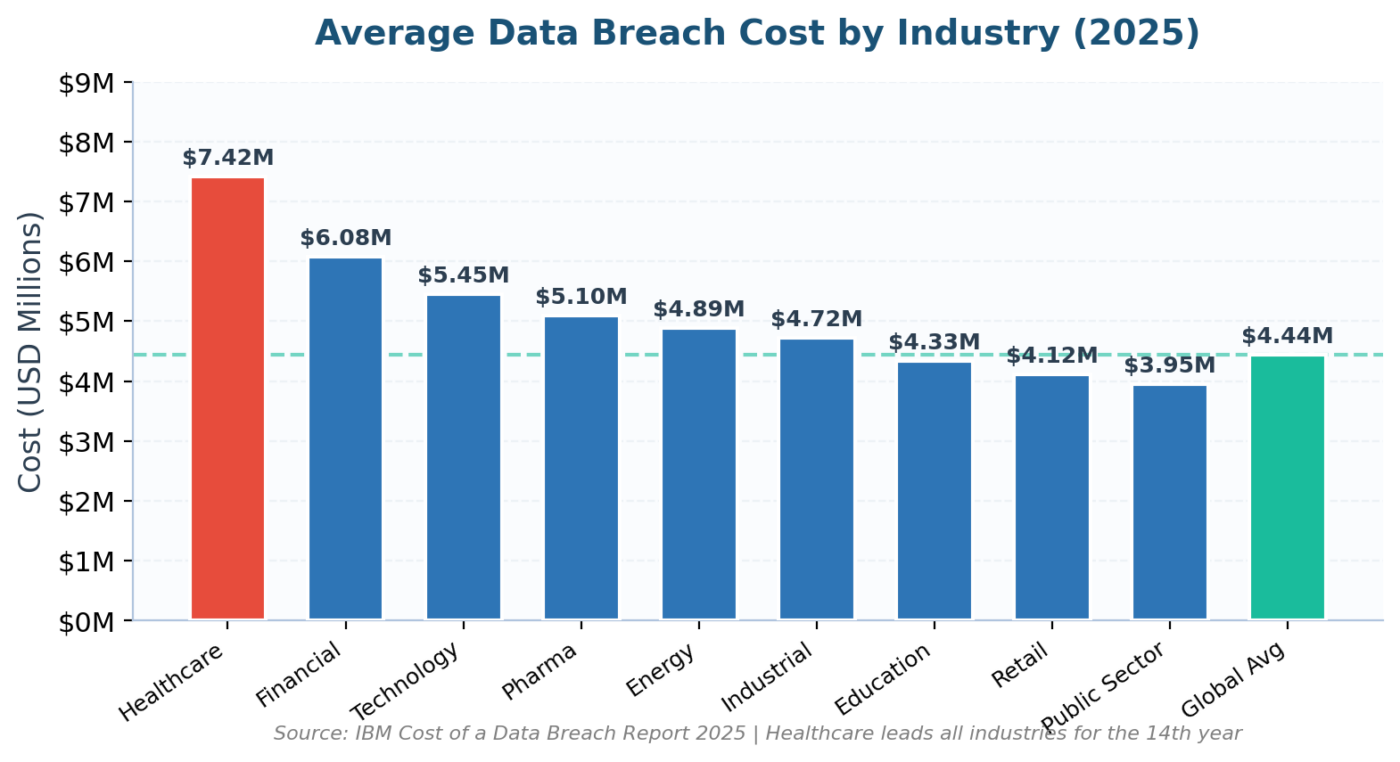
Figure 6: Data breach cost by industry — healthcare leads all sectors (Source: IBM, 2025)
Building a Healthcare Risk Management Plan
A documented risk management plan is both a regulatory requirement and an operational necessity.
The plan should cover the organization’s purpose, scope, governance structure, risk appetite, tools, escalation protocols, and review cadence. NEJM Catalyst identifies the following core components, which align with ISO 31000 lifecycle principles:
| Component | Description | Owner |
| Governance & Oversight | Board risk committee charter, reporting lines, frequency of risk reviews, integration with quality committee | Board / Chief Risk Officer |
| Risk Appetite & Tolerance | Quantified thresholds for each risk domain (e.g., maximum acceptable hospital-acquired infection rate, breach response SLA) | Executive Leadership |
| Risk Assessment Methodology | Standardized likelihood x impact matrix, risk scoring criteria, assessment frequency by domain | Risk Manager |
| Incident Reporting & Analysis | Reporting channels, anonymous reporting options, RCA triggers, trend analysis cadence | Risk Manager / Quality |
| Education & Training | New hire orientation, annual refresher, event-specific training, competency validation | Risk Manager / HR |
| Patient & Family Grievances | Complaint documentation, response timelines, escalation paths, feedback loops | Patient Relations |
| Monitoring & KRIs | Dashboard design, threshold definitions, escalation rules, board reporting cadence | Risk Manager / Analytics |
| Business Continuity & DR | BCP/DRP for critical clinical and operational systems, exercise schedule, lessons-learned process | Risk Manager / IT |
Implementation Roadmap
The roadmap below provides a phased approach to launching or strengthening a healthcare risk management program. Adapt timelines based on your organization’s size and maturity.
Each phase builds on the previous one, moving from assessment through implementation to sustained monitoring.
| Phase | Actions | Deliverables | Success Metrics |
| Days 1–30: Assess | Conduct gap analysis against ASHRM 8-domain framework; inventory existing incident data; benchmark KRIs against peer organizations; assess HIPAA SRA status; interview department heads for top-of-mind risks | Current-state assessment report; risk heat map; gap analysis matrix; prioritized risk register (top 20 risks) | All 8 domains assessed; 100% of department heads interviewed; baseline KRI values established |
| Days 31–60: Design | Define risk appetite statement with executive sign-off; design KRI dashboard with RAG thresholds; draft or refresh risk management plan; select and configure incident reporting platform; develop RCA and FMEA templates | Approved risk appetite statement; KRI dashboard (draft); risk management plan v1; incident reporting SOP; RCA/FMEA templates | Risk appetite approved by board; dashboard populated with live data for at least 5 KRIs; 80%+ of staff aware of reporting platform |
| Days 61–90: Activate | Launch incident reporting system organization-wide; conduct first tabletop exercise (cyber or clinical scenario); deliver risk management training to all staff; present first risk report to board; schedule quarterly review cadence | Tabletop exercise after-action report; staff training completion records; first board risk report; quarterly review calendar | 90%+ staff training completion; at least one tabletop exercise completed; first board report delivered; quarterly cadence locked in |
Pitfalls and How to Avoid Them
| Pitfall | Root Cause | Remedy |
| Risk management treated as a compliance checkbox | Program exists only to satisfy regulators or accreditors, not to drive operational improvement | Tie risk metrics to strategic objectives; report on prevented losses, not just audit findings |
| Incident underreporting | Blame culture discourages staff from reporting near-misses and adverse events | Implement anonymous reporting; celebrate near-miss reporting as a safety win; share de-identified learnings |
| Siloed risk ownership | Clinical risks managed separately from financial, cyber, and operational risks with no integrated view | Adopt ASHRM 8-domain ERM model; create cross-functional risk committee; use a unified risk register |
| Outdated HIPAA security risk analysis | Annual SRA treated as a one-time paper exercise rather than continuous compliance | Use NIST-aligned SRA platform; track remediation year-round; prepare for 2026 HIPAA Security Rule changes now |
| No cybersecurity integration | IT security operates independently from clinical risk management and patient safety | Include cybersecurity in the risk management plan; cross-train clinical and IT staff; run joint cyber-clinical tabletop exercises |
| Reactive-only approach | Organization only investigates after sentinel events occur; no proactive risk identification | Deploy FMEA for new processes; monitor leading KRIs; conduct regular risk assessments on high-hazard areas |
| Board disengagement | Risk reports are too technical or too long for board members to act on | Use one-page risk dashboards with traffic-light scoring; focus on decision asks, not data dumps; apply What / So What / Now What framing |
Looking Ahead: Healthcare Risk Trends for 2026–2028
The healthcare risk landscape is shifting rapidly. Three trends will reshape risk management programs in the next two to three years.
AI governance becomes a regulatory mandate. AI tools are already embedded in clinical decision support, medical imaging, and administrative workflows.
The IBM 2025 report found that 63% of breached organizations lack AI governance policies, and breaches involving AI-driven attacks now account for 1 in 6 incidents.
Regulators in the EU (via the EU AI Act) and the US (via FDA and proposed HIPAA updates) are moving toward mandatory AI risk assessments and bias audits for clinical AI tools. Risk managers need to build AI risk assessment frameworks now, before regulatory deadlines arrive.
Third-party and supply chain risk intensifies. Healthcare’s dependence on external vendors for EHR hosting, telehealth platforms, billing, and medical devices creates cascading exposure.
The Change Healthcare breach demonstrated how a single compromised vendor can disrupt care delivery nationally. IBM found that supply chain compromises are the second most common attack vector at 15% of breaches.
Third-party risk management programs must move from annual questionnaire-based assessments to continuous, real-time monitoring with financial and clinical impact scoring.
Financial resilience testing goes mainstream. With 700+ hospitals at risk of closure and healthcare benefits costs rising at a 5% CAGR since 2019, financial stress testing is no longer optional.
Risk managers should integrate scenario analysis and stress testing into their programs, modeling the financial impact of ransomware shutdowns, payer contract losses, regulatory fines, and workforce shortages.
Monte Carlo simulation can quantify the probability of adverse financial outcomes and support board-level capital allocation decisions.
Ready to strengthen your healthcare risk management program? Visit riskpublishing.com for frameworks, templates, KRI dashboards, and consulting services. Explore our healthcare KRI library, risk register templates, and business continuity planning guides to accelerate implementation.
References
1. Rodziewicz TL, Houseman B, Hipskind JE. Medical Error Reduction and Prevention. StatPearls, 2025.
2. IBM Security. Cost of a Data Breach Report 2025.
3. WHO. Patient Safety Fact Sheet.
4. McGowan J, Wojahn A, Nicolini JR. Risk Management Event Evaluation. StatPearls/NCBI.
5. ASHRM. Health Care Risk Management Fundamentals.
6. NEJM Catalyst. What Is Risk Management in Healthcare?
7. HIPAA Journal. 2025 Healthcare Data Breach Report.
8. Ponemon Institute / Convene. Cyber Insecurity in Healthcare 2024.
9. Joint Commission. Sentinel Event Data (via WilsonLaw analysis, 2025).
10. WTW. Top Risks in Healthcare for 2025–26.
11. Protiviti. 2025 Report on Top Risks in Healthcare.
12. Medcurity. 2026 Healthcare Security Risk Analysis Report.
13. ISO. ISO 31000:2018 Risk Management Guidelines.
14. Panagioti M et al. Prevalence, severity, and nature of preventable patient harm. BMJ, 2019.
15. EY. Healthcare Sector Outlook in 2026.

Chris Ekai is a Risk Management expert with over 10 years of experience in the field. He has a Master’s(MSc) degree in Risk Management from University of Portsmouth and is a CPA and Finance professional. He currently works as a Content Manager at Risk Publishing, writing about Enterprise Risk Management, Business Continuity Management and Project Management.