
The numbers behind cybersecurity hiring are stark. ISC2 puts the global shortage of cybersecurity professionals at 4.8 million, and the U.S. Bureau of Labor Statistics projects information-security-analyst jobs to grow 29% through 2034, nearly ten times the average occupation.
A clear cybersecurity certification pathway is how you turn that demand into a career.
Certifications are the currency of this field. They let you prove skills to employers who cannot interview their way around a 4.8 million-person gap, and they map a route from your first help-desk role to a CISO seat.
This guide lays out the full cybersecurity certification pathway, what each credential pays, and how to prepare for the exams.
| Key Takeaways |
| A cybersecurity certification pathway moves through four tiers: entry (Security+), intermediate (CISSP, CEH), advanced (CISA, CISM, OSCP), and specialized (CCSP, forensics, privacy). |
| The field has a 4.8 million-person global talent gap; U.S. information-security-analyst roles pay a median of $124,910 and are growing 29% through 2034. |
| Senior credentials pay most: CISSP and CISM holders average $148,000 to $160,000, while CompTIA Security+ opens $80,000 to $100,000 entry roles. |
| Most advanced certifications require three to five years of experience, so plan your exams and on-the-job time together. |
| Match the certification to your target role; the pathway is flexible, not a fixed ladder. |
Why a Cybersecurity Certification Pathway Pays Off in 2026
Demand is the engine behind every cybersecurity certification pathway. ISC2’s 2024 workforce study found that 90% of organizations report skills gaps, and 58% say those gaps put them at significant risk.
Employers cannot fill roles fast enough, so a credential that proves capability moves you to the top of the stack.
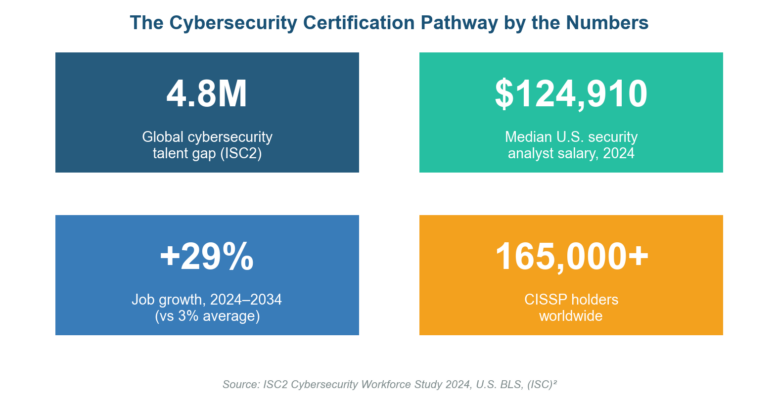
Figure 1. The talent gap and pay that make the cybersecurity certification pathway worth the effort.
The pay reflects the scarcity. BLS reports a 2024 median of $124,910 for information security analysts, with the top 10% above $186,420, and certified professionals consistently out-earn uncertified peers.
A certification is also portable; it signals the same competence whether you move between banks, hospitals, or federal contractors.
For employers, certifications cut hiring risk. A credential from CompTIA, ISC2, or ISACA verifies that a candidate understands threats, controls, and the same cybersecurity risk management discipline and control framework the organization runs internally.
That shared language is why job postings increasingly list specific certifications as hard requirements rather than nice-to-haves.
The demand is broad, not niche. Banks, hospitals, retailers, utilities, and federal agencies now compete for the same certified talent, which is why a single credential travels so well across industries.
That cross-sector pull keeps the cybersecurity certification pathway one of the most resilient career bets in technology, even when individual sectors slow their hiring.
How the Cybersecurity Certification Pathway Is Structured
The cybersecurity certification pathway is best read as four tiers, not a single ladder. You climb from foundational credentials that need no experience to specialized certifications that demand years in the field.
Knowing where each credential sits keeps you from chasing an exam you cannot yet qualify to hold, and it lets you sequence study, experience, and exam fees into a plan you can actually finish.
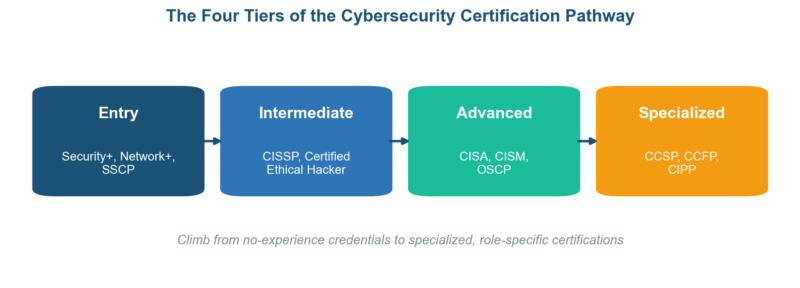
Figure 2. The four tiers that organize the cybersecurity certification pathway, from entry to specialized.
| Certification | Tier | Experience | Focus |
| CompTIA Security+ | Entry | None | Core security baseline, DoD 8140-aligned |
| CompTIA Network+ | Entry | None | Network configuration and security |
| (ISC)² SSCP | Entry | 1 year | Hands-on security operations |
| CISSP | Intermediate | 5 years | Security program design and management |
| Certified Ethical Hacker | Intermediate | 2 years | Offensive testing, vulnerability discovery |
| ISACA CISA | Advanced | 5 years | IS audit, control, and assurance |
| ISACA CISM | Advanced | 5 years | Security governance and management |
| OffSec OSCP | Advanced | Hands-on | Penetration testing (practical exam) |
| (ISC)² CCSP | Specialized | 5 years | Cloud security architecture |
| IAPP CIPP | Specialized | None | Privacy law and program management |
Where the major credentials sit on the cybersecurity certification pathway.
Entry-Level Cybersecurity Certifications
Entry-level certifications open the door. CompTIA Security+ is the anchor, covering network security, threats, identity, and cryptography with no experience prerequisite, and it meets the U.S. DoD 8140 baseline.
CompTIA Network+ and the (ISC)² SSCP round out this tier, the SSCP adding a year of experience and a hands-on focus.
Intermediate Cybersecurity Certifications
The intermediate tier rewards a few years of experience. The CISSP from (ISC)² is the field’s most recognized credential, requiring five years across two of eight domains and proving you can design and manage a security program.
The Certified Ethical Hacker suits those who want to test systems the way an attacker would.
Advanced Cybersecurity Certifications
Advanced certifications signal senior expertise. ISACA’s CISM targets security managers and governance, CISA focuses on audit and control, and both require five years of experience.
The OSCP from OffSec sits apart as a brutal, hands-on penetration-testing exam that rewards proven offensive skill over years served, which is why hiring managers treat a pass as direct evidence of capability rather than test-taking.
Specialized Cybersecurity Certifications
Specialized credentials match a niche to a career track. The CCSP covers cloud security, digital-forensics professionals pursue the CCFP, and privacy specialists earn the CIPP.
These are not steps everyone takes; they are deliberate moves toward forensic analyst, cloud architect, or privacy-officer roles that build on the broader pathway.
Cost is part of the calculus. CompTIA Security+ runs about $400 per attempt, CISSP around $750, and bootcamps can add thousands, though many employers reimburse exam fees and continuing education.
Budgeting the cybersecurity certification pathway up front, including the annual maintenance fees most credentials charge, prevents the stalled, half-finished collections that waste both money and momentum.
Cybersecurity Certification Salaries: What Each Credential Pays
Salary is where the cybersecurity certification pathway gets concrete. Entry credentials like CompTIA Security+ open roles in the $80,000 to $100,000 range, while the senior management certifications command far more. CISSP holders average about $148,000, and CISM holders earn $150,000 to $160,000 in North America.
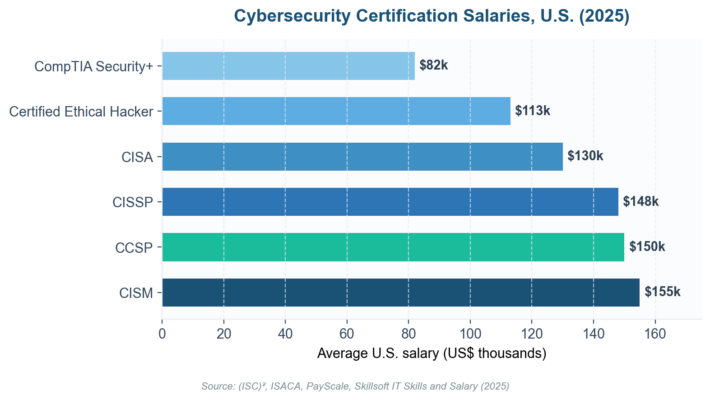
Figure 3. Average U.S. salaries climb steeply across the cybersecurity certification pathway.
Two patterns drive the numbers. Management credentials such as CISM and CISSP unlock director and CISO tracks that clear $200,000, while hands-on certifications like OSCP command premiums for scarce offensive skill. The highest earners often pair a technical credential with a management one, covering both enterprise risk fluency and deep tooling.
Geography and sector matter too. Federal contractors, financial services, and healthcare pay above the median because regulation forces demand, and the Skillsoft IT Skills and Salary report consistently ranks security certifications among the highest-paying in technology.
Stacking credentials compounds the effect across a career, especially when paired with operational risk management experience that broadens your remit beyond pure security.
The pathway also maps to a clear career ladder. CompTIA Security+ supports analyst and help-desk roles, CISSP and CISM open security-manager and architect seats, and a stacked profile points toward CISO positions that clear $200,000.
Each rung on the cybersecurity certification pathway widens both responsibility and pay, which is why planning the sequence early matters.
How to Prepare for Cybersecurity Certification Exams
Passing a cybersecurity certification exam takes structured study, not just experience. Start with the official exam objectives, work through the vendor’s study guide, and supplement with reputable training courses.
The exams test applied judgment, so understanding why a control works matters more than memorizing definitions you will forget by exam day.
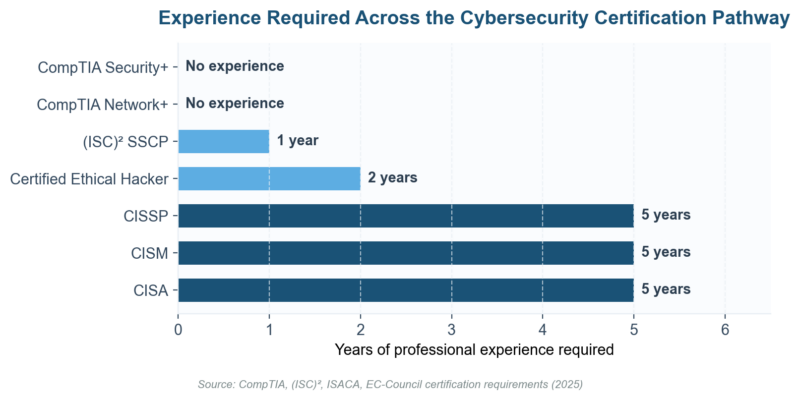
Figure 4. Plan exams around the experience each step of the cybersecurity certification pathway requires.
Plan the calendar realistically. Beginners studying part-time need three to six months for an entry-level cybersecurity certification, while advanced credentials like CISSP can take six months to a year.
Build in the experience requirement early; you cannot hold a CISSP until you have five qualifying years, so log them while you study.
Mock exams close the gap. Timed practice tests reveal weak domains and acclimate you to the multiple-choice, drag-and-drop, and simulation formats most exams use.
Treat each result like a mini risk assessment: rank your weakest areas by likelihood of appearing and impact on your score, then study accordingly.
Free and paid resources abound. Vendor study guides, video courses from providers like Infosec and EC-Council, and community labs cover most exam objectives, while platforms such as TryHackMe build the hands-on reps that exams increasingly test. Pair them with a guide to information security risk management so the exam theory connects to the work itself.
Consistency beats cramming. Two focused hours a day across a few months retains more than weekend marathons, and booking the exam date early creates the deadline that forces the work.
Most people who fail a cybersecurity certification exam ran out of disciplined study time rather than ability, so protect the calendar the way you would any other professional commitment.
Where the Cybersecurity Certification Pathway Is Heading: 2026-2027
The pathway keeps shifting toward newer threats. Cloud security, AI risk, and operational technology are the fastest-growing specialties, and certification bodies are adding tracks to match.
A cybersecurity certification pathway built today should weight cloud and AI credentials more heavily than one designed three years ago would have, and the five steps of the risk management process still sit underneath every new specialty regardless of the tooling.
Frameworks are converging too. The NIST NICE Framework now maps certifications to specific work roles, helping employers and candidates align credentials with actual job tasks.
Expect more postings to specify NICE-aligned skills, tying the cybersecurity certification pathway directly to hiring criteria. Candidates who track those work-role definitions can target the exact credentials a job listing will demand.
Demand will not ease. With the talent gap widening 19% year over year and breaches growing more expensive, the certified professional stays scarce and well-paid.
Pairing certifications with hands-on experience and real information security risk management depth is the surest hedge against an automated future, since the tools still need experts who can read the key risk indicators behind the alerts.
Common Cybersecurity Certification Pathway Mistakes
Plenty of candidates stall on avoidable errors. The most common is chasing a prestigious certification before meeting its experience requirement, then sitting an exam they cannot yet endorse.
The second is collecting credentials with no target role, ending up broad on paper but not hireable for any specific job, which leaves candidates frustrated despite a wall of certificates.
- Skipping the foundation: jumping at CISSP without the Security+ base or the five years it requires.
- Certifying without a target role: stacking exams that do not map to a job you actually want.
- Ignoring hands-on practice: passing the test but freezing during a live incident.
- Letting certifications lapse: missing continuing-education credits and losing the credential.
- Overlooking soft skills: forgetting that senior roles need communication as much as technical depth.
The fix is to plan backward from the job. Pick the role, read its postings, and earn the certifications those listings demand, in order.
Grounding the plan in real risk management techniques, a working grasp of how to mitigate risk, and steady experience turns a pile of credentials into a coherent cybersecurity certification pathway.
Cybersecurity Certification Pathway: Your Questions Answered
What is a cybersecurity certification pathway?
A cybersecurity certification pathway is the planned sequence of credentials that takes you from entry-level skills to senior expertise.
It usually moves from a foundational certification like CompTIA Security+, through intermediate ones like CISSP, to advanced and specialized credentials. The pathway proves your skills to employers and maps a route from your first security job toward leadership roles.
Which cybersecurity certification should I get first?
For most people, CompTIA Security+ is the right first step on the cybersecurity certification pathway. It needs no prior experience, meets the U.S. DoD 8140 baseline, and covers network security, threats, identity, and cryptography.
Pair it with CompTIA Network+ if your networking fundamentals are weak, then move toward intermediate credentials once you have hands-on experience.
How long does the cybersecurity certification pathway take?
Plan for years, not months, across the full cybersecurity certification pathway. An entry-level certification takes three to six months of part-time study, while advanced credentials like CISSP add six months to a year of preparation. The bigger constraint is experience: CISSP and CISM each require five qualifying years, which you accumulate on the job alongside studying.
Is CompTIA Security+ or CISSP better on the cybersecurity certification pathway?
They sit at different points on the cybersecurity certification pathway, so neither is simply better. CompTIA Security+ is an entry credential with no experience requirement, ideal for breaking in. CISSP is an advanced credential needing five years of experience, aimed at security managers and architects. Earn Security+ first, build experience, then pursue CISSP.
Do cybersecurity certifications increase salary?
Yes, measurably. Certified professionals on the cybersecurity certification pathway consistently out-earn uncertified peers, and senior credentials carry the largest premiums. CISSP holders average about $148,000 and CISM holders $150,000 to $160,000 in North America, against $80,000 to $100,000 for entry roles. Stacking a management credential on a technical one compounds the gain over a career.
Do you need a degree for the cybersecurity certification pathway?
No degree is strictly required for the cybersecurity certification pathway, and many professionals enter through certifications and hands-on experience alone. A degree can waive a year of experience for credentials like CISSP and helps with some employers, but a strong certification stack plus demonstrated skill is enough to land most roles, especially given the talent shortage.
Which cybersecurity certifications are most in demand?
CompTIA Security+, CISSP, and CISM lead most demand rankings on the cybersecurity certification pathway, with cloud-focused CCSP and offensive OSCP rising fast. Employers increasingly want NICE-aligned credentials that map to specific work roles. The safest bet is to read the job postings for your target role and earn the certifications those listings name most often.
Can you start a cybersecurity certification pathway with no experience?
Yes. The cybersecurity certification pathway is designed to start without experience, beginning with CompTIA Security+ or Network+, which have no prerequisites. From there you build hands-on experience in help-desk, networking, or junior analyst roles, which then qualifies you for intermediate and advanced certifications that do require several years in the field.
A cybersecurity certification pathway rewards patience and a clear destination. The talent gap is real, the salaries are strong, and the route from Security+ to CISSP is well-mapped for anyone willing to pair study with experience. Pick the role you want, earn the credentials it demands in order, and the pathway becomes a durable, high-paying career rather than a stack of unused certificates.
Plan Your Cybersecurity Certification Pathway With riskpublishing.com
riskpublishing.com helps career changers and security teams plan a cybersecurity certification pathway that maps to real US hiring. We cover cybersecurity risk management, the best risk management certifications, and a CRISC, CISA, and CISM comparison, alongside career guides like how to become a risk analyst. Browse our guide to NIST risk assessment or reach the team through our contact page for a certification-plan review.

Chris Ekai is a Risk Management expert with over 10 years of experience in the field. He has a Master’s(MSc) degree in Risk Management from University of Portsmouth and is a CPA and Finance professional. He currently works as a Content Manager at Risk Publishing, writing about Enterprise Risk Management, Business Continuity Management and Project Management.